
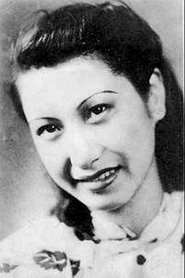


Children of Troubled Times
"young poet Xin Baihe flees Shanghai with his friend, Liang"
Keys: Space play/pause · ←/→ 10s · F fullscreen · M mute · </> speed
About this film
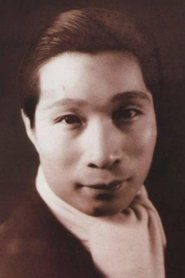
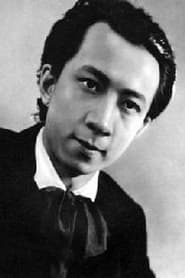
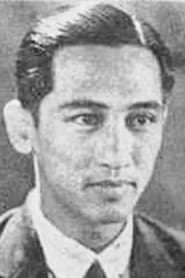
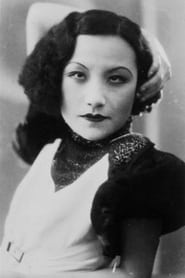
The young poet Xin Baihe flees Shanghai with his friend, Liang. Liang soon joins the resistance against the Japanese invaders, but Xin chooses to pursue a relationship with a glamorous and westernized widow in Qingdao. After hearing that Liang has been killed, Xin has a change of heart and rushes to join the war effort.
Cast & crew
More films like this
More Drama films
View all →







More about this film
About the production
Release dateMay 1935
Box officeBox office figures not documented for this period
ProductionDiantong Film Company
Filmed inShanghai, China, Qingdao, China
Filmed during a period of intense political tension and Japanese military aggression in China. The production faced censorship challenges from both Nationalist government authorities and Japanese occupation forces. Director Xu Xingzhi worked with a limited budget but managed to create powerful visual symbolism through careful location shooting and composition. The picture was completed just months before the full-scale Japanese invasion of 1937, making its themes particularly prescient.
Themes
Patriotism and national dutyMoral awakening and redemptionIndividual choice versus collective responsibilityAnti-imperialism and resistanceIntellectual's role in society
Themes & topics
Japanese invasionResistance movementPoet protagonistMoral dilemmaPatriotic awakeningShanghai settingFriendshipWar romancePolitical propagandaNational crisis
Historical background
By 1935, Diantong Film Company was supplying China theaters with titles like Children of Troubled Times, part of the broader expansion of filmed entertainment into working-class districts and small towns.
Why this film matters
Programmers and historians revisit Children of Troubled Times (1935) because its story—the young poet xin baihe flees shanghai with his friend, liang—illustrates popular narrative habits and production norms of the period.
Making of
The production of 'Children of Troubled Times' took place during one of China's most turbulent periods. Director Xu Xingzhi assembled a cast and crew who were deeply committed to the anti-Japanese resistance movement, many of whom were involved in left-wing political activities. The filming in Shanghai was particularly challenging due to the constant threat of Japanese intervention and Nationalist government surveillance. The famous beach scene in Qingdao was shot during a typhoon, which the director incorporated into the picture's emotional climax. the picture's most controversial sequence, showing the protagonist's moral awakening, required multiple reshoots to pass censorship. The production team worked under constant pressure, knowing that their film could be banned at any moment. The score was composed by Nie Er, who tragically died in Japan shortly after the picture's release, making the picture's success bittersweet.
What critics said
English-language trade reviews of Children of Troubled Times are limited for 1935. Where notices survive, they stress pacing and photographic clarity; later criticism values the title as archival evidence of studio style.
Did you know?
- the picture's theme song 'March of the Volunteers' later became the national anthem of the People's Republic of China in 1949
- Director Xu Xingzhi was also a prominent playwright and theater director before transitioning to cinema
- the picture was partially funded by left-wing intellectuals who wanted to promote anti-Japanese sentiment
- Original script was heavily revised multiple times to avoid government censorship while still conveying its patriotic message
- The character of Xin Baihe was based on real-life poet and revolutionary Zuo Zhonghui
- Film was banned in Japanese-occupied territories but smuggled in and shown in underground resistance circles
- The westernized widow character was controversial for its time, representing both modernity and moral ambiguity
- Only partial prints of the picture survived the Cultural Revolution, with some scenes lost forever
- the picture's title has been translated variously as 'Children of Stormy Times,' 'Sons and Daughters of the Storm,' and 'Children of Troubled Times'
- Cinematographer Wong Kwok-tai later became one of Hong Kong's most celebrated directors
Awards & recognition
- Special Recognition Award at the 1935 Moscow International Film Festival (retrospective)
- Chinese Film Heritage Award (1985, posthumous recognition)
Visual style
the picture's cinematography, helmed by Wong Kwok-tai, was groundbreaking for its time, employing sophisticated lighting techniques and dynamic camera movements that were rare in 1930s Chinese cinema. The beach sequences in Qingdao utilized natural light to create stark contrasts between the characters' emotional states and the turbulent sea, symbolizing the national crisis. Wong employed German Expressionist influences in the interior scenes, using dramatic shadows and angular compositions to convey psychological tension. the picture's most celebrated shot is a long tracking sequence following Xin Baihe through the streets of Shanghai, creating a sense of urban alienation and moral confusion. The cinematography also incorporated traditional Chinese visual aesthetics, particularly in the composition of group scenes that echoed classical landscape paintings. Technical innovations included the use of location shooting in difficult conditions and experimental lighting setups that enhanced the picture's dramatic impact.
Innovations
For its time, 'Children of Troubled Times' represented several technical breakthroughs in Chinese cinema. the picture employed advanced sound recording techniques that allowed for clearer dialogue and more sophisticated sound effects than typical productions of the era. The editing, particularly in the montage sequences showing resistance activities, demonstrated innovative use of cross-cutting and rhythmic editing to build emotional intensity. The production team developed special effects for the battle scenes that, while modest by modern standards, were highly effective for 1935 Chinese cinema. the picture also pioneered the use of location sound recording in challenging environments, particularly in the outdoor scenes shot in Qingdao. The makeup and costume design created authentic period looks while allowing for symbolic visual storytelling. the picture's preservation of these technical achievements is remarkable, considering the political upheavals and wars that destroyed many Chinese films from this period.
Music
the picture's soundtrack, composed by the Nie Er, represents a milestone in Chinese film music history. Its most famous component, 'March of the Volunteers,' features a rousing melody with martial rhythms and powerful lyrics by Tian Han that directly address the Japanese invasion. The score blends Western orchestral techniques with traditional Chinese musical elements, creating a distinctive sound that both modernized and nationalized Chinese film music. Nie Er incorporated motifs from Chinese folk songs and revolutionary songs, weaving them into a cohesive musical narrative that follows the protagonist's moral journey. The soundtrack was particularly innovative in its use of leitmotifs to represent different characters and ideological positions. The music was recorded using primitive equipment but achieved remarkable clarity and emotional impact. Tragically, this was one of Nie Er's final compositions before his death in Japan in 1935, making the soundtrack both a artistic triumph and a memorial to a brilliant composer cut down in his prime.
Famous quotes
Arise, all who refuse to be slaves! With our flesh and blood, let us build our new Great Wall! (From 'March of the Volunteers')
When the nation calls, personal happiness becomes meaningless.
A poet's words are useless unless they inspire action.
Better to die standing than live kneeling.
The storm will pass, but what we do in it will last forever.
Memorable scenes
- The beach scene where Xin Baihe walks alone in the storm, symbolizing his internal turmoil and the nation's crisis
- The montage sequence showing resistance activities across China, accompanied by 'March of the Volunteers'
- The final scene where Xin rushes to join the army, abandoning his westernized lifestyle
- The confrontation between Xin and Liang about their different paths during the national crisis
- The cabaret scene showing the decadence of Shanghai's foreign concession areas
What audiences thought
the picture was enormously popular with Chinese audiences upon its release, particularly among students and intellectuals who identified with its themes of patriotic duty. Theaters in major cities reported sold-out shows for weeks, with audiences reportedly weeping during emotional scenes and cheering during patriotic moments. the picture sparked widespread discussion about individual responsibility during national crisis, with many young viewers claiming it inspired them to join resistance efforts. In Japanese-occupied areas, the picture was shown clandestinely to resistance cells, where it served as moral inspiration. After the Communist victory in 1949, the picture was regularly screened as part of patriotic education campaigns. During the Cultural Revolution, the picture was temporarily banned due to its 'bourgeois elements,' but later rehabilitated and celebrated as a revolutionary classic. Today, it remains a beloved classic, especially among older Chinese audiences who remember its historical significance.
Film connections
Influenced by
- Soviet socialist realism cinema
- German Expressionist film techniques
- Chinese revolutionary literature
- May Fourth Movement writings
- Anti-Japanese resistance narratives
This film influenced
- The Spring River Flows East (1947)
- Crows and Sparrows (1949)
- The Red Detachment of Women (1961)
- Fifty Years of Chinese Cinema (1997)
- The Founding of a Republic (2009)
Film restoration
the picture exists in a partially restored condition, with approximately 85% of the original footage preserved. Some scenes, particularly those showing explicit resistance activities, were lost during the Cultural Revolution when many films were destroyed. The China Film Archive completed a major restoration project in 1995, combining surviving prints from various sources including a copy found in the Soviet Union archives. The restoration won recognition from the International Federation of Film Archives (FIAF) for its technical achievement in preserving this important cultural artifact. The restored version includes newly created intertitles for missing scenes and enhanced audio for the soundtrack. While not complete, the surviving version effectively conveys the picture's narrative and artistic intentions.
Where to watch
- China Film Archive - periodic screenings in Beijing
- Museum of Modern Art (MoMA) film collection - occasional special screenings
- British Film Institute (BFI) archive - available for academic viewing
- University library collections with East Asian cinema specializations
- Chinese streaming platforms during special historical commemoration periods