
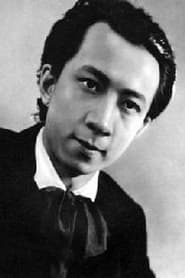
Muzhi Yuan
Actor
Born: March 3, 1909 in Ningbo, Zhejiang Province, China Died: September 30, 1978 Active: 1934-1978 Birth Name: Yuan Muzhi (袁牧之)
Films
2 films
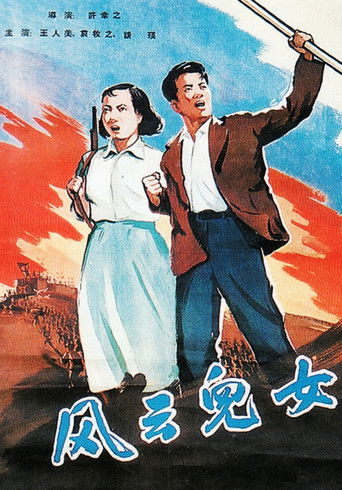
About Muzhi Yuan
Yuan Muzhi was a figure in Chinese cinema who emerged as actors and directors of the 1930s. Born in 1909 in Ningbo, Zhejiang province, he began his artistic career in theater before making a spectacular film debut in 'Plunder of Peach and Plum' (1934), which immediately established him as a leading talent in Chinese cinema. His performance in this film was widely praised for its naturalistic style and emotional depth, setting him apart from many of his contemporaries. The following year, he starred in 'Children of Troubled Times' (1935), a film that would become historically significant as it featured the song that later became China's national anthem. Yuan Muzhi transitioned successfully behind the camera, directing the influential film 'Street Angel' (1937), which is now considered a masterpiece of Chinese cinema. After the founding of the People's Republic of China in 1949, he took on important administrative roles in the cultural sector, serving as the first director of the Beijing Film Academy and later as Vice Minister of Culture. His the critical transformation of Chinese cinema from its early sound period through the establishment of the socialist film industry, making him a bridge between classical and modern Chinese cinema.
The Craft
On Screen
Yuan Muzhi was known for his naturalistic and understated acting style, which was revolutionary in Chinese cinema of the 1930s. Unlike many of his contemporaries who employed theatrical, exaggerated gestures, Yuan brought a subtle realism to his performances that drew from his modern theater training. His acting emphasized emotional authenticity and psychological depth, allowing him to portray complex characters with nuance and sensitivity. This approach helped establish a new standard for film acting in China, moving away from the influence of traditional Chinese opera toward a more cinematic, realistic style.
Milestones
- Film debut in 'Plunder of Peach and Plum' (1934) to critical acclaim
- Starred in 'Children of Troubled Times' (1935) featuring China's future national anthem
- Directed the masterpiece 'Street Angel' (1937)
- Became first director of Beijing Film Academy (1950)
- Appointed Vice Minister of Culture (1954)
- Pioneered naturalistic acting style in Chinese cinema
Best Known For
Iconic Roles
Must-See Films
Accolades
Won
- Posthumous recognition as one of China's greatest film pioneers
- Honored in Chinese Film History Hall of Fame
Nominated
- No formal award system existed in China during his active film period
Special Recognition
- Recognized as a foundational figure in Chinese cinema history
- Beijing Film Academy named a building in his honor
- Cultural Revolution rehabilitation (1976)
- Posthumous restoration of his films for historical preservation
Working Relationships
Worked Often With
Studios
Why They Matter
Impact on Culture
Yuan Muzhi's impact on Chinese cinema cannot be overstated, as he helped define the transition from theatrical to realistic acting styles in Chinese film. His work in the 1930s coincided with a crucial period of cinematic development in China, and his naturalistic approach influenced an entire generation of performers. As an administrator, he shaped the structure of film education in China, establishing patterns and standards that would persist for decades. His films, particularly 'Street Angel,' remain cultural touchstones that continue to be studied and referenced in contemporary Chinese cinema. Yuan's career also reflects the broader political and cultural transformations of 20th century China, making him an important figure for understanding the relationship between art and politics in modern China.
Lasting Legacy
Yuan Muzhi's legacy endures through his contributions to both the artistic and institutional development of Chinese cinema. His films are preserved as classics of the golden age of Chinese cinema, studied by film scholars and appreciated by new generations of viewers. The Beijing Film Academy, which he helped establish and direct, has become one of the world's most prestigious film schools, educating countless Chinese filmmakers who have achieved international recognition. His advocacy for realistic acting and socially conscious filmmaking helped establish enduring values in Chinese cinema. Yuan's life story - from actor to director to cultural administrator - provides a model of artistic integrity combined with social responsibility that continues to inspire Chinese artists.
Who They Inspired
Yuan Muzhi's influence extends beyond his own films to the very structure of Chinese cinema education and industry. His naturalistic acting style broke with traditional theatrical approaches and helped establish a new standard for film performance in China. As a director, his technical innovations and humanistic storytelling influenced subsequent generations of Chinese filmmakers. Through his work at the Beijing Film Academy, he directly trained and influenced countless future directors, actors, and technicians who would shape Chinese cinema for decades to come. His emphasis on combining artistic quality with social relevance became a guiding principle for Chinese cinema, particularly during the socialist period. International film scholars studying Chinese cinema inevitably encounter Yuan Muzhi's work as foundational texts for understanding the development of film in China.
Off Screen
Yuan Muzhi married fellow actress Chen Bo'er in 1939, with whom he had a daughter. Their marriage was both a personal and professional partnership, as Chen was also a significant figure in Chinese cinema and theater. During the Cultural Revolution, Yuan faced persecution like many intellectuals and artists of his generation, but was later rehabilitated. His later years were dedicated to cultural administration and education rather than performance, though he remained respected in artistic circles. His personal life reflected the broader struggles and triumphs of Chinese intellectuals during the tumultuous mid-20th century.
Education
Attended Shanghai Art University, studied modern theater and performance techniques
Family
- Chen Bo'er (1939-1951)
Did You Know?
- The song from 'Children of Troubled Times' became China's national anthem 'March of the Volunteers'
- 'Street Angel' (1937) was his directorial debut and is considered one of the greatest Chinese films ever made
- He began his career in modern theater before transitioning to film
- During the Cultural Revolution, he was persecuted but later fully rehabilitated
- He was instrumental in establishing China's first formal film education system
- His acting style was influenced by Western cinema rather than traditional Chinese opera
- He served as a cultural attaché in the Soviet Union during the 1950s
- His films were banned in Taiwan for decades due to their leftist themes
- He was fluent in Russian and helped facilitate cultural exchanges with the Soviet Union
- His daughter Yuan Xiaoyuan also became involved in cultural work
In Their Own Words
Film should not only entertain but also enlighten the people and serve society
Real acting comes from understanding life, not from imitating gestures
Cinema is the most powerful medium for educating and uniting our people
Frequently Asked Questions
Who was Yuan Muzhi?
Yuan Muzhi was a Chinese actor, director, and cultural administrator who was. He starred in classic films like 'Plunder of Peach and Plum' and 'Children of Troubled Times,' later directing the masterpiece 'Street Angel' before becoming the first director of the Beijing Film Academy.
What films is Yuan Muzhi best known for?
Titles linked here include Plunder of Peach and Plum (1934), Children of Troubled Times (1935).
When was Yuan Muzhi born and when did he die?
Born March 3, 1909; died September 30, 1978.
What awards did Yuan Muzhi win?
While Yuan Muzhi worked during a period when China lacked formal film awards, he has received posthumous recognition as one of China's greatest film pioneers. He is honored in the Chinese Film History Hall of Fame and has had buildings named after him at the Beijing Film Academy.
What was Yuan Muzhi's acting style?
Yuan Muzhi was known for his revolutionary naturalistic acting style that broke with the theatrical traditions of Chinese performance. He emphasized emotional authenticity, psychological depth, and subtle realism, helping establish a new standard for film acting in China that moved away from the exaggerated gestures influenced by traditional Chinese opera.