H.P. Carver
Director
- Active
- 1930-1930
Films directed 1
About H.P. Carver
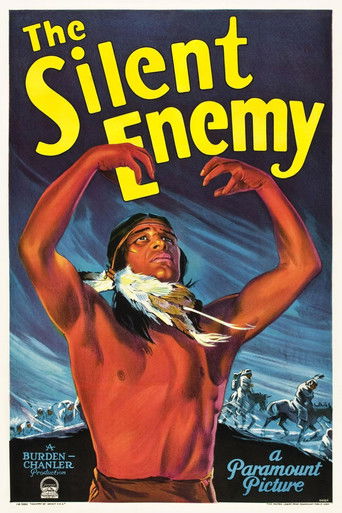
H.P. Carver is an elusive early sound-era film director best remembered for directing The Silent Enemy (1930), an unusual and historically notable production centered on Native American life. Very little reliable biographical information about Carver survives in mainstream film-history references, and he appears to have had a very brief documented screen career rather than a long, well-recorded Hollywood tenure. His known work suggests an involvement with early independent or specialized filmmaking at the transition from silent cinema to talkies, when many technicians and directors were working on a project-by-project basis outside the major studio system. Because his credits are sparse and his personal details are not well preserved in surviving reference sources, much of his life, training, and later career remain unknown. The available record places him within the early 1930s film world, but no confirmed details have been widely established regarding his birth, death, family background, or subsequent professional activities. In classic-cinema databases, he is primarily cited in connection with The Silent Enemy, which has ensured his name remains attached to one of the more distinctive pre-Code era films dealing with Indigenous themes.
More about H.P. Carver
Behind the camera
H.P. Carver’s directing style cannot be reliably reconstructed from surviving biographical sources because so little is documented about his career. Based on the evidence of The Silent Enemy, his approach appears to have favored location-oriented, ethnographic, and story-driven presentation rather than star-centered studio spectacle. The film’s unusual subject matter suggests an interest in atmospheric realism and an emphasis on cultural setting, although the extent of Carver’s personal creative control is difficult to determine. Since no broader body of work is securely attributed to him, any description of a recurring style must remain cautious and limited to the tone and execution of his known film.
In film history
H.P. Carver’s cultural impact is tied almost entirely to his association with The Silent Enemy, a film that occupies a curious and important place in early sound-era cinema because of its depiction of Native American life and its place within the evolving vocabulary of ethnographic storytelling. Even though Carver himself is not a well-documented figure, the film he directed remains historically interesting for scholars examining how Hollywood and independent producers represented Indigenous communities in the early 20th century. His name therefore persists less as that of a major public celebrity and more as a credit attached to a film that is periodically revisited in studies of representation, early sound experimentation, and the broader context of pre-Code production.
Later reputation
Carver’s legacy is that of a minor but historically situated filmmaker whose documentation is sparse yet who remains connected to a film of enduring interest. In classic film history, many such names survive primarily through credits rather than biographies, and Carver is one of them. His lasting significance lies in the archival record of The Silent Enemy, which continues to draw attention from historians interested in early cinema’s handling of Native American themes and in the small, often forgotten cadre of directors who worked at the margins of the studio system. Because his career appears to have been extremely brief or at least extremely under-documented, he occupies a niche place in film history: not a widely celebrated auteur, but a useful reminder of how many early filmmakers contributed to cinema without leaving extensive personal records.
Influence
There is no well-established evidence that H.P. Carver directly mentored notable filmmakers or exerted a measurable influence on later directors. His influence, insofar as it can be discussed, is indirect and historical: his sole known credit contributes to the corpus of early 1930s films that shaped later conversations about representation, realism, and the boundaries of studio-era storytelling. For researchers and programmers, his work is primarily of interest as part of the broader evolution of early sound cinema rather than as a widely emulated directing model.
Off screen
No dependable public information has been found regarding H.P. Carver’s personal life, including marriages, family, residence, or later years. Unlike many more prominent studio-era filmmakers, he does not appear to have left a substantial biographical footprint in standard reference works or widely accessible archival summaries. As a result, details such as spouses, children, education, and private background remain undocumented in readily verifiable sources.
Credits
- Directed The Silent Enemy (1930), the only widely documented credit associated with his name
- Worked during the pivotal transition from silent cinema to early sound filmmaking
- Is associated with one of the few early Hollywood-era productions focused on Native American subjects from an outside production perspective
Films
- The Silent Enemy (1930)
Notes
- H.P. Carver is primarily remembered for a single documented directing credit, which makes him a notably obscure figure in classic film history.
- The Silent Enemy (1930) is the film most strongly associated with his name and is the main reason he appears in film databases.
- His career falls exactly at the transition point between the silent era and early talking pictures, a period when many filmmakers have incomplete surviving documentation.
- He should not be confused with similarly named individuals in other fields or later film production roles.
- Because of the scarcity of biographical records, even basic personal details such as birth date and birthplace are not securely established in widely accessible sources.
- His known film is of special interest because it deals with Indigenous themes, which were relatively uncommon in Hollywood features of that period.
- He is an example of an early cinema professional whose historical footprint survives through credit listings rather than biographies or publicity materials.
Questions
Who was H.P. Carver?
H.P. Carver was an obscure early film director known primarily for directing The Silent Enemy (1930). Very little verified biographical information about him survives in standard film references, so he is remembered mostly through his screen credit rather than a detailed public career history.
What films is H.P. Carver best known for?
He is best known for The Silent Enemy (1930), which is the principal film associated with his name. No other firmly documented directing credits are widely established in mainstream classic-cinema sources.
When was H.P. Carver born and when did he die?
His birth and death dates are not reliably documented in the commonly available historical record. Likewise, his birthplace and other personal details have not been securely established in the sources that typically preserve classic film biographies.
What awards did H.P. Carver win?
No awards or formal honors are widely documented for H.P. Carver. Because so little is known about his career, there is also no reliable record of major nominations or industry recognition.
What was H.P. Carver's directing style?
His directing style cannot be fully verified because only limited information survives. Based on The Silent Enemy, his work appears to have emphasized atmosphere, cultural setting, and a more realistic presentation of subject matter rather than star-driven spectacle.
What is H.P. Carver's legacy in film history?
His legacy is primarily archival and historical: he is remembered as the director of a notable early sound-era film with unusual subject matter. Even though he is not a famous mainstream figure, his name remains relevant to scholars studying early 1930s cinema and representation.