Films
1 film
About Ethel Wright
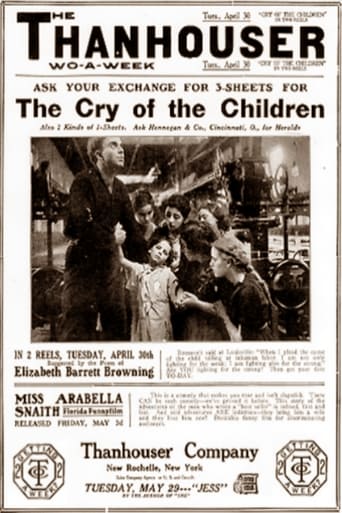
American actress who worked briefly during the silent film era, primarily known for her appearance in the socially significant 1912 Thanhouser production 'The Cry of the Children.' Her career appears to have been extremely brief, with documented activity limited to the year 1912. The film she appeared in was directed by George Nichols and was notable for its powerful critique of child labor practices in early 20th century America. Like many actors from this early period of cinema, detailed records of her life and career are scarce, reflecting the transient nature of early film work and the lack of comprehensive documentation for supporting performers. Her contribution to this important social drama places her within the context of early cinema's emerging role as a medium for social commentary. Unfortunately, beyond her appearance in this notable production, little else is known about her career trajectory or personal life.
The Craft
Milestones
- Appeared in 'The Cry of the Children' (1912), a significant social commentary film
Best Known For
Must-See Films
Working Relationships
Studios
Why They Matter
Impact on Culture
Ethel Wright's cultural impact is primarily tied to her participation in 'The Cry of the Children,' a film that was notable for its time in addressing social issues. The film was one of the earliest examples of cinema being used as a vehicle for social reform, focusing on the harsh realities of child labor during the Industrial Revolution. While Wright herself may not have been a major star, her contribution to this important work places her within the broader narrative of early cinema's evolution as an art form capable of addressing serious social concerns. The film was praised by contemporary critics for its emotional power and social consciousness, helping establish cinema's potential as more than mere entertainment.
Lasting Legacy
Ethel Wright's legacy is preserved primarily through her appearance in 'The Cry of the Children,' which has survived as an important example of early social issue cinema. While her individual contribution may have been small, the film itself remains significant in film history for its bold approach to social commentary during an era when most films focused on lighter fare. The movie has been preserved by film archives and is studied by cinema historians as an early example of socially conscious filmmaking. Her name appears in filmographies and historical records documenting the Thanhouser Company's contributions to American cinema.
Who They Inspired
As an actress with such a brief documented career, Ethel Wright's direct influence on other performers or filmmakers is difficult to trace. However, her participation in 'The Cry of the Children' contributed to a film that helped demonstrate cinema's potential as a medium for social commentary, indirectly influencing future filmmakers who would use movies to address social issues. The film's success in tackling serious subject matter may have paved the way for more socially conscious productions in subsequent years.
Off Screen
Very little information is available about Ethel Wright's personal life, which is typical for many early silent film actors whose careers were brief and who worked primarily as supporting performers.
Did You Know?
- The Cry of the Children was produced by the Thanhouser Company, one of the early independent film studios
- The film was based on a poem by Elizabeth Barrett Browning
- The Cry of the Children was considered controversial for its time due to its depiction of child labor
- The film was praised by the National Child Labor Committee for bringing attention to their cause
- Ethel Wright's career appears to have been limited to a single year, 1912
- The film survives today and is available for viewing through film archives
- Thanhouser Company was known for producing high-quality films with social relevance
- The Cry of the Children was one of the first films to address social reform issues directly
Frequently Asked Questions
Who was Ethel Wright?
American actress who worked briefly during the silent film era, primarily known for her appearance in the 1912 Thanhouser film 'The Cry of the Children.' Her documented career appears to have been limited to the year 1912.
What films is Ethel Wright best known for?
Titles linked here include The Cry of the Children (1912).
When was Ethel Wright born and when did she die?
Specific birth and death dates for Ethel Wright are not available in historical records, which is common for many early silent film actors who had brief careers and limited documentation.
What awards did Ethel Wright win?
There are no documented awards or nominations for Ethel Wright, which is typical for supporting actors from the very early silent film period when formal award systems had not yet been established.
What was Ethel Wright's acting style?
Specific details about Ethel Wright's acting style are not documented in available historical records, as was common for many supporting performers from the early silent era whose individual contributions were not extensively recorded.
What studio did Ethel Wright work for?
Ethel Wright worked for the Thanhouser Company, an early independent film studio known for producing quality films with social relevance during the silent era.