
Films
1 film
About Lila Chester
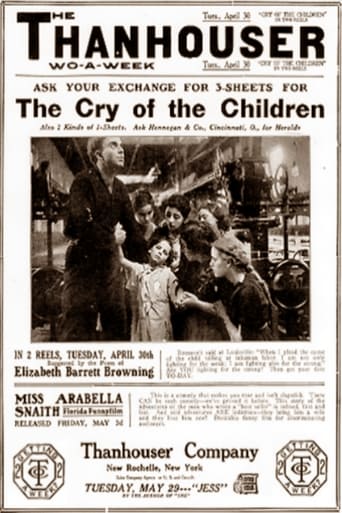
The 1912 film The Cry of the Children is the only title linked here for Lila Chester. With her entire known film career spanning just the single year of 1912. She is documented as having appeared in the Thanhouser Company's production 'The Cry of the Children,' a significant early social drama that highlighted the harsh conditions of child labor in America. The film, directed by George Nichols and starring James Cruze, was controversial and impactful films of its era, drawing attention to industrial exploitation. Chester's role in this production, while likely minor, placed her within the context of early cinema's efforts to address serious social issues through the medium of film. The Thanhouser Company was known for producing high-quality films with moral and social consciousness, and Chester's participation in this important work suggests she was part of this artistic movement. Unfortunately, like many performers from the very early silent era, detailed records of her life and career are extremely limited, and she appears to have left the film industry after this single documented appearance.
The Craft
Milestones
- Appeared in 'The Cry of the Children' (1912), a groundbreaking social drama film
Best Known For
Must-See Films
Working Relationships
Studios
Why They Matter
Impact on Culture
Lila Chester's contribution to cinema, while brief, is part of the important legacy of early silent film actors who helped establish the medium as a vehicle for social commentary. Her participation in 'The Cry of the Children' connects her to one of the earliest examples of cinema being used to address social reform, a practice that would become increasingly important throughout film history. The film itself was influential in raising public awareness about child labor conditions and demonstrated the power of motion pictures as a tool for social change.
Lasting Legacy
Lila Chester represents the countless early film performers whose contributions to cinema history, while perhaps small in scale, were part of the foundation upon which the film industry was built. Her appearance in a significant early social drama places her within the context of cinema's evolution from simple entertainment to a medium capable of addressing serious social issues. Like many actors from this period, her story illustrates the transient nature of early film careers and the difficulty of preserving complete records from cinema's era.
Who They Inspired
Due to the extremely brief nature of her documented career, there is no evidence of Lila Chester directly influencing other performers or filmmakers. However, her participation in socially conscious early cinema contributed to the broader movement that would eventually establish film as a legitimate medium for addressing important social and political issues.
Off Screen
Very little is documented about Lila Chester's personal life, which is common for actors from the earliest days of cinema when detailed biographical records were not systematically maintained. She appears to have had a brief association with the Thanhouser Company, one of the film studios of the silent era.
Did You Know?
- 'The Cry of the Children' was
- The film was so impactful that it reportedly led to reforms in child labor laws
- The Thanhouser Company was known for producing films with strong moral and social messages
- Many early silent film performers like Chester have incomplete or lost biographical records
- Child actors were commonly used in films of this era, though it's unclear if Chester — adult or child performer
- The film was based on a poem by Elizabeth Barrett Browning
- Only fragments of many Thanhouser films survive today, though 'The Cry of the Children' is preserved
- The film was distributed by the Motion Picture Distributing and Sales Company
- George Nichols, the director, was a prolific early filmmaker who directed over 400 films
- The film's success demonstrated that audiences would respond to serious social themes in cinema
Frequently Asked Questions
Who was Lila Chester?
Screen credits include only one documented film, 'The Cry of the Children' (1912). She was associated with the Thanhouser Company, one of the film studios of the period, and her entire known active years covered just the single year of 1912.
What films is Lila Chester best known for?
Titles linked here include The Cry of the Children (1912).
When was Lila Chester born and when did she die?
Unfortunately, specific birth and death dates for Lila Chester are not documented in available historical records. This lack of biographical information is common for actors from the very early days of cinema when detailed personal records were not systematically maintained.
What awards did Lila Chester win?
Lila Chester did not receive any documented awards or nominations during her brief film career. The Academy Awards and other major film honors were not established until many years after her active period in 1912.
What was Lila Chester's acting style?
There is insufficient documentation to determine Lila Chester's specific acting style or techniques. Like many performers from the earliest silent era, her work was likely influenced by the theatrical conventions of the time, but detailed analysis of her performance is not possible given the limited surviving information about her career.