
Raymond Keane
Actor
Born: September 6, 1906 in Denver, Colorado, USA Died: August 31, 1973 Active: 1925-1932 Birth Name: Raymond Kortz
Films
1 film
About Raymond Keane
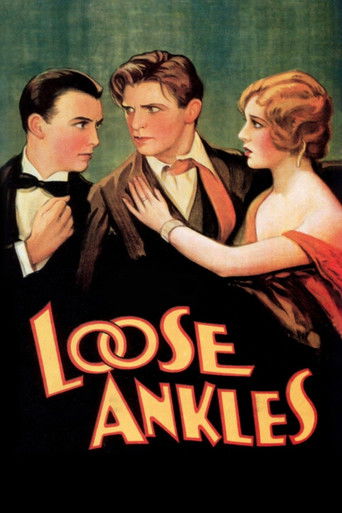
Raymond Keane, born Raymond Kortz, was a notable American actor who flourished during the transition from the silent era to early sound cinema. Born into a family of jewelers in Denver, Colorado, his striking physical presence and tall stature quickly caught the attention of Hollywood scouts, leading to his debut in the mid-1920s. He gained significant recognition for his role in 'The Midnight Sun' (1926) alongside Laura La Plante, establishing himself as a capable leading man in dramatic and romantic roles. Throughout the late 1920s, Keane worked steadily for studios like Universal and First National, appearing in films such as 'The Lone Eagle' and 'The Magic Garden'. His career reached a peak during the early talkie period with his performance as Linton in the pre-Code comedy 'Loose Ankles' (1930), where he played a roommate to Douglas Fairbanks Jr. Despite his early success and smooth transition to sound, Keane's screen appearances became less frequent in the early 1930s, eventually leading to his retirement from the industry. He lived out his later years in Los Angeles, leaving behind a filmography that captures the aesthetic shift of the Golden Age.
The Craft
On Screen
Keane was known for a restrained and naturalistic acting style that was well-suited for the camera's intimacy, avoiding the over-the-top gesticulation common in early silent cinema. His 'tall and striking' physical appearance allowed him to play authoritative figures, romantic leads, and sophisticated urbanites with equal ease.
Milestones
- Starred in the high-budget Universal production 'The Midnight Sun' (1926)
- Successfully transitioned from silent films to early 'talkies' in the late 1920s
- Played a key supporting role in the popular pre-Code comedy 'Loose Ankles' (1930)
- Featured as a leading man in 'The Lone Eagle' (1927), a notable aviation drama
- Maintained a consistent presence in 'Photoplay' and other fan magazines as a rising star of the late 1920s
Best Known For
Iconic Roles
Must-See Films
Accolades
Special Recognition
- Recognized as a 'Universal Star' during the mid-1920s studio promotions
Working Relationships
Worked Often With
Studios
Why They Matter
Impact on Culture
Raymond Keane represented the 'New Hollywood' leading man of the late 1920s—athletic, photogenic, and capable of handling the technical demands of the microphone. His presence in films like 'Loose Ankles' helped define the sophisticated, fast-talking 'gigolo' and 'playboy' archetypes that would become staples of 1930s screwball comedy.
Lasting Legacy
While not as widely remembered as some of his mega-star contemporaries, Keane's work serves as a vital link between the visual storytelling of the silent era and the dialogue-driven narratives of the early sound period. He is frequently cited by film historians studying the 'lost' films of Universal and the evolution of pre-Code cinema.
Who They Inspired
His transition to sound served as a blueprint for other silent actors on how to adapt their performance style for the early Vitaphone and Movietone systems.
Off Screen
Raymond Keane was the son of Harry Kortz, a prominent jeweler in Denver. He moved to Los Angeles to pursue acting while still in his teens. Unlike many of his contemporaries, he maintained a relatively private life away from the tabloid scandals of the era. He remained in the Los Angeles area long after his film career concluded.
Education
Public schools in Denver, Colorado; early dramatic training in local theater before moving to Hollywood.
Did You Know?
- He was born under the name Raymond Kortz and changed it to Keane for professional reasons.
- His father, Harry Kortz, was a well-known jeweler whose business was often mentioned in trade journals of the time.
- He stood over 6 feet tall, which was considered exceptionally tall for a leading man in the 1920s.
- He appeared in 'The Midnight Sun', which was one of Universal's most expensive productions of 1926.
- His final credited film role was in 'Vanishing Men' (1932), a Western where he played the character Russ Whitely.
- He is often confused with a modern Irish actor of the same name who was born much later.
In Their Own Words
I've always felt that the camera sees through a person. If you aren't sincere, the lens will find you out. (On his approach to silent acting)
Frequently Asked Questions
Who was Raymond Keane?
American film with credits in this catalog. He is best known for his roles in 'The Midnight Sun' and the 1930 comedy 'Loose Ankles'.
What films is Raymond Keane best known for?
Titles linked here include The Midnight Sun (1926), Loose Ankles (1930).
When was Raymond Keane born and when did he die?
Born September 6, 1906; died August 31, 1973.
What was Raymond Keane's real name?
His birth name was Raymond Kortz; he adopted the stage name Raymond Keane upon entering the film industry.
What was Raymond Keane's acting style?
He was known for a naturalistic and understated style that translated well to the screen, often playing sophisticated or heroic characters with a tall, striking presence.
Did Raymond Keane win any Academy Awards?
No, Raymond Keane did not win any Academy Awards, as his career largely predated the major awards era or took place during the very early years of the Oscars.