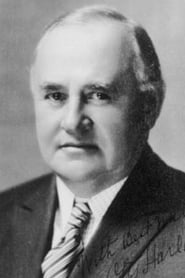
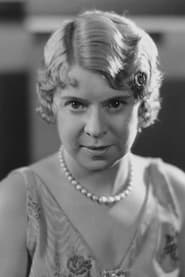

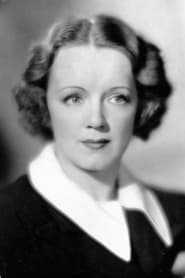


Loose Ankles
"Will demands a husband"
Keys: Space play/pause · ←/→ 10s · F fullscreen · M mute · </> speed
About this film
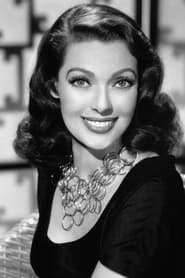
Ann must marry respectably to inherit fortune or lose estate to animal hospital in this 1930 comedy starring Loretta Young.
Cast & crew
More Romance films
View all →



More from Ted Wilde
View all →
More about this film
About the production
Release dateFebruary 2, 1930
BudgetApproximately $250,000 (Estimated)
ProductionFirst National Pictures, Warner Bros.
Filmed inWarner Bros. First National Studios, Burbank, California
The film was a 'talkie' remake of the 1926 silent film 'Ladies at Play.' The production was marked by tragedy when Sam Janney, the author of the original play and the intended director for this version, was killed in a car accident during the early stages of production. Ted Wilde, a veteran of silent comedy who had worked extensively with Harold Lloyd, stepped in to direct. This was one of Wilde's final films before his own untimely death from a stroke at age 40, shortly before the film's release. The transition to sound was still relatively new, resulting in the 'clunky' and dialogue-heavy style typical of early 1930s cinema.
Themes
Rebellion against authorityThe hypocrisy of moral guardiansClass and inheritanceThe performative nature of scandalTrue love vs. financial gain
Themes & topics
Historical background
Loose Ankles plays Jazz Age inheritance gags as talkies revived stage farce.
Why this film matters
The film is a prime example of the 'Pre-Code' romantic comedy, serving as a bridge between the physical comedy of the 1920s and the sophisticated 'screwball' comedies of the mid-1930s. It highlights the shifting role of women in cinema, moving away from the passive damsel to the proactive, rebellious 'flapper' who takes control of her own romantic and financial destiny. It also captures the transition of child stars like Loretta Young into adult leading roles.
Making of
The production was a significant transition for director Ted Wilde, who was moving from the visual slapstick of the silent era (having directed Harold Lloyd's 'The Freshman' and 'Speedy') to the dialogue-driven 'talkie' farce. The sudden death of the original director, Sam Janney, forced the studio to pivot quickly. Because sound technology was still in its infancy, the cameras were often housed in soundproof booths, which limited movement and resulted in the static, stage-like cinematography seen in many scenes. The actors had to adapt to the presence of microphones hidden in props, which contributed to the somewhat stilted delivery of lines that was characteristic of the 1929-1930 period.
What critics said
Light programmer; Young's early talkie footnote.
Did you know?
- The term 'Loose Ankles' was Jazz Age slang for gigolos or professional dance partners who were hired for their agility on the dance floor.
- Loretta Young was only 17 years old when she played the role of the wealthy socialite Ann Harper Berry.
- The film features a poster for the 1929 Alice White film 'Broadway Babies' in an alleyway scene during the speakeasy raid.
- Douglas Fairbanks Jr. was struggling to establish an identity separate from his father at the time of filming.
- The film includes several musical numbers, including the title song 'Loose Ankles,' which was a common trend as studios experimented with the new sound technology.
- The plot's inheritance-with-strings-attached trope was a staple of the era, previously seen in Buster Keaton's 'Seven Chances' (1925).
- The character of Agnes the maid provides a standout comedic performance, particularly when she gleefully advises Ann on how to 'compromise' a man.
- The film was produced by First National Pictures just after it had become a subsidiary of Warner Bros.
Visual style
The cinematography by Arthur L. Todd is largely functional and static, a common trait of early sound films where camera mobility was restricted by heavy soundproofing equipment. Most scenes are shot in medium-long takes with minimal cutting. However, the musical sequences and the speakeasy raid offer slightly more visual dynamism, utilizing the depth of the sets to create a sense of scale.
Innovations
While not innovative in a positive sense, the film is a textbook example of the technical limitations of 1930. It presents the 'Vitaphone' style of sound-on-disc or early sound-on-film recording, where dialogue had to be captured live on set, often leading to a 'theatrical' rather than 'cinematic' feel. The use of a title song to market the film was a key promotional technique of the early sound period.
Music
The film features several songs, most notably the title track 'Loose Ankles' (music by Pete Wendling, lyrics by Jack Meskill). The score was uncredited but is attributed to Cecil Copping and Alois Reiser. The music is typical of the early sound era, often used to punctuate transitions or provide a 'Jazz Age' atmosphere in the nightclub scenes.
Famous quotes
Ann: 'I want a man who is young, handsome, and unscrupulous.'
Agnes: 'You don't have to understand. That's one of the advantages of being dumb!'
Gil: 'Well, what type of compromising do you specialize in? Plain or fancy?' Ann: 'Both!'
Uncle Rupert: 'People that go to a place like that deserve to be arrested!'
Memorable scenes
- The 'Compromise' Preparation: Agnes the maid gleefully instructs Ann on how to properly set the stage for a scandal, including having Gil remove his clothing and using scissors on his trousers to make the situation look more desperate.
- The Speakeasy Raid: The two prudish aunts, Sarah and Katherine, get accidentally intoxicated on spiked punch at the Circus Cafe and must be smuggled out by gigolos during a police raid to avoid the very scandal they've been trying to prevent.
- The Window Escape: Gil, wearing nothing but a woman's silk robe, is forced to jump out of Ann's bedroom window to avoid her aunts, leading to a farcical chase across town.
What audiences thought
Audiences in 1930 were still enamored with the novelty of 'all-talking' pictures. The film's mix of romance, mild scandal, and musical numbers made it a popular choice for theater-goers looking for escapism from the early signs of the Depression. Its portrayal of 'naughty' behavior and the mockery of prudish authority figures resonated with the youth culture of the time.
Film connections
Influenced by
- Seven Chances (1925)
- Matrimony's Speed Limit (1913)
- The original 1926 Broadway play by Sam Janney
This film influenced
- My Man Godfrey (1936)
- It Happened One Night (1934)
- The Philadelphia Story (1940)
Film restoration
The film is preserved and survives intact. It is held in the collection of the Library of Congress and is occasionally broadcast on Turner Classic Movies (TCM).
Where to watch
- Turner Classic Movies (TCM)
- Warner Archive Collection (DVD)
- Public domain streaming sites (though copyright status may vary by region)