V. N. Janaki
Actor
Born: November 30, 1923 in Srirangam, Tamil Nadu, India Died: May 23, 1996 Active: 1948-1954 (acting), 1988-1996 (politics) Birth Name: Varalakshmi Narasimhan Janaki
Films
1 film
About V. N. Janaki
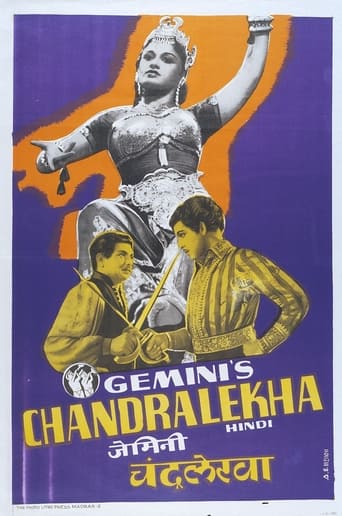
Actress in Indian cinema who began her career during the golden era of Tamil films in the 1940s. She made her mark in the landmark film Chandralekha (1948), ambitious and expensive productions of its time, produced by S. S. Vasan's Gemini Studios. Her performance in this epic film helped establish her as a promising actress in the Tamil film industry. Throughout her brief acting career from 1948, she appeared in several notable films that showcased her talent and screen presence. In 1954, she married the actor-politician M. G. Ramachandran (MGR), after which she retired from films to focus on her family life. Following MGR's death, she entered politics and made history by becoming the Chief Minister of Tamil Nadu in 1988, though her tenure was brief. Her journey from cinema to politics made her a unique figure in Tamil Nadu's cultural and political landscape.
The Craft
On Screen
Classical Tamil cinema style with emphasis on expressive facial features and traditional dance movements, typical of the 1940s Indian film aesthetic
Milestones
- Debut in Chandralekha (1948)
- Marriage to MGR (1954)
- Became Chief Minister of Tamil Nadu (1988)
- First woman Chief Minister of Tamil Nadu from AIADMK
Best Known For
Iconic Roles
Must-See Films
Accolades
Won
- Kalaimamani Award (Tamil Nadu Government's arts award)
Special Recognition
- First woman Chief Minister of Tamil Nadu from AIADMK party
- Honored for contributions to Tamil cinema and politics
Working Relationships
Worked Often With
Studios
Why They Matter
Impact on Culture
V. N. Janaki represents the unique intersection of cinema and politics in Tamil Nadu, where film stars often transition into political leadership. Her role in Chandralekha contributed to one of Indian cinema's most influential early productions, which set new standards for film production values and storytelling. Her later political career as Chief Minister broke barriers for women in Tamil Nadu politics, though her brief tenure was marked by political instability. She exemplified the phenomenon of film stars becoming political leaders in South India, a trend that continues to this day.
Lasting Legacy
V. N. Janaki's legacy is twofold: as an actress who participated in creating one of Indian cinema's landmark films, and as a woman politician who broke the glass ceiling in Tamil Nadu politics. Her journey from the silver screen to the Chief Minister's office remains unique in Indian political history. She demonstrated the power of celebrity in politics and paved the way for other women in Tamil Nadu politics. Her life story continues to be studied as an example of the cinema-politics nexus in South India.
Who They Inspired
Janaki influenced the trajectory of women's participation in Tamil Nadu politics and demonstrated how film stardom could translate into political capital. Her brief tenure as Chief Minister, though controversial, showed that women could hold the highest office in the state. She also influenced the AIADMK party's structure during a critical period of transition after MGR's death. Her early film work in Chandralekha continues to be referenced in studies of Indian cinema history.
Off Screen
V. N. Janaki led a remarkable life that spanned both cinema and politics. She married M. G. Ramachandran in 1954, who was already a major star in Tamil cinema. The couple remained married until MGR's death in 1987. After her husband's death, she entered politics and led a faction of the AIADMK party. She had no biological children but was known for her charitable work and support of MGR's fan clubs. Her later years were marked by political battles and health issues.
Education
Educated in Srirangam and Chennai, specific details not widely documented
Family
- M. G. Ramachandran (1954-1987)
Did You Know?
- Chandralekha was the most expensive Indian film made at that time, costing over $3 million in 1948
- She was 25 years old when she married MGR, who was 37 at the time
- Her tenure as Chief Minister lasted only 24 days, one of the shortest in Indian history
- She was the first actress from Tamil cinema to become a Chief Minister
- Her real name was Varalakshmi Narasimhan before entering films
- She learned classical dance which helped her film roles
- After marrying MGR, she adopted his surname and became V. N. Janaki Ramachandran
- She maintained close ties with MGR's fan clubs throughout her political career
- Her political faction was known as AIADMK (Janaki faction)
- She died of cardiac arrest in Chennai at age 72
In Their Own Words
Cinema and politics are both platforms to serve the people
My life has been dedicated to following MGR's path of public service
Women can lead as effectively as men in governance
The love of the people is the greatest award any leader can receive
Frequently Asked Questions
Who was V. N. Janaki?
Tamil actress from the 1940s who later became a politician and served as the Chief Minister of Tamil Nadu in 1988. She is best known for her role in the landmark film Chandralekha (1948) and for being the wife of legendary actor-politician M. G. Ramachandran.
What films is V. N. Janaki best known for?
Titles linked here include Chandralekha (1948), Velaikari (1949).
When was V. N. Janaki born and when did she die?
Born November 30, 1923; died May 23, 1996.
What awards did V. N. Janaki win?
V. N. Janaki received the Kalaimamani Award from the Tamil Nadu government for her contributions to arts. While she didn't receive many formal awards for her acting, her political achievements included becoming the first woman Chief Minister of Tamil Nadu from the AIADMK party.
What was V. N. Janaki's acting style?
V. N. Janaki's acting style was typical of classical Tamil cinema in the 1940s, featuring expressive facial expressions, traditional dance movements, and dramatic delivery. Her training in classical dance enhanced her screen presence, particularly in the elaborate musical sequences that were characteristic of films like Chandralekha.
How long was V. N. Janaki Chief Minister?
V. N. Janaki served as Chief Minister of Tamil Nadu for only 24 days in 1988, making it one of the shortest tenures for a Chief Minister in Indian history. Her government was dismissed by the central government following political instability and party factionalism.
How did V. N. Janaki enter politics?
V. N. Janaki entered politics after the death of her husband MGR in 1987. She led a faction of the AIADMK party and claimed the Chief Minister's post, citing her position as MGR's widow. She was sworn in as Chief Minister in January 1988 but her government was short-lived due to internal party conflicts.