
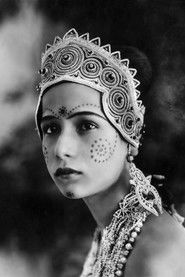
Seeta Devi
Actor
Born: 1912 in Calcutta, British India Died: 1983 Active: 1925-1929 Birth Name: Renee Smith
Films
3 films


About Seeta Devi
Indian actress of the silent film era who achieved international fame through her work in Indo-German film collaborations. Born Renee Smith, she was discovered by producer Himanshu Rai while working as a telephone operator in Calcutta and quickly became one of India's first film stars to gain global recognition. Her career, though brief, was remarkably impactful, spanning from 1925 to 1929 during which she starred in three landmark films that introduced Indian cinema to international audiences. Devi's performances were characterized by their naturalistic style and emotional depth, which stood out in an era of exaggerated silent film acting. She worked primarily under the direction of Franz Osten in films produced by Himanshu Rai, forming a creative trio that would influence Indian cinema for decades. After her marriage and the advent of sound films, she retired from acting, leaving behind a legacy as one of the earliest Indian actresses to bridge Eastern and Western cinema. Her work remains significant not only for its artistic merit but also for its role in establishing India's presence in international film markets during the colonial era.
The Craft
On Screen
Seeta Devi was known for her naturalistic and understated acting style, which was revolutionary for silent cinema where exaggerated gestures were common. She brought a subtle emotional depth to her performances, using minimal yet expressive movements to convey complex emotions. Her screen presence was described as ethereal and graceful, perfectly suited for the mythological and historical roles she portrayed. Devi's ability to convey deep emotion through her eyes and subtle facial expressions set her apart from her contemporaries and made her particularly effective in close-up shots, which were frequently used in her films.
Milestones
- Starred in The Light of Asia (1925), the first Indian film to achieve international success
- Played the title role in Shiraz: A Romance of India (1928)
- Appeared in A Throw of Dice (1929), completing the trilogy of Indo-German collaborations
- Became one of the first Indian actresses to gain international fame
- Worked with director Franz Osten and producer Himanshu Rai
Best Known For
Iconic Roles
Must-See Films
Accolades
Special Recognition
- Recognized as one of the actresses of Indian cinema
- Featured in retrospectives of silent cinema at international film festivals
Working Relationships
Worked Often With
Studios
Why They Matter
Impact on Culture
Seeta Devi played a crucial role in establishing Indian cinema on the international stage during the silent era. Her films were among the first Indian productions to be distributed globally, introducing international audiences to Indian stories, culture, and cinematic aesthetics. The trilogy of films she starred in helped create a template for cross-cultural film collaborations and demonstrated that Indian stories could appeal to universal audiences. Devi's success challenged prevailing stereotypes about Indian women and helped pave the way for future generations of Indian actresses. Her work contributed to the development of a distinct Indian cinematic identity while also showing how Indian cinema could engage with global film traditions.
Lasting Legacy
Seeta Devi's legacy endures as one of the earliest Indian film stars to achieve international recognition. Her films, particularly the Indo-German collaborations, are studied today as landmarks of early world cinema and examples of successful cross-cultural artistic partnerships. The preservation and restoration of her films have allowed new generations to appreciate her talent and the historical significance of her work. She is remembered as a pioneer who helped establish India's presence in global cinema and as an artist who brought dignity and naturalism to Indian film acting. Her brief but brilliant career continues to inspire filmmakers and scholars interested in the history of Indian cinema and its international connections.
Who They Inspired
Seeta Devi influenced subsequent generations of Indian actresses by demonstrating that naturalistic acting could be more powerful than exaggerated gestures. Her success in international markets showed that Indian films could compete globally, encouraging future filmmakers to aim for international recognition. The technical and artistic standards of the films she worked in set benchmarks for Indian cinema production values. Her collaboration with German filmmakers helped establish a tradition of international cooperation in Indian cinema that continues today. Devi's ability to bridge cultural divides through her performances inspired later actors to pursue roles that could transcend national boundaries.
Off Screen
Seeta Devi married a wealthy Indian businessman and retired from films after her marriage, as was customary for women of her time. She chose to step away from the spotlight at the height of her career to focus on her family life. Despite her brief film career, she maintained connections with the film industry and was remembered fondly by her colleagues. Her decision to retire early was partly influenced by the transition to sound films, which would have required different acting skills and potentially accent training. She spent her later years away from the public eye, living a quiet life with her family.
Family
- Indian businessman (married 1930s)
Did You Know?
- Was discovered while working as a telephone operator in Calcutta
- Her real name was Renee Smith, and she was of Anglo-Indian heritage
- The Light of Asia was one of the first Indian films to be released in both Indian and international markets
- Her films were part of a unique collaboration between Indian and German filmmakers in the 1920s
- She retired from films at the height of her career to get married
- Her films were shot on location in India, which was unusual for the time
- The trilogy of films she starred in were among the most expensive Indian productions of their era
- Her performance style influenced the transition from theatrical to more naturalistic acting in Indian cinema
- Her films have been preserved and restored by international film archives
- She was one of the first Indian actresses to have a significant international fan following
In Their Own Words
I believe that true acting comes from the heart, not from exaggerated gestures
Cinema has the power to unite different cultures through shared stories
My time in films taught me that art knows no boundaries
The silent screen allowed emotions to speak louder than words ever could
Frequently Asked Questions
Who was Seeta Devi?
Indian actress of the silent film era who achieved international fame through her work in Indo-German collaborations. Born Renee Smith, she starred in three landmark films in the 1920s that introduced Indian cinema to global audiences. She is remembered as one of India's first film stars to gain international recognition.
What films is Seeta Devi best known for?
Titles linked here include The Light of Asia (1925), Shiraz: A Romance of India (1928).
When was Seeta Devi born and when did she die?
Born 1912; died 1983.
What awards did Seeta Devi win?
While formal award ceremonies were not common during the silent era, Seeta Devi received recognition as one of the actresses of Indian cinema. Her films have been featured in retrospectives at international film festivals, and she is celebrated for her role in establishing India's presence in global cinema.
What was Seeta Devi's acting style?
Seeta Devi was known for her naturalistic and understated acting style, which was revolutionary for silent cinema where exaggerated gestures were typical. She brought subtle emotional depth to her performances, using minimal yet expressive movements to convey complex emotions, setting her apart from her contemporaries.