Eunice Woodruff
Actor
- Active
- 1918-1918
Films 1
About Eunice Woodruff
Eunice Woodruff appears in surviving film records as a very minor silent-era screen performer, with her name credited in the 1918 film "Vive la France!" and little else securely documented in standard reference sources. Available evidence suggests that her career in motion pictures was brief and limited to the late silent period, when many actors and actresses worked in only one or a handful of productions and then disappeared from the trade papers and studio rosters. Because her filmography is so sparse and contemporary biographical records are not readily extant, the details of her early life, training, and later career remain largely undocumented. Her known screen presence places her within the broad population of working character players, extras, and supporting performers who helped populate World War I-era and late-1910s silent films. No widely verified later talkie credits, theatre history, or publicity material can be confidently attributed to her without risking confusion with similarly named individuals. As a result, her importance today lies primarily in film historiography and archival recordkeeping rather than in a large surviving body of work. She represents one of many silent-era names preserved only in cast lists, reminding researchers how much of early Hollywood and regional film production remains fragmentary.
More about Eunice Woodruff
In film history
Eunice Woodruff's cultural impact is best understood as archival rather than celebrity-driven. She is part of the historical fabric of silent cinema, where thousands of performers contributed to the medium without leaving behind the robust paper trail that later stars enjoyed. Her surviving credit in a 1918 film underscores how the early motion-picture industry often preserved names while losing the surrounding context of careers, identities, and contributions. For historians, such figures matter because they help map the labor and personnel networks that supported the silent screen, even when their individual fame was limited or absent. In that sense, her presence in the record is a small but meaningful reminder of the breadth of early film production and the many uncelebrated artists who made it possible.
Later reputation
Her legacy lies in the historical record itself: Eunice Woodruff remains one of many silent-era performers whose names survive in filmographies while their biographies have largely vanished. This kind of residual documentation is significant because it helps scholars reconstruct casting patterns, studio practices, and the participation of women in early screen entertainment. Even a single surviving credit can provide evidence of an actor's involvement in wartime-era filmmaking and the broader social history of the period. For modern database users and researchers, preserving her name helps prevent the erasure of minor contributors to classic cinema. Her legacy is therefore one of documentation, representation, and the continuing need for archival recovery in early film studies.
Influence
No direct influence on later actors or directors can be verified from currently available evidence. However, like many unheralded silent-era performers, she contributed to the on-screen culture and production ecosystem from which later film acting standards evolved. Her value to film history is indirect: she is part of the large, often anonymous workforce whose collective presence shaped early cinematic performance styles and ensemble production methods. Without stronger documentary evidence, it would be speculative to attribute specific artistic influence to her personally.
Off screen
No reliable biographical information about Eunice Woodruff's personal life has been located in standard film reference sources. Her birth details, family background, marriage history, and post-screen life are not documented in the available record. Because she appears only fleetingly in film credits, it is not possible to reconstruct her private life with confidence without risking misidentification. Researchers may need to consult period trade papers, studio records, local archives, or census materials to determine whether additional personal information exists under this exact name.
Education
No verified educational background is currently available in standard film reference sources.
Credits
- Credited screen appearance in the silent film "Vive la France!" (1918)
- Documented participation in the late silent-era film world during the World War I period
- Presence in surviving cast records despite the scarcity of biographical documentation
- Representative of the many lesser-known performers working in short-lived or sparsely recorded silent productions
Films
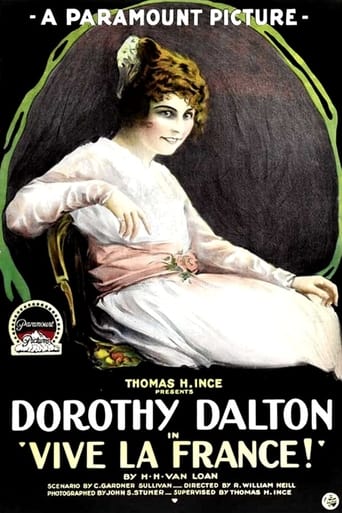
- "Vive la France!" (1918)
Notes
- Eunice Woodruff is documented in film records primarily through a single known screen credit.
- Her surviving film credit belongs to the silent era and dates to 1918.
- She appears to have had a very brief or minimally documented screen career.
- Her biography is difficult to reconstruct because standard reference sources do not preserve many personal details.
- She is an example of how many early film performers are known today only from cast lists and archival records.
- No confirmed awards, nominations, or honors are associated with her in available sources.
- Her name may appear in archival materials related to "Vive la France!" and late-1910s production records.
- Because records are sparse, researchers must be careful not to confuse her with similarly named individuals in other fields.
Questions
Who was Eunice Woodruff?
Eunice Woodruff was a silent-era film actor known from surviving cast records, including a credit in "Vive la France!" (1918). Very little biographical information has been preserved about her life or career, so she is best understood as a little-documented performer from early cinema.
What films is Eunice Woodruff best known for?
She is best known for the 1918 silent film "Vive la France!" It is the principal surviving screen credit associated with her name in standard reference sources.
When was Eunice Woodruff born and when did she die?
Her birth and death dates are not currently verified in available film reference sources. Her documented career activity is limited to 1918, but no reliable vital records have been confirmed under this name.
What awards did Eunice Woodruff win?
No awards or formal honors are documented for Eunice Woodruff in the available record. This is not unusual for many minor silent-era performers whose careers were briefly recorded but not extensively publicized.
What was Eunice Woodruff's acting style?
No detailed descriptions of her acting style have survived in the record. Given her late-silent-era credit, she likely performed within the broader naturalistic but highly expressive conventions of silent film acting, but this cannot be stated with certainty for her personally.
What is Eunice Woodruff's legacy in film history?
Her legacy is primarily archival: she is one of many early performers whose name survives even though much of her life story does not. For film historians, such figures are important because they help preserve the completeness of silent-era production records.