Films
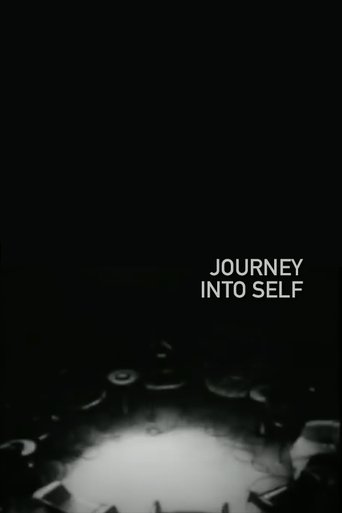
1 film
About Bill McGaw
American documentary filmmaker and producer who gained international acclaim for his work at the intersection of psychology and cinema during the late 1960s and early 1970s. He was a prominent member of the Western Behavioral Sciences Institute (WBSI) in La Jolla, California, where he collaborated closely with humanistic psychologists Carl Rogers and Richard Farson. McGaw is best known for directing and producing the 1968 documentary 'Journey Into Self,' which captured an intensive 16-hour group therapy session and won the Academy Award for Best Documentary Feature. His career was defined by a commitment to using the medium of film to explore human potential, interpersonal communication, and conflict resolution. Beyond his Oscar-winning work, he produced several other significant psychological documentaries, including 'Because That's My Way' (1971) and 'The Steel Shutter' (1973), the latter of which addressed the Northern Ireland conflict. McGaw's work is credited with helping to popularize the 'encounter group' movement and bringing humanistic psychology into the mainstream cultural consciousness.
The Craft
Behind the Camera
McGaw utilized a 'fly-on-the-wall' observational documentary style, often referred to as direct cinema. His approach focused on capturing raw, unscripted human emotion and interpersonal dynamics without intrusive narration or staging. He frequently employed multi-camera setups to record long-form therapy sessions, which were then meticulously edited to highlight the most profound moments of personal breakthrough and vulnerability.
Milestones
- Won the Academy Award for Best Documentary Feature for 'Journey Into Self' (1968)
- Pioneered the 'encounter group' documentary format in collaboration with Carl Rogers
- Produced 'The Steel Shutter' (1973), a landmark study of group therapy in the context of the Northern Ireland Troubles
- Served as a key member of the Western Behavioral Sciences Institute (WBSI)
- Co-produced the action film 'Sky Riders' (1976) starring James Coburn
Best Known For
Must-See Films
Accolades
Won
- Academy Award for Best Documentary Feature (1968) for 'Journey Into Self'
Nominated
- Academy Award for Best Documentary Feature (1968)
Special Recognition
- Member of the Western Behavioral Sciences Institute
Working Relationships
Worked Often With
Studios
Why They Matter
Impact on Culture
Bill McGaw's work had a profound impact on the 'Human Potential Movement' of the 1960s and 70s. By bringing the intimate, often private world of group therapy to the silver screen, he demystified psychological practices for the general public. 'Journey Into Self' became a foundational text for psychology students and practitioners worldwide, demonstrating the efficacy of the 'encounter group' model. His films helped shift the cultural perception of therapy from a clinical necessity for the 'ill' to a tool for personal growth for 'well-adjusted' individuals.
Lasting Legacy
McGaw's legacy lies in his role as a bridge between the worlds of behavioral science and cinematic art. He proved that documentary film could be a rigorous tool for scientific observation while remaining emotionally resonant for a mass audience. His collaboration with Carl Rogers remains.
Who They Inspired
He influenced a generation of documentary filmmakers to explore psychological and sociological themes using long-form observational techniques. His work paved the way for modern reality television and therapeutic media, though his productions maintained a level of academic integrity and humanistic purpose often missing from later iterations of the genre.
Off Screen
Bill McGaw was deeply integrated into the intellectual and scientific community of La Jolla during the 1960s. His work was often sponsored by major corporations like American Airlines and Saga Food, reflecting his ability to bridge the gap between academic psychology and commercial production.
Education
Associated with San Diego State University and the Western Behavioral Sciences Institute.
Did You Know?
- The film 'Journey Into Self' was originally a 16-hour session that McGaw and his team edited down to 47 minutes.
- Director Stanley Kramer was so impressed by the film that he agreed to introduce it, which helped it gain the visibility needed for its Oscar win.
- McGaw's film 'The Steel Shutter' involved bringing together Protestants and Catholics from Belfast for a high-stakes encounter group.
- He transitioned briefly into mainstream action cinema as a co-producer for the 1976 film 'Sky Riders'.
- The Oscar statuette for 'Journey Into Self' was historically kept at the headquarters of the Western Behavioral Sciences Institute in La Jolla.
In Their Own Words
The film portrays a 16-hour group therapy session for eight well-adjusted people who had never met before. (Context: Standard promotional description of his most famous work)
Frequently Asked Questions
Who was Bill McGaw?
Academy Award-winning documentary filmmaker and producer known for his work with the Western Behavioral Sciences Institute. He specialized in capturing psychological encounter groups on film, most notably in the 1968 documentary 'Journey Into Self'.
What films is Bill McGaw best known for?
Titles linked here include Journey Into Self (1968), Because That's My Way (1971).
What was Bill McGaw's directing style?
McGaw used an observational, direct-cinema style that focused on raw human interaction. He specialized in filming long-duration therapy sessions and editing them to reveal deep emotional truths and personal transformations.
What awards did Bill McGaw win?
His primary accolade was the Academy Award for Best Documentary Feature in 1968 for 'Journey Into Self'. This win was significant as it brought humanistic psychology into the Hollywood spotlight.
Who were Bill McGaw's most frequent collaborators?
He worked extensively with psychologists Carl Rogers and Richard Farson. He also collaborated with famed Hollywood director Stanley Kramer, who helped present his work to the Academy.
What is the legacy of Bill McGaw's work?
McGaw's legacy is the popularization of the 'encounter group' and the use of film as a medium for psychological exploration. His documentaries are still used today as educational tools in psychology and filmmaking.