
José Buchs
Director
- Active
- 1923-1923
Films directed 1
About José Buchs
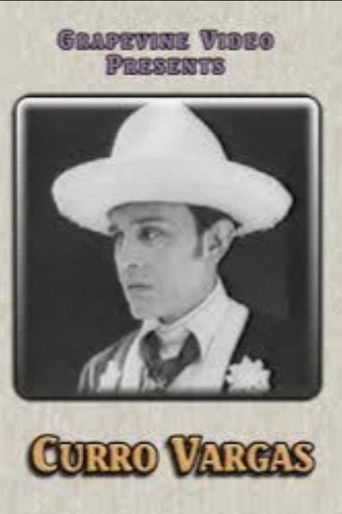
José Buchs was a Spanish film director and screenwriter active during the silent era and the transition to sound, best known for his early feature work in Spanish cinema. He is credited with directing Curro Vargas (1923), one of the titles associated with his surviving filmography and the period in which he was professionally active. Buchs belonged to the generation of filmmakers who helped establish feature-length narrative cinema in Spain before the industry became more standardized in the sound era. Available historical records on his personal life are limited, and many standard biographical details such as exact birth and death dates are not securely documented in widely accessible reference sources. His importance lies less in celebrity status than in his role as part of the foundational cohort of Spanish directors who shaped the nation’s early screen culture. Because documentation from this period is often incomplete, his career is mainly reconstructed through film credits, archival references, and film-history scholarship. He remains a figure of interest for researchers of silent Spanish cinema and early national film production.
More about José Buchs
Behind the camera
José Buchs worked in the silent-era Spanish tradition, where direction emphasized visual storytelling, theatrical staging, and clear melodramatic expression. His surviving credit suggests an orientation toward literary or popular narrative material, likely shaped by the conventions of early 1920s European cinema. As with many directors of his period, his approach would have relied on composed tableau framing, expressive performance direction, and intertitle-driven storytelling rather than later sound-era realism. Specific stylistic traits are difficult to verify in detail because relatively little of his work is easily documented in modern reference sources.
In film history
José Buchs’s cultural impact lies primarily in his place within the first generations of Spanish filmmakers who helped establish a domestic feature-film tradition. Directors of his era were working in a national cinema that was still defining its aesthetic identity, industrial base, and audience expectations, and even a small surviving filmography can represent an important historical contribution. His association with Curro Vargas places him within the broader movement of early Spanish literary and melodramatic adaptation, a key pathway through which silent cinema won cultural legitimacy. Although he is not among the most internationally famous Spanish directors, he remains relevant to historians because every surviving credit from this period helps reconstruct the development of Spain’s silent film industry.
Later reputation
Buchs’s legacy is primarily archival and historiographic rather than celebrity-based: he is remembered as one of the filmmakers who contributed to the foundations of Spanish silent cinema. For film historians, directors like Buchs matter because they illuminate the repertory, production practices, and narrative preferences of a national cinema before full industrial consolidation. His name persists in film databases and historical filmographies as evidence of Spain’s early feature filmmaking activity. Even when little biographical detail survives, the preservation of his credit ensures that he remains part of the documented lineage of classic cinema.
Influence
Direct influence is difficult to trace because of the limited surviving documentation on his work and collaborators. However, as an early Spanish director, Buchs would have been part of the broader professional environment that influenced later generations of Spanish filmmakers by establishing production precedents and cinematic norms. His films contributed to the body of work later directors and scholars could study when defining the roots of Spanish national cinema. In this sense, his influence is historical and structural rather than attributed through a clearly documented mentorship network.
Off screen
Very little reliable information about José Buchs’s personal life is readily available in standard film-reference sources. His family background, marriages, and private life do not appear to be widely documented in the public record. Like many early Spanish silent-era filmmakers, he is better known through his surviving film credits than through biographical archives. As a result, most personal details remain unconfirmed or unavailable in accessible sources.
Credits
- Directed Curro Vargas (1923), the key surviving credited title associated with his name
- Worked in Spanish silent cinema during the formative years of feature-length national production
- Represents an early generation of Spanish filmmakers whose work helped define domestic film culture before the talkie era
- Associated with the historical development of literary and melodramatic screen adaptations in Spain
- Recognized in film-history references as a classic-era Spanish director
Films
- Curro Vargas (1923)
Notes
- José Buchs is chiefly remembered today for a single documented silent-era credit, Curro Vargas (1923).
- He belongs to the early Spanish film industry, a period with sparse and sometimes inconsistent archival records.
- Many classic-era Spanish filmmakers are known only through surviving credits and trade references, and Buchs is one of them.
- His career is a reminder that important early directors were often not internationally famous, even when they contributed meaningfully to national cinema.
- Because his filmography is so limited in standard databases, he is of special interest to researchers of lost or underdocumented silent films.
- The lack of widely available biographical data about Buchs is typical of many European filmmakers from the silent period.
- His surviving recognition comes mainly from film-history catalogs rather than major popular histories or awards records.
Questions
Who was José Buchs?
José Buchs was a Spanish film director associated with the silent era. He is best known in surviving records for directing Curro Vargas (1923), and he is considered part of the pioneering generation of Spanish cinema.
What films is José Buchs best known for?
The key film associated with José Buchs in accessible filmography records is Curro Vargas (1923). Because documentation on his career is limited, this title is the most consistently cited work linked to his name.
When was José Buchs born and when did he die?
His exact birth and death dates are not securely documented in widely accessible reference sources. For that reason, both dates are listed as unavailable in this database entry.
What awards did José Buchs win?
No verified awards or major nominations are widely documented for José Buchs in the available classic-cinema reference record. Early silent-era directors, especially those from smaller or less internationally documented industries, were often not tracked through modern award systems.
What was José Buchs’s directing style?
His directing style can only be inferred from the silent-era Spanish context in which he worked. It likely relied on visual storytelling, expressive staging, and melodramatic presentation, which were standard methods for directors of the period.
What is José Buchs’s legacy in film history?
His legacy is that of an early Spanish silent-film director whose name survives as part of the historical record of national cinema development. Even with limited documentation, his work helps scholars understand the formation of Spain’s feature-film tradition.