Also available on: Archive.org
Curro Vargas

Curro Vargas

1923 Spain
Honor and social reputationClass decline and inherited misfortuneRomantic jealousy and desireProvincial society and local pressureFamily legacy and tragedy

Plot

Set in a small town in Granada in the early nineteenth century, Curro Vargas begins in the aftermath of Juan de Vargas's death, which leaves his son Curro in poverty and social uncertainty. The young man is drawn back into the tangled world of his family's former standing, where class tensions, local gossip, and old obligations shape every relationship. As the story develops, Curro becomes involved in a web of romance, jealousy, and honor shaped by the rigid morals of provincial Spain. The drama builds toward tragic consequences, with personal desire colliding against inherited social pressures and the weight of reputation.

About the Production

Release Date 1923
Production Hispano Films
Filmed In Spain

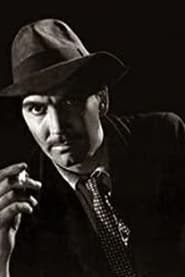
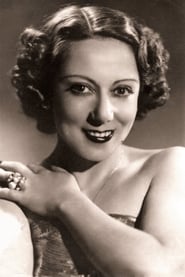
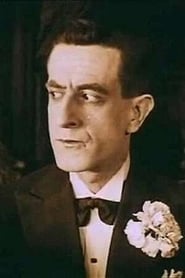
Curro Vargas is a Spanish silent feature directed by José Buchs and adapted from a novel of the same name, which also had a strong life in Spanish literary and theatrical culture. Like many Spanish silent-era productions, detailed production records are sparse, and precise information on budget, shooting schedule, and release strategy has not survived in widely accessible sources. The film was mounted as a prestige literary adaptation, a common approach for Spanish producers in the 1920s seeking to elevate domestic cinema through recognized national material. Surviving documentation confirms the involvement of actors Ricardo Galache, Angelina Bretón, and María Comendador, but detailed credits and technical personnel are not consistently preserved in modern reference sources.

Historical Background

Curro Vargas was made in 1923, during the final years of the silent era and in a Spain still marked by political instability, regional tensions, and strong cultural interest in national identity. Spanish cinema of this period often turned to literary adaptation as a way to compete with imported films and to frame local stories in a form that critics could regard as culturally serious. The setting in nineteenth-century Granada reflects a broader early-twentieth-century fascination with Andalusia as a symbolic space of honor, passion, class distinction, and tradition. As a silent film, it relied entirely on imagery, intertitles, and performance, placing it within a transitional moment before sound reshaped European filmmaking.

Why This Film Matters

The film is significant as part of the effort to build a distinctly Spanish screen culture in the silent period, especially through adaptations of nationally recognizable literature. Its choice of subject reflects a recurring interest in regional identity, social hierarchy, and melodramatic tragedy, all of which were central to Spanish popular and prestige culture of the era. Even though it is not among the most internationally famous Spanish silent films, Curro Vargas represents the kind of literary cinema that helped establish legitimacy for domestic production. It also has value for film historians as evidence of José Buchs's work and for researchers studying how Spanish novels were translated into silent visual narratives.

Making Of

Very little detailed behind-the-scenes information on Curro Vargas survives in commonly accessible modern sources, which is typical for Spanish silent films of the early 1920s. What can be established is that the film was produced during a period when José Buchs was helping shape a commercially viable national cinema through adaptations of familiar literary and historical subjects. The production likely depended on modest studio resources and location work typical of the era, with visual storytelling carrying the burden of complex social and emotional material in the absence of synchronized dialogue. The choice of a rural Andalusian setting and an established novel suggests an effort to appeal to audiences through recognizable regional atmosphere and melodramatic conflict.

Visual Style

No detailed shot-by-shot or stylistic cinematography notes survive in accessible sources, but as a 1923 silent Spanish drama, the film would have depended on expressive framing, intertitles, and heightened performance to convey the emotional stakes of the story. Films of this kind often used static or gently mobile cameras, staged tableaux, and strong contrasts between interior and exterior settings to emphasize social environment and character conflict. The Granada setting would have offered opportunities for atmospheric regional imagery and visual cues associated with rural honor culture. The film's visual style likely aligned with the conventions of early 1920s European melodrama rather than experimental modernism.

Innovations

There are no well-documented technical innovations specifically associated with Curro Vargas. Its significance lies more in its role as a representative silent literary adaptation than in any known formal breakthrough. Like many productions of its time, its craft would have depended on set design, staging, lighting, and actor expressiveness rather than on elaborate camera movement or post-production effects. If any technical materials once existed, they have not been widely cited or preserved in modern reference accounts.

Music

As a silent film, Curro Vargas did not have a synchronized recorded soundtrack. It would have been exhibited with live musical accompaniment in theaters, commonly by a pianist, small ensemble, or local theater orchestra depending on venue and city. No specific original score has been reliably documented in accessible sources. Any music used would have varied by exhibition site unless a special cue sheet or compiled score was created, and such material has not been widely preserved.

Memorable Scenes

  • The opening situation in Granada, following Juan de Vargas's death, establishes the film's atmosphere of loss, poverty, and social uncertainty.
  • Scenes of Curro confronting the forces of provincial reputation and inherited status drive the melodramatic tension.
  • The gradual escalation of romantic and social conflict toward tragedy is the film's central dramatic pattern.

Did You Know?

  • Curro Vargas (1923) is a silent adaptation of a Spanish novel rather than an original screenplay.
  • The film was directed by José Buchs, one of the important Spanish directors of the silent era.
  • The title refers to the central character, Curro Vargas, whose family history and social standing drive the drama.
  • The story is set in Granada, giving the film a distinctly Andalusian regional identity.
  • This is one of many Spanish silent films whose exact runtime and preservation details are difficult to verify because documentation is incomplete.
  • The cast includes Ricardo Galache, Angelina Bretón, and María Comendador, names associated with early Spanish screen acting.
  • Because the film is from 1923, it would have originally been accompanied by live music in theaters rather than synchronized sound.
  • The film belongs to a period when Spanish cinema frequently adapted well-known literary works to attract audiences and critics alike.
  • It should not be confused with later works or stage versions based on the same source material.

What Critics Said

Contemporary critical reception is not well documented in surviving widely cited sources, and detailed reviews from 1923 are difficult to verify. In the broader context of the era, literary adaptations by José Buchs were generally treated as respectable mainstream entertainment, though Spanish silent cinema often struggled for consistent critical preservation compared with later national film movements. Modern evaluation is similarly limited because the film is little discussed outside archival and reference contexts. Today it is primarily of interest to historians, archivists, and researchers of early Spanish cinema rather than to a large critical canon.

What Audiences Thought

Specific box office figures and audience surveys are not available in reliable surviving sources. Given the popularity of literary adaptations in Spain during the silent era, it is reasonable to infer that the film was intended for a broad domestic audience familiar with melodramatic and regional narratives. However, without contemporary trade data or press reporting, its commercial success cannot be stated with confidence. Its present-day audience is largely restricted to scholars, archivists, and enthusiasts of early Spanish silent film.

Film Connections

Influenced By

  • The novel Curro Vargas by the same name
  • Spanish literary melodrama
  • Regional Andalusian stories and traditions common in Spanish theater and prose
  • Silent-era prestige adaptations

This Film Influenced

  • Later Spanish literary adaptations of provincial melodramas
  • Subsequent screen versions and reinterpretations of Curro Vargas material

Film Restoration

No reliable surviving preservation status could be confirmed from widely accessible sources. The film appears to be poorly documented in modern circulation, and it is not commonly listed among restored Spanish silent titles. It may survive only in incomplete archival records or may be considered lost or effectively inaccessible to the general public, but that status cannot be stated with certainty without a specific archive citation.

Themes & Topics

silent filmSpanish literature adaptationGranadamelodramafamily tragedyhonor