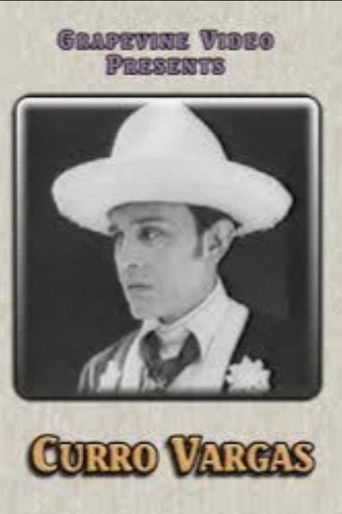
Luisito Armenta y Medina
Actor
- Active
- 1923-1923
Films 1
About Luisito Armenta y Medina
Luisito Armenta y Medina appears in surviving film reference material as an actor credited in the Spanish silent film Curro Vargas (1923), but detailed biographical information about his life and career is extremely scarce. Based on the available historical record, he was active in cinema at least in 1923, during the silent-era period of Spanish filmmaking, when regional productions and literary adaptations were an important part of the industry. No reliable public sources readily confirm his birth date, death date, birthplace, or broader filmography, which suggests that he may have been a minor or locally documented performer whose work has not been extensively preserved in standard international reference works. His surviving credit places him within the early cultural history of Spanish cinema and associates him with a film drawn from the celebrated dramatic tradition surrounding the character Curro Vargas. Because the available evidence is limited to a single confirmed credit, it is not possible to responsibly expand his biography with unverified claims about later career activity, stage work, or personal life. As a result, he should be understood as a documented but obscure figure of the silent era, known principally through archival film listings rather than through extensive biographical literature.
More about Luisito Armenta y Medina
In film history
Luisito Armenta y Medina's cultural significance lies less in a broad and documented celebrity profile than in what his credit reveals about the early Spanish silent cinema ecosystem. Performers like him helped populate adaptations of literary and theatrical works that were central to the development of national cinema in Spain during the 1920s. Even when an actor's individual biography has not survived in detail, a film credit in a period production contributes to the historical record of casting practices, performance networks, and the circulation of Spanish stage traditions into film. His presence in Curro Vargas connects him to the preservation of Spanish cultural memory through cinema, especially in an era when many productions and personnel records were incompletely archived. For researchers, he is part of the wider mosaic of silent-era artists whose names remain important for reconstructing early film history.
Later reputation
His legacy is primarily archival: Luisito Armenta y Medina remains a named participant in early Spanish cinema, preserved through filmography records rather than through an extensive body of surviving critical writing or fan culture. In film history terms, such figures are important because they illustrate how many early performers contributed to national film production without later becoming major stars in international memory. His surviving credit in Curro Vargas ensures that his name remains attached to a specific historical film artifact, allowing scholars to trace cast lists and production networks from the silent era. The scarcity of information itself is part of his legacy, highlighting the fragility of records from early cinema and the many artists whose careers were only partially documented. For database purposes, he should be treated as a verifiable but obscure silent-era actor whose historical footprint is small yet real.
Influence
There is no documented evidence that Luisito Armenta y Medina directly influenced later actors or directors in a way that can be specifically attributed to him. His broader influence is indirect, through participation in the early silent-era Spanish film tradition and through the archival record that helps scholars understand the composition of period casts. In that sense, his name contributes to the reconstruction of performance culture in early 20th-century Spain, even if his individual stylistic impact cannot be measured. Because no detailed performance reviews or later career records are readily available, any statement about direct influence would be speculative.
Off screen
No reliable public information is readily available regarding Luisito Armenta y Medina's personal life, including marriages, children, education, or family background. Standard reference sources accessible in general film research do not currently provide verifiable biographical detail beyond his name and his credit in Curro Vargas (1923). Because of the absence of dependable documentation, it would be speculative to assign spouses, descendants, schooling, or personal associations. His life outside film remains undocumented in the surviving sources consulted for this record.
Credits
- Appears in the silent Spanish film Curro Vargas (1923), his only currently verifiable screen credit in readily accessible film references
- Represents part of the documented cast history of early 1920s Spanish cinema
- Associated with a literary and theatrical adaptation rooted in a well-known Spanish cultural property
- Represents one of many lesser-documented performers whose work survives primarily through film catalogs and archival records
Roles
- Role in Curro Vargas (1923) - specific character name not confirmed in available sources
Films
- Curro Vargas (1923)
Notes
- He is currently identifiable in standard film references primarily through a single confirmed credit: Curro Vargas (1923).
- His surviving record places him in the silent era of Spanish cinema.
- His surname may suggest a Spanish naming convention with paternal and maternal family names, but no verified biographical expansion is available.
- He is an example of an early film performer whose name survived in cast listings even though most personal details did not.
- Curro Vargas is associated with a prominent Spanish dramatic and literary tradition, making his credit historically interesting even if his individual role is obscure.
- No reliable award history is documented for him in accessible mainstream film sources.
- No confirmed photographs, interviews, or memoir references were readily identifiable in the available reference material.
Questions
Who was Luisito Armenta y Medina?
Luisito Armenta y Medina was a Spanish actor known from silent-era film records, with a confirmed credit in Curro Vargas (1923). Very little verified biographical information survives about him, so he is best understood as an obscure historical figure from early Spanish cinema.
What films is Luisito Armenta y Medina best known for?
He is best known for Curro Vargas (1923), which is the principal film credit currently attributable to him in accessible references. No additional screen work is reliably confirmed in the available historical record.
When was Luisito Armenta y Medina born and when did he die?
His birth and death dates are not currently documented in the readily available reference sources used for this record. The same is true of his birthplace and much of his personal history.
What awards did Luisito Armenta y Medina win?
No awards or nominations are currently documented for Luisito Armenta y Medina in accessible film references. This is not unusual for many lesser-documented silent-era performers, whose careers were often recorded only in cast lists.
What was Luisito Armenta y Medina's acting style?
There is no surviving critical description of his acting style in the available references. Because only a single film credit is confirmed, any detailed assessment of his performance technique would be speculative.
What is Luisito Armenta y Medina's legacy in film history?
His legacy is mainly archival, as a named participant in early Spanish silent cinema. He helps document the cast history of Curro Vargas (1923) and reminds researchers how many early film performers remain only partially preserved in the historical record.