Films
1 film
About Norton S. Parker
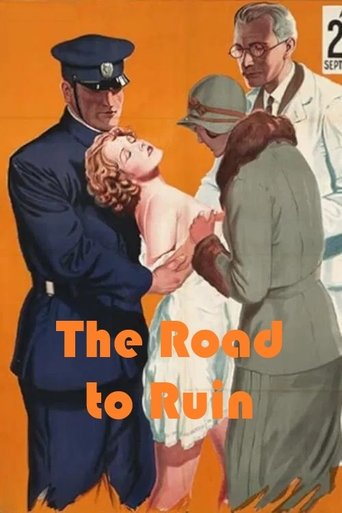
American film director active during the late silent era, best known for his work on exploitation films. His most notable and possibly only directorial credit was 'The Road to Ruin' (1928), a controversial morality tale that addressed taboo subjects of the time including premarital sex and venereal disease. Parker emerged during a period when exploitation films were gaining popularity as they pushed boundaries beyond what mainstream Hollywood would dare to show. His directorial approach was typical of the exploitation genre, combining sensationalism with moral messaging to attract audiences while claiming educational value. Like many directors in this niche market, Parker worked outside the studio system, often with limited budgets and resources. His brief career appears to have been confined to the year 1928, coinciding with the transition from silent films to talkies. While his filmography is minimal, his work represents an important aspect of late 1920s cinema that explored social issues through the lens of exploitation filmmaking.
The Craft
Behind the Camera
Parker's directing style was characteristic of exploitation cinema, employing sensationalist techniques combined with moral messaging. His approach focused on shocking audiences with taboo subjects while maintaining a veneer of educational purpose. Like exploitation directors of his era, he likely used dramatic close-ups, melodramatic performances, and stark visual contrasts to emphasize the supposed dangers of immoral behavior. His films were designed to provoke strong emotional responses while delivering cautionary tales about social ills.
Milestones
- Director of 'The Road to Ruin' (1928)
- Pioneer in exploitation film genre
- Worked during the transition from silent to sound films
Best Known For
Must-See Films
Working Relationships
Studios
Why They Matter
Impact on Culture
Norton S. Parker's work, though limited, contributes to our understanding of the exploitation film genre that flourished in the late 1920s. 'The Road to Ruin' represents the type of independent filmmaking that addressed social issues too controversial for mainstream Hollywood. These films played a significant role in pushing boundaries of what could be shown on screen and often served as precursors to more frank discussions of social problems in later cinema. Parker's work exemplifies how independent filmmakers of the silent era used sensationalism combined with moral messaging to attract audiences while circumventing the restrictions of the Hays Code, which would soon be more strictly enforced.
Lasting Legacy
Norton S. Parker's legacy is primarily preserved through his contribution to the exploitation film genre and the historical documentation of 'The Road to Ruin' as an example of late 1920s independent cinema. While not a well-known figure in film history, his work provides insight into the types of films being produced outside the Hollywood studio system during the transition to sound. His film serves as an important artifact for understanding how social issues were addressed through cinema in the pre-Code era, and how independent filmmakers operated in the shadow of the major studios. The preservation and study of films like 'The Road to Ruin' help film historians understand the full spectrum of cinema available to audiences in the late silent period.
Who They Inspired
As an obscure director from the exploitation genre, Norton S. Parker's direct influence on other filmmakers is difficult to trace. However, his work was part of a broader movement of exploitation filmmaking that would influence later generations of independent and genre filmmakers. The techniques used in films like 'The Road to Ruin' - combining sensationalism with moral messaging - would become hallmarks of exploitation cinema that continued through the decades. His approach to addressing taboo subjects under the guise of education would be emulated by countless exploitation filmmakers who followed.
Off Screen
Very little is known about Norton S. Parker's personal life, as was common for many directors working in the exploitation film industry during the silent era. These filmmakers often operated outside the mainstream studio system and received little press coverage. His brief apparent active years covered only the year 1928, suggesting he may have been a journeyman director who moved on to other professions after his short stint in filmmaking.
Did You Know?
- The Road to Ruin (1928) was considered highly controversial for its time, addressing topics like venereal disease and premarital sex
- Exploitation films like Parker's were often shown in independent theaters rather than major cinema chains
- Many exploitation directors of the era used pseudonyms, making it difficult to track their complete filmographies
- The Road to Ruin was remade in 1934 with sound, indicating the original's commercial success
- Exploitation films of this era often claimed to be educational to avoid censorship
- Parker worked during the pivotal transition year of 1928 when sound films were revolutionizing the industry
- Independent exploitation films often had smaller budgets than studio productions but could be very profitable
- The moral messaging in exploitation films was often contradictory to their sensational content
- Many exploitation directors worked anonymously or with little credit, making historical research challenging
- The genre Parker worked in would eventually evolve into what became known as 'grindhouse' cinema
Frequently Asked Questions
Who was Norton S. Parker?
American on YTB.my.' He worked during the late silent era in the independent film sector, producing controversial content that addressed social issues too taboo for mainstream Hollywood.
What films is Norton S. Parker best known for?
Titles linked here include The Road to Ruin (1928).
When was Norton S. Parker born and when did he die?
Unfortunately, specific birth and death dates for Norton S. Parker are not documented in available historical records, which is common for many directors who worked in the exploitation film industry outside the mainstream studio system during the silent era.
What awards did Norton S. Parker win?
Norton S. Parker did not receive any known awards or nominations for his work. Like many exploitation film directors of his era, he operated outside the mainstream film industry and his work was not recognized by major film organizations or award bodies.
What was Norton S. Parker's directing style?
Parker's directing style was typical of exploitation cinema, using sensationalist techniques combined with moral messaging. His approach focused on shocking audiences with taboo subjects while maintaining an educational veneer, employing melodramatic performances and stark visual contrasts typical of the genre.
What is the significance of 'The Road to Ruin' in film history?
'The Road to Ruin' is significant as an example of late 1920s exploitation cinema that addressed social issues too controversial for mainstream Hollywood. The film represents the independent filmmaking sector that pushed boundaries and influenced later generations of genre filmmakers, while providing insight into pre-Code era cinema.
Why is so little known about Norton S. Parker?
The scarcity of information about Parker reflects the nature of exploitation filmmaking in the silent era. These directors often worked anonymously, with minimal documentation, outside the studio system, and their films were not preserved or documented as carefully as mainstream productions.