
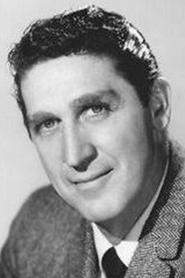
Peter Leeds
Actor
Born: May 30, 1917 in Bayonne, New Jersey, USA Died: November 12, 1996 Active: 1941-1996 Birth Name: Milton Lieberman
Films
1 film
About Peter Leeds
Prolific American character actor: over five decades, primarily by his remarkable versatility as a 'straight man' to comedians. Born Milton Lieberman in Bayonne, New Jersey, he initially pursued a legal career on a scholarship at John Marshall Law School before his passion for the arts led him to the Neighborhood Playhouse and the Group Theater in New York. Leeds made his professional debut on Broadway in 1939 and transitioned to film in 1941 with a role in 'Public Enemies.' Over the course of his career, he achieved the staggering feat of appearing in more than 8,000 television episodes, becoming recognizable faces of the Golden Age of Television. He was a mainstay in the variety show era, frequently supporting icons like Bob Hope, Jack Benny, and Lucille Ball. Beyond his on-screen work, Leeds — dedicated union leader, serving as the president of the Los Angeles chapter of AFTRA and contributing significantly to the USO through fourteen international tours.
The Craft
On Screen
Leeds was the quintessential 'straight man,' a role that required impeccable timing, a deadpan delivery, and the ability to react naturally to the chaotic antics of lead comedians. His style was grounded and professional, allowing the stars he worked with to shine while providing a necessary anchor for the comedy. He was equally adept at dramatic roles, often portraying authoritative figures, detectives, or white-collar professionals with a believable, understated gravitas.
Milestones
- Appeared in over 8,000 television episodes throughout his career.
- Served as the President of the Los Angeles chapter of AFTRA (1971–1976).
- Accompanied Bob Hope on 14 international USO tours to entertain troops.
- Regular performer on the critically acclaimed 'The Stan Freberg Show' on radio.
- Recipient of the AFTRA Gold Card in 1991 for his lifelong service to the union.
- Featured in the pilot for 'The Untouchables' (The Scarface Mob) as LaMarr Kane.
Best Known For
Iconic Roles
Must-See Films
Accolades
Won
- AFTRA Gold Card (1991)
Nominated
- Grammy Award Nomination for Best Spoken Word Album (1959) - as part of the cast of 'The Best of the Stan Freberg Shows'
Special Recognition
- President of the Los Angeles Chapter of AFTRA
- Board of Governors for the Academy of Television Arts & Sciences
- Board of Directors for the USO
Working Relationships
Worked Often With
Studios
Why They Matter
Impact on Culture
Peter Leeds represents the backbone of the Golden Age of Hollywood and television: the reliable character actor. His ability to facilitate comedy as a straight man helped define the rhythm of mid-century American humor. By appearing in over 8,000 television segments, he became a constant presence in American households, bridging the gap between radio's golden era and the rise of the sitcom and variety show.
Lasting Legacy
Leeds is remembered as. His legacy is preserved not only in his massive filmography but also in his advocacy for actors' rights through AFTRA. He is often cited by historians as the ultimate example of the 'working actor' who maintained a high-level career through talent, reliability, and technical precision.
Who They Inspired
His technical mastery of the 'straight man' archetype influenced generations of comedic supporting actors. He demonstrated that a supporting player could be just as essential to a scene's success as the lead, influencing the casting standards for variety television and ensemble sitcoms.
Off Screen
Leeds was married to Patricia 'Pat' Leeds for 34 years, from 1962 until his death in 1996. He was a devoted family man and was survived by his wife, his son Dr. Michael Leeds, and a granddaughter. Outside of his acting career, he was deeply involved in Jewish community organizations, notably serving as Vice President of the Eddie Cantor Lodge of B'nai B'rith.
Education
Attended John Marshall Law School (one year); Trained at the Neighborhood Playhouse School of the Theatre; Graduated from the Group Theater of New York on a scholarship.
Family
- Patricia Leeds (1962-1996)
Did You Know?
- He estimated he had appeared in over 8,000 television shows and 3,000 radio broadcasts.
- He was a frequent voice actor for Hanna-Barbera, including roles in 'The Jetsons.'
- Leeds was the original choice for the role of the federal agent in 'The Untouchables' series but was replaced after the pilot.
- He was a skilled magician and often performed for friends and colleagues.
- He appeared in three different episodes of 'Perry Mason,' playing a different character each time.
- He was a veteran of the Broadway stage, appearing with Mickey Rooney in the long-running hit 'Sugar Babies.'
- He died of cancer in Los Angeles at the age of 79.
In Their Own Words
Working as a straight man is like being a catcher in baseball; you have to handle whatever the pitcher throws at you and make it look easy.
I've worked with them all, from Benny to Hope, and the secret was always the same: listen and react.
Frequently Asked Questions
Who was Peter Leeds?
Highly prolific American character with credits in this catalog. He was most famous for serving as the 'straight man' to legendary comedians like Bob Hope and Jack Benny.
What films is Peter Leeds best known for?
Titles linked here include High School Big Shot (1959), The Last Time I Saw Paris (1954).
When was Peter Leeds born and when did he die?
Born May 30, 1917; died November 12, 1996.
What awards did Peter Leeds win?
While he did not win an Oscar, he received the AFTRA Gold Card in 1991, the union's highest honor, for his extensive service and leadership in the acting community.
What was Peter Leeds's acting style?
Leeds excelled in the 'straight man' technique, utilizing a deadpan and professional demeanor to contrast with the zany behavior of lead comics. He was also a versatile dramatic actor capable of playing serious authority figures.