High School Big Shot
"Smart kid — wrong girlfriend"
Keys: Space play/pause · ←/→ 10s · F fullscreen · M mute · </> speed
About this film
High-school outcast Marvin writes papers for vamp Betty until cheating scandal traps them in robbery plot. High School Big Shot (1959) is poverty-row teen-crime melodrama.
Cast & crew
More Crime films
View all →

More about this film
About the production
Release dateJune 21, 1959
BudgetEstimated at under $50,000 (Low-budget independent production)
ProductionSparta Productions, The Filmgroup
Filmed inLos Angeles, California, USA
The film was produced by Stanley Bickman and executive produced by Roger Corman, serving as one of the first releases for Corman's new distribution company, The Filmgroup. It was originally filmed in 1958 under the working title 'Blood Money' before being retitled for its 1959 release. The production was a 'quickie' shoot, typical of the era's exploitation cinema, designed to fill the bottom half of drive-in double features. It was paired with 'T-Bird Gang' (1959) for its theatrical run.
Themes
The corrupting influence of greedClass struggle and social mobilityThe 'Femme Fatale' and male vulnerabilityAlcoholism and its impact on the familyThe burden of high intelligence in a conformist society
Themes & topics
heisthigh school studentalcoholic fatherfemme fatalecheatingscholarshipsafecrackerbetrayalmillion dollar robberyjuvenile delinquent
Historical background
High School Big Shot (1959) belongs to late-1950s juvenile delinquency B-pictures for drive-ins.
Why this film matters
Teen exploitation cycle fed later cult reappraisal through television syndication.
Making of
The production was a hallmark of Roger Corman's early efficiency. Corman reportedly financed the film because he was impressed by Tom Pittman's acting ability, seeing him as a potential rising star in the vein of James Dean. The film was shot on a shoestring budget using many of the same crew members Corman utilized for his own directorial efforts. Because of the limited budget, many scenes were shot in real locations around Los Angeles with minimal lighting setups, contributing to the film's gritty, noir-like aesthetic. The tragic death of Tom Pittman before the film's release cast a somber shadow over its promotion, as he was considered the production's greatest asset.
What critics said
Reviews were nil; MST-era fans treat it as earnest poverty-row time capsule.
Did you know?
- Lead actor Tom Pittman died in a car accident in October 1958, shortly after filming was completed; the film was released posthumously.
- The film was featured in a 1994 episode of Mystery Science Theater 3000 (Season 6, Episode 18).
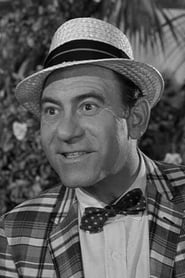
- Stanley Adams, who plays the safecracker Harry March, is best known to sci-fi fans as Cyrano Jones, the tribble merchant from the Star Trek episode 'The Trouble with Tribbles'.
- The film's plot structure and heist mechanics are frequently cited by critics as being heavily influenced by Stanley Kubrick's 1956 noir 'The Killing'.
- Director Joel Rapp was the son of Philip Rapp, a well-known radio and television writer (The Bickersons).
- Despite being marketed as a 'juvenile delinquent' film, it features a surprisingly bleak and nihilistic ending where almost every major character dies or faces total ruin.
- The film's score was composed by Gerald Fried, who later became a prolific television composer for series like 'Star Trek' and 'The Man from U.N.C.L.E.'
- Virginia Aldridge, who played the femme fatale Betty, had a brief career in the late 50s and early 60s, appearing in 'The Donna Reed Show' and 'Father Knows Best'.
Visual style
The film was shot in black and white by John M. Nickolaus Jr. in a 1.37:1 aspect ratio. It employs a stark, low-key lighting style reminiscent of classic film noir, which helps mask the low production budget and enhances the film's bleak, urban atmosphere. The use of real-world locations like the shipping docks adds a layer of realism often missing from studio-bound B-movies of the era.
Innovations
The film is noted for its efficient use of limited resources, particularly in the staging of the safe-cracking sequence which manages to build genuine tension despite the lack of expensive special effects or elaborate sets.
Music
The score by Gerald Fried is a notable highlight, utilizing a jazzy, brass-heavy sound typical of 1950s crime dramas. The music emphasizes the tension of the heist and the emotional instability of the protagonist, providing a professional polish to an otherwise low-budget production.
Famous quotes
Harry March: 'I am a thief, not a crook.'
Marv Grant: 'All my life my brains have been sort of a curse. Now maybe I can make it pay off for everybody.'
Betty Alexander: 'I want to throw diamonds and furs in his face!'
Mr. Carter: 'I hope you understand that I'll have to fail you for this, Betty. As far as you're concerned, Marv... I am going to withdraw my recommendation for the scholarship.'
Memorable scenes
- The classroom scene where Marv and Betty are confronted by their teacher over the cheated term paper, marking the turning point of Marv's life.
- The meticulously planned warehouse heist where Marv's 'genius' is put to the test alongside professional criminals.
- The bleak final sequence where Marv discovers his father has committed suicide while he was attempting the robbery, ending the film on a note of total despair.
What audiences thought
Contemporary audiences primarily saw the film at drive-ins as part of a double bill. Today, it is mostly known through the lens of MST3K, where it is enjoyed for its 'hilariously bad' moments—such as the protagonist's overly dramatic 'genius' persona—while still being recognized as one of the more competent and depressing films the show ever covered.
Film connections
Influenced by
- The Killing (1956)
- Rebel Without a Cause (1955)
- The Asphalt Jungle (1950)
This film influenced
- Reservoir Dogs (1992) - (Indirectly through the lineage of the 'failed heist' subgenre)
Film restoration
The film is in the public domain. It has been released on various budget DVD collections and was restored/remastered for its release as part of the MST3K Shout! Factory DVD sets.
Where to watch
- Amazon Prime Video
- Tubi (Free with ads)
- YouTube (Public Domain uploads)
- The Roku Channel
- Shout! Factory TV (MST3K version)