
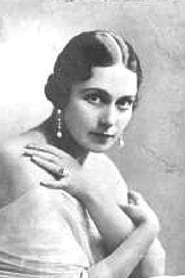
Stella Arbenina
Actor
Born: 1885 in St. Petersburg, Russian Empire Died: 1976 Active: 1922-1922 Birth Name: Stella Hoyer
Films
1 film
About Stella Arbenina
Made her mark in European cinema during the silent era, particularly in German films of the early 1920s. Born into Russian aristocracy, she fled her homeland following the Bolshevik Revolution and eventually found her way to Germany, where she entered the film industry. Her most notable work came in 1922 when she appeared in F.W. Murnau's acclaimed silent drama 'The Burning Soil' (Der brennende Acker), which showcased her dramatic talents to European audiences. Despite her promising debut and aristocratic bearing that suited the melodramatic style of silent cinema, her film career remained brief, spanning only the year 1922. Following her short stint in acting, she largely disappeared from the public eye and historical records, making her one of cinema's more enigmatic figures from the silent era. Her legacy endures primarily through her connection to Murnau's work and the fascinating story of a Russian noblewoman who briefly graced the silver screen during one of cinema's most transformative periods.
The Craft
On Screen
Classical dramatic style suited for silent era melodrama, with aristocratic bearing and expressive gestures typical of early 1920s European cinema
Milestones
- Appeared in F.W. Murnau's 'The Burning Soil' (1922)
- Transition from Russian nobility to European film actress
- Represented the wave of Russian émigré artists in European cinema
Best Known For
Iconic Roles
Must-See Films
Working Relationships
Worked Often With
Studios
Why They Matter
Impact on Culture
Stella Arbenina represents the fascinating intersection of Russian aristocracy and early European cinema, embodying the wave of Russian émigrés who contributed to the arts in exile following the Revolution. Her appearance in a Murnau film places her within the context of German Expressionist cinema's golden age, though her brief career means her direct impact was limited. She serves as an example of how political upheaval displaced talented individuals who might otherwise have had more substantial artistic careers.
Lasting Legacy
Though her filmography consists of only known work from 1922, Stella Arbenina's legacy endures through her connection to F.W. Murnau's 'The Burning Soil' and her representation of Russian émigré artists in European cinema. She remains a subject of interest for film historians studying the contributions of Russian actors to German silent films and the broader story of aristocratic refugees who found brief moments of artistic expression in cinema.
Who They Inspired
Due to her brief career, direct influence on other actors or filmmakers is difficult to trace, though she participated in the German Expressionist film movement that would later influence cinema worldwide. Her story serves as inspiration for understanding the personal costs of political upheaval on artistic careers.
Off Screen
Born into Russian aristocracy, Stella Arbenina fled her homeland following the 1917 Russian Revolution along with many other nobles and intellectuals. She eventually settled in Germany where she briefly pursued a career in silent cinema before largely disappearing from public records. Her life represents the tragic displacement of Russian nobility during the early 20th century and their attempts to rebuild lives in exile.
Education
Information not available, likely received aristocratic education typical of Russian nobility
Family
- Information not available
Did You Know?
- Born into Russian aristocracy before the 1917 Revolution
- Fled Russia following the Bolshevik takeover
- Her entire known film active years covered only one year (1922)
- Appeared in a film by legendary director F.W. Murnau
- Part of the wave of Russian émigré artists in 1920s Europe
- Her birth name was reportedly Stella Hoyer
- Lived to age 91, outlasting the silent era by decades
- Her story represents the lost potential of many displaced artists
- The Burning Soil was one of Murnau's early major works
- Like many silent era actors, her voice and speaking style remain unknown
In Their Own Words
No documented quotes available from interviews or public appearances
Frequently Asked Questions
Who was Stella Arbenina?
Screen credits include European silent films, most notably in F.W. Murnau's 1922 film 'The Burning Soil'. She was part of the wave of Russian émigrés who fled their homeland following the 1917 Revolution and briefly pursued careers in European arts and cinema.
What films is Stella Arbenina best known for?
Titles linked here include The Burning Soil (1922).
When was Stella Arbenina born and when did she die?
Born 1885; died 1976.
What awards did Stella Arbenina win?
There are no documented awards or nominations for Stella Arbenina, which was not uncommon for actors in the early 1920s, especially those with brief careers. The major film award systems had not yet been established during her active period.
What was Stella Arbenina's acting style?
Based on her appearance in a Murnau film and the period, Stella Arbenina likely employed the dramatic, expressive style typical of silent era actors, with exaggerated gestures and facial expressions to convey emotion without dialogue. Her aristocratic background would have contributed to her screen presence.