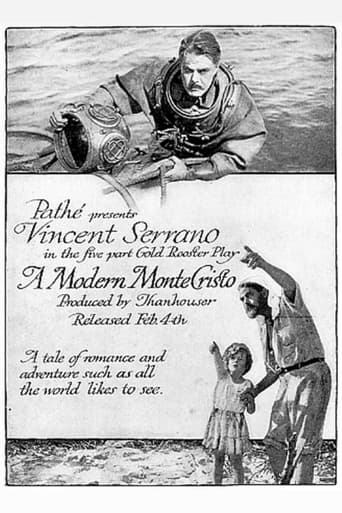

Films
2 films
About Eugene Moore
American film director active during the silent era, best known for his 1917 adaptation of 'A Modern Monte Cristo.' Working early American cinema, Moore contributed to the burgeoning film industry at a time when feature films were becoming increasingly sophisticated. His directorial work on 'A Modern Monte Cristo' demonstrated the era's fascination with literary adaptations, particularly classic tales reimagined for contemporary audiences. The film itself was part of a wave of Monte Cristo adaptations that were popular in the 1910s, showcasing the enduring appeal of Alexandre Dumas' revenge narrative. Moore's career appears to have been brief, with his known directorial work concentrated in 1917, which was not uncommon for many early filmmakers who either moved into other aspects of the industry or left filmmaking altogether. His work represents the transitional period in American cinema when directors were experimenting with narrative techniques and visual storytelling methods that would define the silent era's golden age.
The Craft
Behind the Camera
As a director during the silent era, Eugene Moore likely employed the visual storytelling techniques characteristic of the period, including expressive intertitles, dramatic lighting, and exaggerated physical performances to convey emotion without dialogue. His adaptation of 'A Modern Monte Cristo' suggests a focus on narrative clarity and dramatic pacing typical of early feature films.
Milestones
- Directed 'A Modern Monte Cristo' (1917)
- Contributed to silent era literary adaptations
Best Known For
Must-See Films
Why They Matter
Impact on Culture
Eugene Moore's contribution to cinema, though brief, represents the broader trend of literary adaptations during the silent era. His work on 'A Modern Monte Cristo' was part of a significant movement in early American cinema that brought classic literature to the silver screen, helping to establish film as a legitimate artistic medium capable of handling complex narratives. The early 1910s saw numerous adaptations of literary works, and directors like Moore played a role in bridging the gap between traditional literature and the emerging art form of cinema.
Lasting Legacy
While Eugene Moore's directorial career appears to have been limited to 1917, his work exemplifies the transitional period in American film history when directors were developing the language of cinema. His adaptation of 'A Modern Monte Cristo' is often cited to the silent era's ambition to tackle complex literary narratives, contributing to the foundation that later filmmakers would build upon. Though not a widely recognized figure in film history, Moore represents the hundreds of early filmmakers who helped shape the nascent film industry.
Who They Inspired
Given the brevity of his known career, Eugene Moore's direct influence on subsequent filmmakers appears limited. However, his work in adapting classic literature for the screen was part of a broader movement that established important precedents for cinematic storytelling. The techniques and approaches developed during this period by directors like Moore influenced how future generations would approach literary adaptations in film.
Off Screen
Very little is documented about Eugene Moore's personal life, which is not uncommon for directors from the early silent era who had brief careers in the film industry. Many filmmakers from this period left minimal personal records, especially those who worked outside the major studio system or had short-lived careers in motion pictures.
Did You Know?
- A Modern Monte Cristo was one of several film adaptations of Alexandre Dumas' famous novel during the silent era
- 1917 was a pivotal year in American cinema, marking the transition from short films to feature-length productions
- The film was produced during World War I, a period that saw significant changes in the American film industry
- Silent era directors often had to work with limited resources and primitive technology compared to later periods
- Literary adaptations were extremely popular during the 1910s as they provided familiar stories to audiences
- Many directors from this period remain obscure due to incomplete records and the loss of many silent films
- The year 1917 saw the establishment of several film companies that would later become major studios
- Directors in the silent era had to rely heavily on visual storytelling techniques without the benefit of synchronized sound
Frequently Asked Questions
Who was Eugene Moore?
American on YTB.my.' His career appears to have been brief, with his known directorial work concentrated in that single year.
What films is Eugene Moore best known for?
Titles linked here include A Modern Monte Cristo (1917).
When was Eugene Moore born and when did he die?
Specific birth and death dates for Eugene Moore are not well-documented, which is common for many early filmmakers from the silent era who had brief careers in the industry.
What awards did Eugene Moore win?
There are no recorded awards or honors for Eugene Moore, which is not unusual for directors from the early silent era when formal award systems in cinema were not yet established.
What was Eugene Moore's directing style?
As a silent era director, Moore likely employed visual storytelling techniques including expressive intertitles, dramatic lighting, and physical performances to convey emotion without dialogue, typical of filmmakers working during this transitional period in cinema.