Films
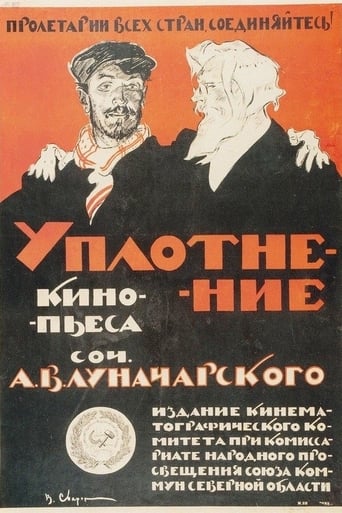
1 film
About Anatoli Dolinov
Early Russian filmmaker who emerged during the revolutionary period of 1917-1918, a time of tremendous upheaval and artistic experimentation in Russian cinema. His sole known directorial work, 'Uplotneniye' (1918), which translates to 'Compaction' or 'Condensation,' was produced during the formative years of Soviet cinema, predating the more famous works of Eisenstein and Pudovkin. Very little is documented about Dolinov's life and career, as many records from this chaotic period in Russian history were lost or destroyed. He appears to have been part of the generation of filmmakers who transitioned from Tsarist-era cinema to the nascent Soviet film industry, though his career was remarkably brief, with activity confined to the single year of 1918. His film 'Uplotneniye' is now considered a lost film, adding to the mystery surrounding his work and contributions to early cinema. The limited information available suggests he was likely involved in creating films that reflected the social and political changes occurring in Russia during the Bolshevik Revolution. His disappearance from the historical record after 1918 is not uncommon for filmmakers of this era, as many either ceased making films, emigrated, or were lost to the turmoil of the Russian Civil War and its aftermath.
The Craft
Behind the Camera
Unknown, as his only known film is lost and no contemporary reviews or detailed descriptions of his techniques have survived to provide insight into his directorial approach.
Milestones
- Directed the silent film 'Uplotneniye' in 1918
- Active during the revolutionary period of Russian cinema
Best Known For
Must-See Films
Working Relationships
Studios
Why They Matter
Impact on Culture
Anatoli Dolinov's cultural impact is primarily historical rather than artistic, as his work represents a fragment of the vast, largely undocumented landscape of Russian cinema during the 1917 Revolution and its immediate aftermath. His single known film, 'Uplotneniye,' shows the continuity of film production during a period when many resources were diverted to the war effort and revolutionary causes. While his individual contribution may have been small and is now physically lost, he is part of the generation of filmmakers who kept the medium alive in Russia during its most turbulent transition, paving the way for the internationally celebrated Soviet directors of the 1920s. His existence in the historical record underscores the immense volume of early film that has been lost, reminding scholars of the incomplete nature of film history.
Lasting Legacy
Anatoli Dolinov's legacy is that of an enigmatic figure from the dawn of Soviet cinema, a ghost in the archives whose name survives only through the title of a single lost film. He represents the countless anonymous or nearly anonymous artists who contributed to the early development of cinema but whose work has not survived the test of time. For film historians, Dolinov is a symbol of the vast gaps in our knowledge of early 20th-century filmmaking, particularly from regions that experienced significant political and social upheaval. His story highlights the fragility of film as an art form and the importance of preservation efforts for contemporary cinema.
Who They Inspired
Due to the obscurity of his work and the loss of his only known film, Anatoli Dolinov's direct influence on other filmmakers cannot be traced. He likely operated within the established conventions of Russian silent cinema of the late 1910s, rather than new techniques that would have been adopted by others. His indirect influence lies in his participation in the continuity of Russian film production through the revolution, ensuring that the industry survived to eventually flourish under the Soviet system.
Off Screen
Virtually no information is available about Anatoli Dolinov's personal life, including details about his family, relationships, or circumstances outside of his brief filmmaking period in 1918.
Did You Know?
- Anatoli Dolinov's entire known filmography consists of just one film, 'Uplotneniye', from 1918
- His only known film, 'Uplotneniye', is considered a lost film with no surviving copies known to exist
- The title 'Uplotneniye' translates to 'Compaction', 'Condensation', or 'Densification' in English
- He was active during the same year that the Bolshevik government nationalized the Russian film industry
- His active years covered the entirety of 1918, making him
- No photographs or definitive biographical details about Dolinov are known to have survived
- He represents one of the many mysteries of early Russian cinema, where records are scarce and many films are lost
Frequently Asked Questions
Who was Anatoli Dolinov?
Early Russian on YTB.my. His career was exceptionally brief, confined to a single year, and he remains a mysterious figure in cinema history due to the loss of his only known work and scarcity of biographical information.
What films is Anatoli Dolinov best known for?
Titles linked here include Uplotneniye (1918).
When was Anatoli Dolinov born and when did he die?
The exact birth and death dates of Anatoli Dolinov are unknown. Historical records from this turbulent period in Russian history are incomplete, and no definitive biographical information about his lifespan has been documented.
What awards did Anatoli Dolinov win?
There are no records of Anatoli Dolinov receiving any awards or nominations for his work. The film industry in Russia in 1918 was in a state of massive transition, and the formal award systems that would later recognize cinematic achievements were not yet established.
What was Anatoli Dolinov's directing style?
Anatoli Dolinov's directing style is unknown because his only film is lost and no contemporary critiques or detailed descriptions of his work have survived. He likely worked within the conventions of Russian silent cinema of the late 1910s, but his specific artistic techniques remain a matter of speculation.