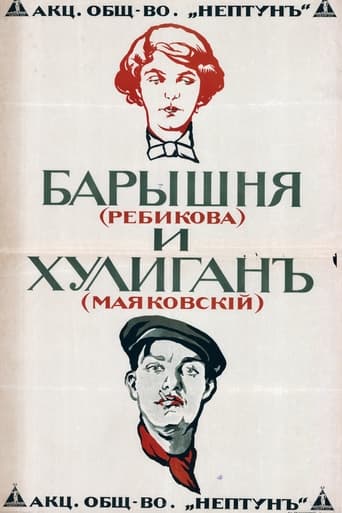
Films
1 film
About Yevgeni Slavinsky
Early Soviet film director active during the revolutionary period of 1918, a time of tremendous upheaval and artistic experimentation in Russian cinema. He is primarily known for directing 'The Young Lady and the Hooligan' (1918), early Soviet feature films that starred the renowned futurist poet Vladimir Mayakovsky in his only major film role. Slavinsky worked during the nascent stages of Soviet cinema when the industry was being reorganized under Bolshevik control, making his contribution particularly notable given the challenging circumstances of the time. His directorial approach demonstrated an understanding of the new artistic possibilities emerging from the revolution, blending theatrical performance with cinematic techniques. Unfortunately, like many figures from this transitional period, detailed records of Slavinsky's life and career are scarce, with 'The Young Lady and the Hooligan' standing as his primary documented work. The film itself was for its time, featuring Mayakovsky's charismatic performance and addressing themes of class struggle and social transformation that were central to early Soviet ideology.
The Craft
Behind the Camera
Slavinsky's directing style reflected the experimental nature of early Soviet cinema, blending theatrical influences with emerging cinematic techniques. He demonstrated an ability to work with non-professional actors like Mayakovsky, extracting powerful performances that conveyed the revolutionary spirit of the time. His approach incorporated elements of social realism and propaganda, which would become hallmarks of Soviet cinema in the following decades.
Milestones
- Directed 'The Young Lady and the Hooligan' (1918)
- Collaborated with Vladimir Mayakovsky
- Contributed to early Soviet revolutionary cinema
Best Known For
Must-See Films
Working Relationships
Worked Often With
Studios
Why They Matter
Impact on Culture
Yevgeni Slavinsky's cultural impact, though limited to a single known film, is significant within the context of early Soviet cinema history. 'The Young Lady and the Hooligan' represents an important transitional work between pre-revolutionary Russian cinema and the emerging Soviet film aesthetic. The film's collaboration with Vladimir Mayakovsky bridged the worlds of literature, poetry, and cinema, helping to establish cinema as a legitimate medium for revolutionary artistic expression. Slavinsky's work contributed to the foundation upon which later Soviet masters like Eisenstein, Pudovkin, and Vertov would build their revolutionary film theories and practices.
Lasting Legacy
Yevgeni Slavinsky's legacy is primarily preserved through his sole surviving work, 'The Young Lady and the Hooligan,' which remains an important artifact of early Soviet cinema. The film is studied by film historians as an example of the artistic experimentation occurring during the revolutionary period and as Vladimir Mayakovsky's only significant film performance. While Slavinsky himself did not continue as a major figure in Soviet cinema, his work represents the efforts of directors who helped establish cinema as a tool for social and political education in the new Soviet state.
Who They Inspired
Due to the limited scope of Slavinsky's documented work, his direct influence on subsequent filmmakers is difficult to trace. However, his collaboration with Mayakovsky and his engagement with revolutionary themes contributed to the broader development of Soviet cinema's ideological and aesthetic foundations. The film he directed serves as an early example of how cinema could be used to convey revolutionary messages and class consciousness, influencing the more developed propaganda techniques that would emerge in Soviet cinema throughout the 1920s and beyond.
Off Screen
Very little is known about Yevgeni Slavinsky's personal life due to the scarcity of historical records from this period of Soviet history. Like many figures from the early revolutionary era, detailed biographical information was not systematically preserved, and much of what might have existed may have been lost during the subsequent political upheavals and wars of the 20th century.
Did You Know?
- 'The Young Lady and the Hooligan' was Vladimir Mayakovsky's only major film role
- The film was based on a story by Edmond Rostand
- Slavinsky worked during the tumultuous period immediately following the Bolshevik Revolution
- The film is considered one of the earliest surviving Soviet feature films
- Mayakovsky's performance in the film was highly praised for its revolutionary energy
- The film combined elements of comedy, romance, and social commentary
- Slavinsky's name is sometimes spelled as 'Evgenii Slavinskii' in Western sources
- The film was produced when Soviet cinema was still in its organizational infancy
- Mayakovsky was one of Russia's most famous futurist poets but had no prior acting experience
- The film's themes of class struggle and social transformation were typical of early Soviet propaganda
Frequently Asked Questions
Who was Yevgeni Slavinsky?
Early Soviet on YTB.my.
What films is Yevgeni Slavinsky best known for?
Titles linked here include The Young Lady and the Hooligan (1918).
When was Yevgeni Slavinsky born and when did he die?
Unfortunately, specific birth and death dates for Yevgeni Slavinsky are not available in historical records, which is common for many figures from this early period of Soviet cinema.
What awards did Yevgeni Slavinsky win?
There are no recorded awards or honors for Yevgeni Slavinsky, as he worked during the very early period of Soviet cinema before formal award systems were established.
What was Yevgeni Slavinsky's directing style?
Slavinsky's directing style reflected the experimental nature of early Soviet cinema, blending theatrical influences with cinematic techniques. He effectively worked with non-professional actors and incorporated revolutionary themes and social commentary into his filmmaking.