The Young Lady and the Hooligan
"Schoolmistress tames a classroom of unruly men"
Keys: Space play/pause · ←/→ 10s · F fullscreen · M mute · </> speed
About this film
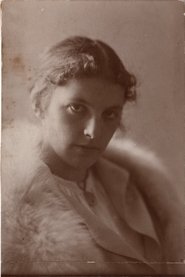
A young woman arrives in her school where she must teach for the first time. Her task consists in teaching a class of adults to read and write. All her students are male, ranging from boys to old men, and they are rather rowdy and difficult.
Cast & crew
More films like this
More Drama films
View all →







More about this film
About the production
Release dateOctober 1918
ProductionNeptun Film Company
Filmed inMoscow, Russia
Filmed during the tumultuous period of the Russian Civil War, the production faced numerous challenges including limited resources, film shortages, and political instability. The film was shot on location in Moscow during 1918, a time when the city was experiencing severe food shortages and political upheaval. Director Yevgeni Slavinsky had to work with extremely limited film stock and equipment, often having to reuse and recycle materials. The production was one of the first to continue operating after the Bolshevik Revolution, navigating the new Soviet film policies.
Themes
Education and literacyClass dynamicsRevolutionary transformationRomantic passionSocial morality
Themes & topics
teacherilliteracyclassroomlove declarationsocial conflictdeathkissredemptionviolenceRussian Revolutionpoetryeducationclass strugglemortalityemotional transformation
Historical background
Made during the studio era of 1918, The Young Lady and the Hooligan reached audiences through theatrical programs, fairground booths, or specialized distribution channels typical of its generation. A young woman arrives in her school where she must teach for the first time. Her task consists in teaching a class of. Historians now read such works for what they reveal about production methods, national taste, and the expanding vocabulary of screen narrative.
Why this film matters
Archivists and programmers still screen The Young Lady and the Hooligan when tracing how popular entertainment evolved. Its subject—a young woman arrives in her school where she must teach for the first time. her task consists in—gives later viewers tangible evidence of what drew crowds in the silent period. Home video, restorations, and festival sidebars keep the title circulating among students of film history.
Making of
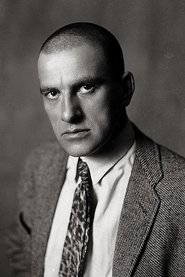
The production of 'The Young Lady and the Hooligan' took place under extraordinary circumstances during among the leading turbulent periods in Russian history. The film was shot in Moscow in 1918, while the city was besieged by various political factions and experiencing severe shortages of food, electricity, and basic supplies. Director Yevgeni Slavinsky had to navigate not only the technical challenges of filmmaking during wartime but also the rapidly changing political landscape as the Bolsheviks consolidated power. Vladimir Mayakovsky, though primarily known as a poet, brought his revolutionary artistic sensibility to the project, writing the scenario and delivering a performance that embodied the raw, passionate energy of the futurist movement. The cast and crew often worked in unheated studios during the harsh Russian winter, and film stock was so precious that multiple takes were rarely possible. Despite these hardships, the production team managed to create a film that captured the social and emotional tensions of the revolutionary era, with Mayakovsky's intense performance becoming particularly memorable for its authenticity and emotional power.
What critics said
Original trade coverage treated The Young Lady and the Hooligan as routine program filler rather than a landmark production—common for shorts. Later criticism emphasizes preservation, stylistic comparison with contemporaries, and whatever cast or crew names later gained prominence. Contemporary writing is mostly historical: assessing completeness, influence, and place in a director's or studio's catalog.
Did you know?
- This film marked the only starring role for Russian poet Vladimir Mayakovsky, who was primarily known for his revolutionary poetry and futurist art rather than acting.
- Mayakovsky wrote the scenario for the film himself, adapting it from a story by American writer Jack London, demonstrating his versatility across artistic mediums.
- The film was produced by the Neptun Film Company, which was one of the few private film companies allowed to operate briefly after the Bolshevik Revolution before being nationalized.
- Vladimir Mayakovsky's distinctive physical appearance - his tall stature and intense gaze - made him an unconventional but compelling screen presence in the role of the hooligan.
- The film was shot during the height of the Russian Civil War, making it one of the rare cinematic productions from this extremely turbulent period in Russian history.
- Director Yevgeni Slavinsky was a pioneering figure in early Russian cinema who later became an important director in the Soviet film industry.
- The film's theme of education and social transformation aligned with early Soviet ideals about creating a new, educated proletariat society.
- Only incomplete prints of the film survive today, with some scenes missing or damaged, making it a rare example of early Soviet cinema.
- The film's romantic elements were considered somewhat daring for the time, especially the final scene where the teacher kisses the dying hooligan.
- Mayakovsky's involvement in cinema was part of the broader futurist movement's embrace of new artistic forms and technologies.
Visual style
The cinematography of 'The Young Lady and the Hooligan' reflects the transitional nature of Russian cinema in 1918, incorporating techniques from both the late Tsarist period and the emerging Soviet aesthetic. The film uses relatively static camera positions typical of the era but incorporates some innovative close-ups, particularly in scenes featuring Mayakovsky's expressive performance. The lighting design creates dramatic contrasts between the classroom setting and the more intimate emotional moments, using natural light when possible due to electricity shortages. The visual composition emphasizes the social tensions between the educated teacher and her working-class students through careful staging and character positioning. The film's visual style also incorporates some futurist influences through its dynamic framing of Mayakovsky's movements and its emphasis on physical expression. Despite the technical limitations of wartime production, the cinematography manages to convey both the social realism of the classroom scenes and the emotional intensity of the romantic drama.
Innovations
While not technically groundbreaking compared to some contemporary European productions, 'The Young Lady and the Hooligan' demonstrated notable technical achievements considering the extreme production constraints of 1918 Russia. The film's successful completion under wartime conditions, with limited film stock and resources, represented a significant logistical achievement. The production team developed innovative solutions for lighting and camera operation during frequent power outages and supply shortages. The film's editing techniques, while relatively simple by modern standards, effectively conveyed the emotional arc of the story through careful shot selection and pacing. The use of location shooting in Moscow, despite the city's dangerous conditions, added authenticity to the production. The film's preservation of Mayakovsky's performance, captured despite the technical limitations of the era, represents an important achievement in documenting one of Russia's major artistic figures. The surviving footage demonstrates the cinematographer's skill in capturing subtle emotional expressions and group dynamics within the constraints of early cinema technology.
Music
As a silent film, 'The Young Lady and the Hooligan' would have been accompanied by live musical performance during its original theatrical run. The typical practice in Russian cinemas of 1918 involved a pianist or small orchestra providing improvised or compiled musical accompaniment that matched the mood of each scene. While no original score documentation survives for this specific film, contemporary accounts suggest that the musical accompaniment would have emphasized the dramatic tension between the classroom scenes and the romantic elements. The music likely incorporated popular Russian songs of the period along with classical pieces that could be quickly adapted to fit the on-screen action. In modern screenings, the film has been accompanied by various musical interpretations, from traditional piano scores to more experimental electronic compositions that reflect Mayakovsky's futurist aesthetic. The absence of synchronized sound allowed the visual performance, particularly Mayakovsky's intense physical acting, to carry the emotional weight of the story.
Famous quotes
Written on test paper: 'I love you' - The hooligan's bold declaration
Dialogue intertitles expressing the teacher's internal conflict between professional duty and personal feelings
Final scene intertitle: 'In death, truth reveals itself'
Memorable scenes
- The classroom chaos where the hooligan first declares his love on paper, creating tension among the students and discomfort for the teacher
- The confrontation scene where other students defend the teacher against the hooligan's advances, showing the complex social dynamics
- The deathbed scene where the teacher tenderly kisses the dying hooligan, acknowledging his genuine love and providing emotional closure
What audiences thought
Audience reception in 1918 is difficult to document precisely due to the lack of systematic box office tracking and the disruption of normal cultural life during the Civil War. However, contemporary accounts suggest that the film attracted significant attention due to Mayakovsky's participation, as his poetry readings had already made him a celebrity among Moscow's intellectual and artistic circles. The film's themes of education and social transformation resonated with many viewers who were experiencing the profound changes brought by the revolution. The romantic elements, particularly the controversial final scene, generated discussion among audiences about the changing moral and social codes in revolutionary Russia. In subsequent years, the film developed a cult following among Mayakovsky enthusiasts and scholars of early Soviet cinema. Today, the film is primarily viewed by academic audiences and cinema historians, though screenings at film festivals and retrospectives continue to attract interest from those curious about this unique collaboration between one of Russia's greatest poets and early cinema.
Film connections
Influenced by
- Jack London's stories
- Russian realist literature
- Futurist artistic movement
- Early Soviet educational ideals
- Pre-revolutionary Russian melodrama
This film influenced
- Bed and Sofa (1927)
- The End of St. Petersburg (1927)
- Man with a Movie Camera (1929)
- Early Soviet educational films
Film restoration
The film survives in an incomplete and partially damaged condition, with some scenes missing or deteriorated. Portions of the original nitrate film stock have been preserved through archival restoration efforts, but the complete original version no longer exists. The surviving footage has been digitized and is held in Russian film archives, particularly the Gosfilmofond archive. Restoration work has been ongoing to preserve what remains of this historically significant film. The incomplete nature of the surviving print makes it a rare example of early Soviet cinema that has managed to survive the ravages of time and the political upheavals of the 20th century.
Where to watch
- Available through specialized film archives and cinematheques
- Screenings at classic film festivals and retrospectives
- Academic institutions with Russian film collections
- Online platforms specializing in classic and silent cinema
- Museum exhibitions on early Soviet art and cinema