Films
1 film
About Fedor Dunayev
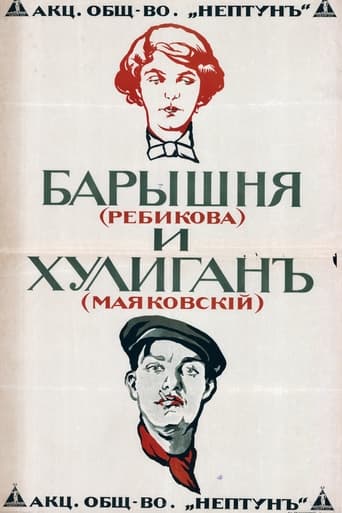
The 1918 film The Young Lady and the Hooligan is the only title linked here for Fedor Dunayev. ' This film was significant as one of the early works of the revolutionary Soviet cinema era, directed by Yevgeni Slavinsky and co-directed by poet Vladimir Mayakovsky, who also starred in the film. Dunayev's career appears to have been extremely brief, spanning only the year 1918, which was common for many actors during the turbulent revolutionary period in Russia when the film industry was undergoing massive transformation. The film itself was notable for its experimental approach and social commentary, typical of early Soviet avant-garde cinema. Unfortunately, detailed records about Dunayev's life and career are scarce, reflecting the chaotic nature of the period and the loss of many archival materials from early Russian cinema. His brief appearance in this historically significant film represents his entire known filmography, making him a footnote in the history of early Soviet cinema.
The Craft
On Screen
Likely employed the exaggerated theatrical style common in silent film era, though specific details about his technique are not documented
Milestones
- Appeared in 'The Young Lady and the Hooligan' (1918) during the early Soviet cinema period
Best Known For
Iconic Roles
Must-See Films
Working Relationships
Worked Often With
Studios
Why They Matter
Impact on Culture
Fedor Dunayev's contribution to cinema, while minimal in scope, is part of the broader tapestry of early Soviet filmmaking during a revolutionary period when cinema was being transformed into a tool for social and political expression. His participation in 'The Young Lady and the Hooligan' places him within the context of the avant-garde movement that would later influence filmmakers worldwide. The film itself represents an important milestone in Russian cinema history, being one of the early works that combined poetic expression with cinematic innovation, characteristics that would define the golden age of Soviet film in the 1920s.
Lasting Legacy
Fedor Dunayev's legacy is primarily that of a participant in one of the early significant works of Soviet cinema. While his individual contribution may have been minor, the film 'The Young Lady and the Hooligan' remains an important historical document of the revolutionary period in Russian arts. His name survives in film archives and historical records as part of the cast of this work, representing the many actors who contributed to the birth of Soviet cinema during.
Who They Inspired
Given the brevity of his known career and the limited documentation of his work, Fedor Dunayev's direct influence on subsequent actors or filmmakers cannot be definitively established. However, his participation in early Soviet cinema places him within the generation of artists who helped establish the foundations of a film industry that would later produce some of the most influential directors and actors in cinema history.
Off Screen
Very limited information is available about Fedor Dunayev's personal life, which is common for many actors from the early Soviet period who had brief careers and whose records were not well preserved through the political and social upheavals of the following decades.
Did You Know?
- Appeared in cinema during the same year as the Russian Revolution, a period of immense social and artistic upheaval
- His only known film was co-directed by famous Russian poet Vladimir Mayakovsky
- The film 'The Young Lady and the Hooligan' was one of the early examples of Soviet avant-garde cinema
- Many records from this period of Russian cinema were lost or destroyed during subsequent political upheavals
- The film was based on a story by American writer O. Henry, showing the international influences in early Soviet cinema
- Silent films from 1918 Russia are extremely rare, making any surviving cast information historically valuable
- The film was produced during the civil war period, when film production was extremely difficult and dangerous
Frequently Asked Questions
Who was Fedor Dunayev?
Russian with credits in this catalog.' His career appears to have been extremely brief, spanning only the year 1918 during the revolutionary period in Russia.
What films is Fedor Dunayev best known for?
Titles linked here include The Young Lady and the Hooligan (1918).
When was Fedor Dunayev born and when did he die?
Specific birth and death dates for Fedor Dunayev are not available in historical records, which is common for many actors from this period of Russian cinema whose documentation was lost during the political upheavals of the early 20th century.
What awards did Fedor Dunayev win?
There are no recorded awards or nominations for Fedor Dunayev, which is typical for actors from the very early Soviet cinema period when formal award systems had not yet been established in the Russian film industry.
What was Fedor Dunayev's acting style?
While specific details about Fedor Dunayev's acting technique are not documented, he likely employed the exaggerated theatrical style common in silent films of the era, where physical expression and gesture were essential for conveying emotion and story without dialogue.
Why is there so little information about Fedor Dunayev?
The scarcity of information about Fedor Dunayev reflects the chaotic nature of the 1918 period in Russia, when the revolution and civil war disrupted normal record-keeping, and many archives from early Soviet cinema were lost or destroyed in subsequent decades.