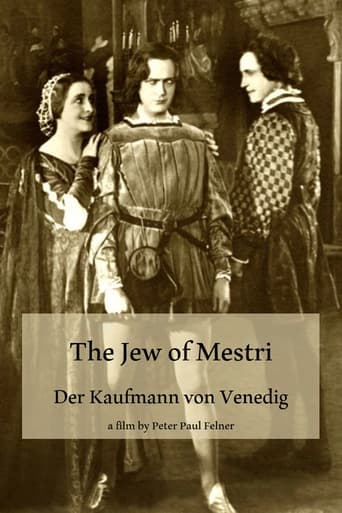
Films
1 film
About Peter Paul Felner
Austrian film director active during the silent era of European cinema. His known directorial work consists primarily of 'The Jew of Mestri' (Der Jude von Mestri) in 1923, a film that reflects the social and cultural themes prevalent in Weimar-era cinema. As a director from this period, Felner would have worked during a time of significant artistic innovation in German and Austrian cinema, when expressionism and social realism were prominent styles. His single known film suggests he may have been a filmmaker who had a brief career or whose other works have been lost to time. The film's title indicates it dealt with themes of Jewish identity, which was a subject explored in various European films of the 1920s. Unfortunately, detailed records of Felner's life and career are scarce, making him one of the many obscure figures from the golden age of European silent cinema whose contributions remain largely undocumented.
The Craft
Behind the Camera
Silent era European cinema style, likely influenced by German and Austrian film movements of the early 1920s
Milestones
- Directed 'The Jew of Mestri' (1923)
Best Known For
Must-See Films
Why They Matter
Impact on Culture
Peter Paul Felner represents the many filmmakers from the silent era whose contributions have been largely lost to history. His work 'The Jew of Mestri' is part of the broader tradition of early 1920s European cinema that explored themes of identity, religion, and social issues. While his individual impact may be minimal due to the scarcity of surviving information and works, filmmakers like Felner collectively contributed to the silent era European cinema that laid foundations for future developments in film art. The very existence of directors like Felner demonstrates the breadth and diversity of filmmaking during this period, even if many of these artists have faded into obscurity.
Lasting Legacy
Peter Paul Felner's legacy is primarily that of an obscure figure from the silent era whose work exemplifies the vast number of films and filmmakers from this period that have been lost to time. His single known film 'The Jew of Mestri' serves as a reminder of the extensive output of European cinema in the 1920s, much of which has been lost or forgotten. While he may not have achieved lasting fame, Felner represents the countless artists who contributed to the development of cinema during its formative years. His story highlights the challenges of film preservation and the importance of documenting cinema history, as many directors from his era remain little more than names in filmographies.
Who They Inspired
Due to the limited documentation of Peter Paul Felner's career and works, it is difficult to assess his direct influence on other filmmakers. As a minor director from the silent era, he would have been working within the established conventions and techniques of early 1920s European cinema rather than new approaches. His influence, if any, would likely have been localized and temporary, affecting perhaps a small circle of actors and crew members rather than the broader development of cinema art.
Off Screen
Very little is documented about Peter Paul Felner's personal life, which is common for many minor figures from the silent era whose records have not been preserved or digitized.
Did You Know?
- Peter Paul Felner is known for directing only one surviving film credit from 1923
- His film 'The Jew of Mestri' is also known by its German title 'Der Jude von Mestri'
- He represents one of many obscure directors from the European silent era whose complete filmography may be lost
- The fact that only one year (1923) is listed as his active period suggests either a very brief career or lost works
- His film's title indicates it dealt with themes of Jewish identity, common in European cinema of the 1920s
- Like many silent era directors, his personal details remain largely undocumented
- His work would have been created during the height of German and Austrian silent cinema's artistic achievements
- The scarcity of information about him illustrates how many early filmmakers have been lost to cinema history
Frequently Asked Questions
Who was Peter Paul Felner?
Austrian on YTB.my. He represents one of many obscure figures from early European cinema whose complete careers have been lost to history.
What films is Peter Paul Felner best known for?
Titles linked here include The Jew of Mestri (1923).
When was Peter Paul Felner born and when did he die?
Specific birth and death dates for Peter Paul Felner are not documented in available film history records, which is common for many minor figures from the silent era whose biographical information has been lost over time.
What awards did Peter Paul Felner win?
There are no documented awards or honors for Peter Paul Felner, which is typical for many obscure directors from the silent era whose contributions were not formally recognized during their time.
What was Peter Paul Felner's directing style?
Based on the period and his Austrian background, Felner would have worked within the conventions of early 1920s European silent cinema, likely influenced by the artistic movements prevalent in German and Austrian film production of that era.
Why is so little known about Peter Paul Felner?
The scarcity of information about Felner is typical of many minor figures from the silent era, as film archives were incomplete, records were not systematically preserved, and many early films have been lost, taking their creators' histories with them.
What was 'The Jew of Mestri' about?
While specific plot details are scarce, the title suggests the film dealt with themes of Jewish identity, which was a subject explored in various European films of the 1920s, reflecting the social and cultural concerns of the period.