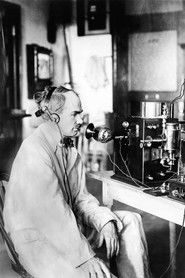
Lee De Forest
Director
Born: August 26, 1873 in Council Bluffs, Iowa, USA Died: June 30, 1961 Active: 1890s-1960s (inventor), 1923 (film director) Birth Name: Lee de Forest
Films
3 films
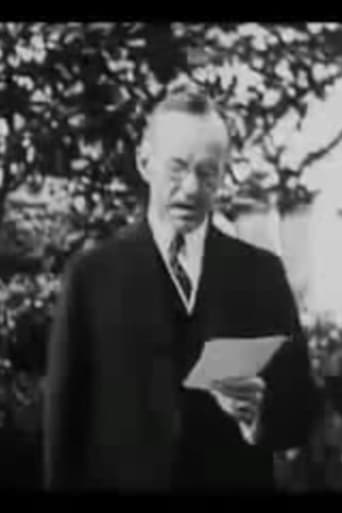
About Lee De Forest
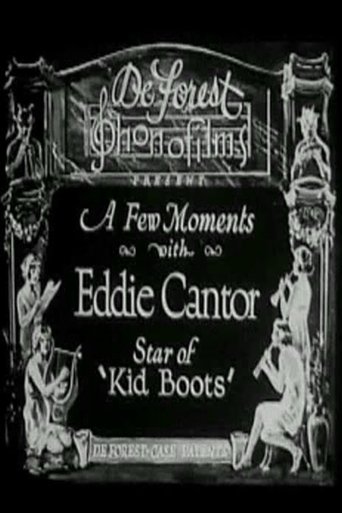
American inventor and electrical engineer who revolutionized both radio and cinema technology. Born in 1873, he invented the Audion tube in 1906, the first triode vacuum tube capable of amplifying electrical signals, which became fundamental to radio, telephone, and early electronics. In the 1920s, he turned his attention to film and developed the Phonofilm system, an innovative method for recording sound directly onto film strips. To demonstrate this technology, he produced and directed several short films in 1923, including 'A Few Moments with Eddie Cantor,' featuring popular vaudeville performers of the era. While his Phonofilm system was technically superior to competing technologies, he struggled to gain commercial success and faced fierce competition from studios like Warner Bros. Despite these business challenges, his work laid crucial groundwork for the sound revolution that would transform cinema. Throughout his career, he held over 180 patents and continued inventing until his death in 1961, leaving an indelible mark on both telecommunications and film technology.
The Craft
Behind the Camera
As a technical innovator rather than a trained filmmaker, De Forest's directing approach was primarily focused on demonstrating his Phonofilm sound technology rather than artistic expression. His films were typically short, straightforward presentations designed to showcase the capabilities of synchronized sound and image, featuring performers speaking or singing directly to the camera to highlight the technical achievement.
Milestones
- Invention of the Audion tube (1906)
- Development of Phonofilm sound-on-film system (1920s)
- Production of early sound films including 'A Few Moments with Eddie Cantor' (1923)
- Over 180 patents in electronics and communication
- IEEE Medal of Honor recipient (1922)
- work in radio technology
Best Known For
Must-See Films
Accolades
Won
- IEEE Medal of Honor (1922)
- Elliott Cresson Medal (1917)
- John Scott Medal (1916)
- IEEE Edison Medal (1946)
Special Recognition
- Inducted into the National Inventors Hall of Fame
- IEEE Fellow
- Franklin Institute Award recipient
Working Relationships
Worked Often With
Why They Matter
Impact on Culture
Lee De Forest's Phonofilm system, while not commercially successful, was instrumental in demonstrating the viability of sound-on-film technology to the motion picture industry. His innovations helped pave the way for the sound revolution that would transform cinema in the late 1920s, fundamentally changing how films were made and experienced. By proving that synchronized sound and image was technically possible, he inspired other inventors and studios to pursue sound film technology, ultimately leading to the end of the silent era. His work represented a crucial bridge between the purely visual medium of silent film and the multimedia experience of modern cinema, influencing everything from acting styles to film production techniques.
Lasting Legacy
Lee De Forest is remembered as. His Audion tube was fundamental to the development of radio, television, and countless electronic devices that shaped modern life. While his Phonofilm system was not commercially successful, it demonstrated important principles that would later be refined and adopted by the film industry. His legacy extends beyond cinema to the very foundation of modern electronics, with his vacuum tube technology being crucial to everything from early radios to the first computers. He received numerous posthumous recognitions and is celebrated as a pioneer who bridged multiple technological revolutions.
Who They Inspired
De Forest's inventions influenced countless engineers and inventors who followed, particularly in the fields of radio and electronics. His work on vacuum tubes was crucial for the development of modern telecommunications and inspired generations of electrical engineers. In cinema, his efforts in sound film inspired others to perfect the technology, with major studios eventually adopting sound-on-film systems similar in principle to his Phonofilm. His approach to innovation—combining theoretical understanding with practical application—served as a model for future inventors and entrepreneurs in the technology sector.
Off Screen
Lee De Forest was married four times throughout his life and had a complex personal history marked by both professional success and financial struggles. His first marriage to Lucille Sheardown in 1906 ended in divorce after two years. He then married Nora Stanton Blatch Barney, an engineer and suffragist, in 1908, but this marriage also ended in divorce in 1911. His third marriage to Mary Mayo in 1912 lasted until her death in 1940. In 1951, at age 78, he married Marie Mosquini, a former silent film actress who had worked as his secretary. De Forest had no children from any of his marriages and was known for his eccentric personality and relentless pursuit of invention despite often facing financial difficulties.
Education
Graduated from Yale University in 1899 with a PhD in Electrical Engineering; also attended Mount Hermon School and studied at the Sheffield Scientific School
Family
- Lucille Sheardown (1906-1908)
- Nora Stanton Blatch Barney (1908-1911)
- Mary Mayo (1912-1940)
- Marie Mosquini (1951-1961)
Did You Know?
- Held over 180 patents during his lifetime
- Nicknamed 'the Father of Radio' for his contributions to radio technology
- His Audion tube was the first device that could amplify electrical signals
- Was involved in numerous patent lawsuits throughout his career
- Despite his inventions, often struggled financially and faced multiple bankruptcies
- His fourth wife Marie Mosquini was a former silent film actress
- Once claimed to have invented television, though this was disputed
- His Phonofilm system recorded sound directly onto film strips
- Was one of the first people to demonstrate talking pictures to the public
- Graduated from Yale with a PhD in Electrical Engineering
- Was a controversial figure in the scientific community, with some questioning his claims
In Their Own Words
I discovered an invisible empire of the air, intangible, yet solid as steel.
To my mind, the greatest invention of all time is the vacuum tube.
The Phonofilm will revolutionize the motion picture industry.
I have been called the father of radio, but I am content to be known as a humble inventor.
Frequently Asked Questions
Who was Lee De Forest?
American inventor and electrical engineer best known for inventing the Audion tube and developing the Phonofilm system for sound movies. While primarily known as an inventor rather than a filmmaker, he did direct some early sound films to demonstrate his technology in 1923.
What films is Lee De Forest best known for?
Titles linked here include A Few Moments with Eddie Cantor (1923).
When was Lee De Forest born and when did he die?
Born August 26, 1873; died June 30, 1961.
What awards did Lee De Forest win?
He received the IEEE Medal of Honor in 1922 for his invention of the Audion, the Elliott Cresson Medal in 1917, the John Scott Medal in 1916, and the IEEE Edison Medal in 1946. He was also inducted into the National Inventors Hall of Fame for his contributions to electrical engineering and sound film technology.
What was Lee De Forest's directing style?
As a technical innovator rather than a trained filmmaker, De Forest's directing approach was primarily functional and experimental, focused on demonstrating his Phonofilm sound technology rather than artistic expression. His films were typically straightforward presentations designed to showcase synchronized sound and image capabilities.
How did Lee De Forest influence the film industry?
De Forest's Phonofilm system was crucial in demonstrating that sound-on-film technology was viable, helping pave the way for the sound revolution in cinema. While his system wasn't commercially successful, it inspired other inventors and studios to pursue sound film technology, ultimately leading to the end of the silent era.
What was Lee De Forest's most important invention?
The Audion tube, invented in 1906, was De Forest's most important invention. It was the first triode vacuum tube capable of amplifying electrical signals and was fundamental to the development of radio, telephone, and early electronics technology.