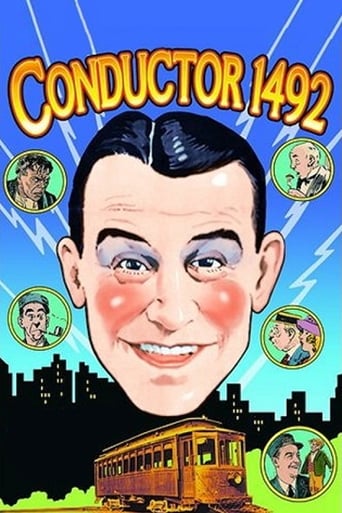
Charles Hines
Director
- Active
- 1924-1924
Films directed 1
About Charles Hines
Charles Hines was an American silent-era film director whose documented screen career is extremely brief and appears to have centered on a single known directing credit, Conductor 1492 (1924). Because he worked during the silent period and left a very sparse paper trail in surviving reference sources, comparatively little is firmly established about his personal life or broader professional background. He is most often encountered in film-history records as a minor studio-era craftsman rather than as a celebrity director, which is typical of many early Hollywood practitioners whose work survives in filmographies but not in extensive biographical files. The available record suggests he was active in 1924, at least as far as preserved film credits indicate, and may have been involved in the industrial, rapidly produced short-form filmmaking environment common to the period. No reliable evidence has surfaced in standard reference material identifying him as a major studio auteur, and he should not be confused with other similarly named entertainers from later periods. His surviving legacy rests primarily on the fact that he is credited as the director of Conductor 1492, making him part of the larger body of early cinema workers whose contributions helped shape the silent film industry even when their individual careers were brief or poorly documented. In the absence of stronger archival documentation, much of his life beyond that credit remains unknown to current public film scholarship.
More about Charles Hines
Behind the camera
No detailed contemporary descriptions of Charles Hines's directing style have been located in standard surviving reference sources. Based on the era and the type of production associated with his known credit, his work would likely have followed the economical, performance-driven, visually clear style typical of silent-era directors. Because only one confirmed film credit is readily documented, it is not possible to responsibly characterize him as a stylistic innovator or assign a distinctive auteur signature.
In film history
Charles Hines's cultural impact is best understood in the context of the thousands of early film professionals whose work sustained the silent-era motion picture industry even when they were not major public figures. Directors like Hines helped supply the constant flow of shorts, comedies, and program fillers that kept nickelodeons, neighborhood theaters, and studio distribution networks active during the 1920s. Although no evidence suggests he achieved wide fame or exerted a large public influence, his credited work forms part of the historical record that allows scholars to reconstruct the full ecology of silent cinema beyond marquee-name auteurs. In that sense, his importance is archival and industrial as much as artistic: he is one of the names that demonstrates how broad and collaborative early Hollywood truly was.
Later reputation
Charles Hines's legacy is limited but meaningful as a documented participant in silent-era filmmaking. Since only a small amount of information survives, his name functions as a reminder that film history is not made only by major stars and celebrated directors, but also by lesser-known craftsmen whose work contributed to the medium's development. His surviving credit on Conductor 1492 ensures that he remains part of the historical ledger of early American cinema, even if the broader details of his career are lost. For researchers and database compilers, he stands as an example of the many early filmmakers whose identities persist in credits and trade records while their personal stories remain largely unrecorded.
Influence
There is no documented evidence that Charles Hines directly mentored prominent filmmakers or established a discernible school of direction. Any influence he may have had was likely limited to the immediate production context of his own work and the practical craft traditions of silent-era filmmaking. Indirectly, however, his credited existence in the record contributes to the broader understanding of early studio-era labor practices and the collaborative nature of film production in the 1920s. His place in history is therefore more cumulative than individual, representing the many working directors who shaped the form through routine production rather than through widely recognized innovation.
Off screen
No reliable public biographical details about Charles Hines's personal life, family background, marriages, or descendants are readily available in standard film-reference sources. As with many minor silent-era filmmakers, archival survival is limited, and basic civil records have not been clearly tied to his film career in accessible mainstream references. If he had a family life, education, or other occupations outside film, they are not well documented in the sources typically used for classic cinema research. Because of that, any attempt to specify spouses, children, or upbringing would be speculative.
Credits
- Received a documented directing credit for the silent film Conductor 1492 (1924)
- Worked during the silent-era studio system, a period when many short productions and lower-budget releases were made quickly and often left limited archival traces
- Represents one of the many early Hollywood filmmakers whose names survive primarily in filmographies rather than in extensive personal records
Films
- Conductor 1492 (1924)
Notes
- Charles Hines is best known today for a single surviving directing credit rather than a long list of famous films.
- His documented active period in available filmography is confined to 1924.
- He worked in the silent film era, before synchronized sound transformed Hollywood production.
- Because he left such a limited archival footprint, he is easy to confuse with other people of similar name, making careful identification important.
- His career illustrates how many early filmmakers were essential to the industry even though they never became household names.
- The film Conductor 1492 (1924) is the key title associated with his name in historical records.
Questions
Who was Charles Hines?
Charles Hines was a silent-era American film director best known for directing Conductor 1492 in 1924. He appears in film history primarily as a little-documented working director rather than as a major star filmmaker.
What films is Charles Hines best known for?
He is best known for Conductor 1492 (1924), which is the principal film credit associated with his name in surviving records. Additional major titles are not readily documented in standard reference sources.
When was Charles Hines born and when did he die?
His birth and death dates are not readily available in standard surviving film-reference sources. The historical record currently provides too little verified biographical detail to state those facts confidently.
What awards did Charles Hines win?
No known awards or formal honors are documented for Charles Hines in the readily available record. He appears to have been a working silent-era director whose recognition, if any, was local or industry-based rather than award-centered.
What was Charles Hines's directing style?
His directing style is not documented in surviving mainstream sources. Given the silent-era context, his work would likely have emphasized visual clarity, concise storytelling, and performance-driven scene construction typical of the period.
What is Charles Hines's legacy in film history?
His legacy lies in his place among the many early Hollywood directors whose names survive in filmographies even when detailed biographies have been lost. He helps document the breadth of silent-era production and the many workers who contributed to early American cinema.