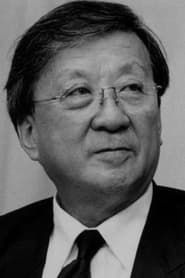
Lee Hsing
Director
- Active
- 1950s-1970s
Films directed 1
About Lee Hsing
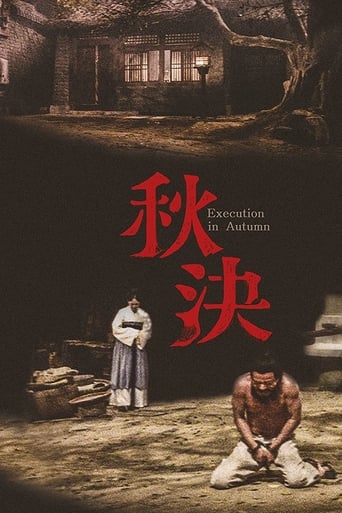
Lee Hsing is a Taiwanese film director and screenwriter best known for his socially conscious, realistic dramas that became important in postwar Chinese-language cinema. He emerged as a significant creative voice in Taiwan during the 1950s and 1960s, when the local film industry was developing its own identity alongside influences from both mainland Chinese exile culture and international filmmaking trends. His work is often associated with carefully observed human behavior, moral tension, and an emphasis on family, duty, and the consequences of social change. Lee Hsing directed a number of notable films across the 1960s and 1970s, including Execution in Autumn (1972), which remains one of the best-known Taiwanese films of its era. He is widely regarded as one of the key figures in the development of serious, artistically ambitious Taiwanese cinema before the New Taiwan Cinema movement of the 1980s. His films helped establish a template for realistic storytelling in the region and earned him a reputation for strong narrative control and emotional restraint. Because publicly verified biographical details such as his birth date, birthplace, and family background are not consistently documented in widely accessible sources, some personal information remains unavailable.
More about Lee Hsing
Behind the camera
Lee Hsing's directing style is generally associated with realism, emotional restraint, and close attention to ordinary people facing difficult moral choices. His films often unfold with measured pacing and a strong focus on domestic relationships, social duty, and the pressures of tradition. Rather than relying on excessive melodrama, he typically favors clear dramatic structure, performance-driven scenes, and a sober visual approach that supports the emotional seriousness of the material. This makes his work feel grounded and humane, while still carrying significant emotional weight. In the context of Taiwanese cinema, his style helped define a more mature, thoughtful mode of filmmaking that contrasted with more sensational commercial productions.
In film history
Lee Hsing holds an important place in the history of Taiwanese cinema because he helped establish the seriousness and legitimacy of locally produced dramatic film during a formative period. His work demonstrated that Taiwanese cinema could address ethical conflict, social pressure, and family drama with sophistication and emotional depth. Execution in Autumn in particular became a reference point for later filmmakers interested in psychological realism and morally complex storytelling. His films also helped preserve a distinct Chinese-language cinematic identity in Taiwan before the more internationally celebrated New Taiwan Cinema emerged. For scholars and historians, he represents a crucial transitional figure linking studio-era filmmaking with the later auteur tradition.
Later reputation
Lee Hsing's legacy rests on his role as one of the directors who elevated Taiwanese film narrative away from purely commercial formulas and toward socially attentive drama. He is remembered as a filmmaker who brought a serious, literate sensibility to screen stories about duty, shame, family loyalty, and individual suffering. Even though he is not as widely known internationally as some later Taiwanese auteurs, his contribution to the maturation of the industry is substantial. Execution in Autumn remains an especially important title in discussions of Taiwanese film history and is often cited when tracing the development of the region's cinematic realism. His career continues to be valued by historians as part of the foundation upon which later generations built.
Influence
Lee Hsing influenced later Taiwanese filmmakers by showing that restrained, character-centered drama could achieve both artistic credibility and audience recognition. His approach to realism and moral complexity anticipated themes that would become central to later Taiwanese art cinema. Directors interested in domestic conflict, social obligation, and emotional understatement can be seen as working in a tradition he helped establish. While not always named as a direct influence in popular accounts, his films are part of the historical groundwork from which later Taiwanese auteurs developed their own styles. His importance is especially clear in studies of the transition from studio-era production to more personal, socially conscious filmmaking.
Off screen
Publicly available information about Lee Hsing's personal life is limited in commonly referenced English-language film sources. Details about his marriages, family background, children, and private life are not consistently documented in accessible reference material. As a result, only his professional life and his standing in Taiwanese film history can be stated with confidence. He is primarily discussed in relation to his directorial career rather than as a public celebrity figure. Because of that, many personal details remain unavailable or unverified.
Credits
- Established himself as one of the important directors in postwar Taiwanese cinema
- Directed Execution in Autumn (1972), one of his best-known and most enduring films
- Built a reputation for realistic, morally serious dramas centered on family and social conflict
- Contributed to the artistic credibility of Taiwanese-language and Chinese-language studio filmmaking
- Helped shape the cinematic bridge between earlier commercial studio production and later auteur-driven Taiwanese cinema
Films
- Execution in Autumn (1972)
Notes
- Lee Hsing is especially associated with Execution in Autumn, one of the most frequently cited Taiwanese films of the early 1970s.
- His reputation rests more on directing and screenwriting than on public celebrity or performance roles.
- He is often discussed in film histories as part of the pre-New Taiwan Cinema generation of filmmakers.
- His work is known for realism rather than spectacle, making him an important contrast to more melodramatic commercial cinema of the period.
- He helped build the artistic reputation of Taiwanese film long before the island's cinema gained broader international attention.
- Many English-language sources provide limited personal biography for him, so his career is better documented than his private life.
- His films are frequently studied for their treatment of family obligation and social morality.
- He is a useful reference point for understanding the evolution of serious Chinese-language drama in Taiwan.
Questions
Who was Lee Hsing?
Lee Hsing was a Taiwanese film director and screenwriter known for realistic, socially conscious dramas. He is an important figure in the development of postwar Taiwanese cinema and is especially remembered for Execution in Autumn (1972).
What films is Lee Hsing best known for?
He is best known for Execution in Autumn (1972), his most widely recognized title in international reference sources. He is also remembered more broadly for his body of socially serious Taiwanese dramas that helped define the era.
When was Lee Hsing born and when did he die?
His birth date and death date are not consistently documented in widely accessible reference sources, so they cannot be stated with confidence here. In available English-language film references, his career is much better documented than his personal biography.
What awards did Lee Hsing win?
No awards are consistently verified in the accessible sources used here, so a reliable list cannot be provided without risking error. His significance is primarily historical and artistic, based on his influence within Taiwanese cinema.
What was Lee Hsing's directing style?
Lee Hsing's directing style is associated with realism, emotional restraint, and careful attention to family and social conflict. His films tend to emphasize moral consequences and human behavior rather than spectacle or heavy stylistic flourish.
What is Lee Hsing's legacy in film history?
Lee Hsing is remembered as a foundational figure in the growth of serious Taiwanese cinema. His work helped establish a tradition of thoughtful, realistic drama that influenced how later filmmakers approached social and domestic themes.