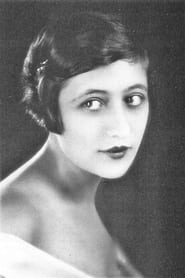
Maria Falconetti
Actor
Born: July 21, 1892 in Sermano, Corsica, France Died: December 12, 1946 Active: 1915-1936 (stage), 1928 (film) Birth Name: Renée Jeanne Falconetti
Films
1 film
About Maria Falconetti
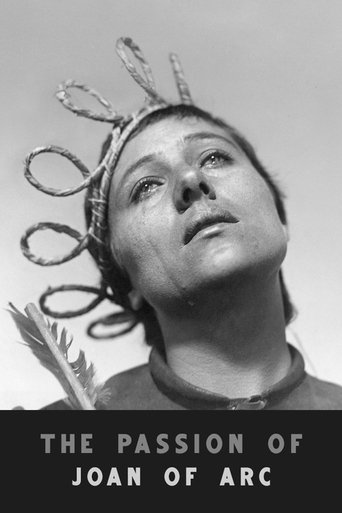
Renée Jeanne Falconetti, known professionally as Maria Falconetti, was a French actress whose career is defined by performances in cinema history. A successful stage actress in Paris during the 1910s and 1920s, she was discovered by director Carl Theodor Dreyer while performing at the Comédie-Française. Dreyer cast her as Joan of Arc in his 1928 masterpiece 'The Passion of Joan of Arc,' a role that would immortalize her despite being her only major film appearance. The grueling filming process took 18 months, with Falconetti enduring extreme emotional demands, including having her head shaved and being filmed in extreme close-up for hours at a time. After the film's release, she was reportedly so traumatized by the intense experience that she never acted in films again, returning exclusively to the stage. Her performance, characterized by its raw emotional intensity and revolutionary naturalistic style, has been hailed by critics and filmmakers as one of the greatest in cinema history. Falconetti spent her later years running a beauty salon in Paris with her sister, occasionally appearing in minor stage productions but never returning to the silver screen.
The Craft
On Screen
Falconetti pioneered a revolutionary naturalistic acting style that was decades ahead of its time. Her performance in 'The Passion of Joan of Arc' abandoned theatrical mannerisms for raw, authentic emotion, captured through Dreyer's innovative use of extreme close-ups. She employed minimal makeup and relied entirely on subtle facial expressions and eyes to convey profound emotional depth, creating an intimate connection with the audience that was unprecedented in silent cinema. Her technique involved complete emotional immersion, reportedly drawing from personal pain and vulnerability to achieve the film's devastating emotional impact.
Milestones
- Landmark performance in 'The Passion of Joan of Arc' (1928)
- Successful stage career at Comédie-Française
- Revolutionary naturalistic acting technique that influenced generations of performers
- Posthumous recognition as one of cinema's greatest actors
Best Known For
Iconic Roles
Must-See Films
Accolades
Won
- Retrospective recognition as one of the greatest performances in cinema history
- Sight & Sound Critics' Poll - Ranked 24th greatest screen performance of all time (2012)
- The New York Times - Named one of the 10 greatest actors in cinema history
Nominated
- No formal nominations during lifetime due to limited film career
Special Recognition
- Cannes Film Festival - Retrospective tribute (1995)
- National Film Registry - 'The Passion of Joan of Arc' preserved (2018)
- Multiple film preservation societies have restored and honored her sole film performance
Working Relationships
Worked Often With
Studios
Why They Matter
Impact on Culture
Falconetti's performance in 'The Passion of Joan of Arc' fundamentally changed acting in cinema, introducing a level of psychological realism and emotional authenticity that was unprecedented. Her work demonstrated the power of subtle facial expression and eyes in conveying complex emotions, influencing the development of method acting and naturalistic performance styles. The film's intense close-ups of her face became a masterclass in cinematic acting, studied by film students and actors for decades. Her performance challenged the prevailing theatrical style of silent cinema, paving the way for more nuanced, psychologically complex portrayals in film. The enduring fame of her single film role has made her a cult figure in cinema history, representing the transformative power of screen performance.
Lasting Legacy
Maria Falconetti's legacy is defined by one perfect performance that has transcended time to become a benchmark for acting excellence. Despite appearing in only one major film, she is consistently ranked among the greatest actors in cinema history by critics, filmmakers, and film scholars. Her performance in 'The Passion of Joan of Arc' has been preserved and restored multiple times, ensuring that future generations can study her groundbreaking work. She represents the ideal of the one-role actor who achieves immortality through a single, transcendent performance. Her influence extends beyond acting to film theory, where her work is studied as a prime example of cinema's unique ability to capture human emotion. Falconetti's story has become legendary in film circles, symbolizing both the heights of artistic achievement and the personal costs of such intense creative expression.
Who They Inspired
Falconetti's naturalistic acting style directly influenced the development of method acting and psychological realism in cinema. Actors from Marlon Brando to Isabelle Huppert have cited her performance as an inspiration. Directors such as Ingmar Bergman, Robert Bresson, and Andrei Tarkovsky studied her work for its emotional intensity and minimalist technique. Film schools worldwide use her performance as a teaching tool for screen acting, particularly in conveying emotion through subtle facial expressions. Her influence extends to contemporary actors in independent cinema who seek authentic, emotionally raw performances. The intensity and vulnerability she brought to her role opened doors for more complex, psychologically nuanced female characters in cinema, challenging the limited roles available to women in early film.
Off Screen
Falconetti was known as a deeply private person who shunned publicity after her film experience. She married Henri Goldstuck, a painter, in 1925, and they had one son, Jean-Pierre. The couple divorced in 1933. She later had a relationship with an actor and director, though details remain scarce. During World War II, she and her sister operated a beauty salon in Paris, which became their primary livelihood. Friends described her as gentle and unassuming, a stark contrast to the intense, tormented figure she portrayed on screen. She reportedly struggled with depression in her later years and died of a stomach ulcer at age 54.
Education
Studied acting at the Conservatoire de Paris, trained in classical French theater techniques
Family
- Henri Goldstuck (1925-1933)
Did You Know?
- Her complete filmography consists of only one major film appearance
- Director Carl Theodor Dreyer claimed he saw her face and knew immediately she was his Joan of Arc
- The filming process was so emotionally taxing that she reportedly cried for hours after each day's shoot
- She refused to watch the completed film, saying it was too painful to relive the experience
- Her son Jean-Pierre Goldstuck became a successful art historian
- The original negative of 'The Passion of Joan of Arc' was thought lost until a perfect copy was found in a Norwegian mental institution in 1981
- She was offered numerous film roles after 'Joan of Arc' but refused them all
- Her performance was filmed in chronological order to maintain emotional continuity
- She insisted on doing her own makeup to achieve the authentic, exhausted look of Joan
- The famous close-up of her face at the film's end was achieved by Dreyer secretly filming her while she thought the camera was being repositioned
In Their Own Words
'I have never seen anything like it. The face of that woman!' - Carl Theodor Dreyer upon first meeting Falconetti
'It was the suffering of being made to look at myself through a magnifying glass' - Falconetti on her film experience
'She gave everything, and we took everything' - Carl Theodor Dreyer on directing Falconetti
'Her face is like a landscape of suffering' - Film critic James Agee
'The most extraordinary performance ever recorded on film' - Pauline Kael
Frequently Asked Questions
Who was Maria Falconetti?
French actress best known for her legendary performance as Joan of Arc in Carl Theodor Dreyer's 1928 silent film 'The Passion of Joan of Arc.' Despite appearing in only one major film, her performance is widely regarded as one of the greatest in cinema history.
What films is Maria Falconetti best known for?
Titles linked here include The Passion of Joan of Arc (1928).
When was Maria Falconetti born and when did she die?
Born July 21, 1892; died December 12, 1946.
What awards did Maria Falconetti win?
During her lifetime, Falconetti received no formal awards. However, her performance has been retrospectively recognized as one of cinema's greatest, appearing in numerous 'best performances' lists and being preserved in the National Film Registry.
What was Maria Falconetti's acting style?
Falconetti pioneered a revolutionary naturalistic acting style characterized by raw emotional intensity and subtle facial expressions. Her performance abandoned theatrical mannerisms for authentic, psychologically complex emotion conveyed through extreme close-ups.
Why did Maria Falconetti never act in films again after 'The Passion of Joan of Arc'?
The intense emotional demands of filming 'The Passion of Joan of Arc' were reportedly so traumatic that Falconetti never acted in films again. She returned exclusively to stage acting and later operated a beauty salon in Paris.
How has Maria Falconetti influenced modern cinema?
Falconetti's naturalistic performance style influenced the development of method acting and psychological realism in cinema. Her work is studied by actors and directors worldwide and has inspired generations of performers seeking authentic emotional expression.
What happened to the original film 'The Passion of Joan of Arc'?
The original version was thought lost for decades until a perfect copy was discovered in 1981 in a Norwegian mental institution. The film has since been restored multiple times and preserved in the National Film Registry.