Antonin Artaud
Actor
Born: September 4, 1896 in Marseille, France Died: March 4, 1948 Active: 1920-1948
Films
2 films
About Antonin Artaud
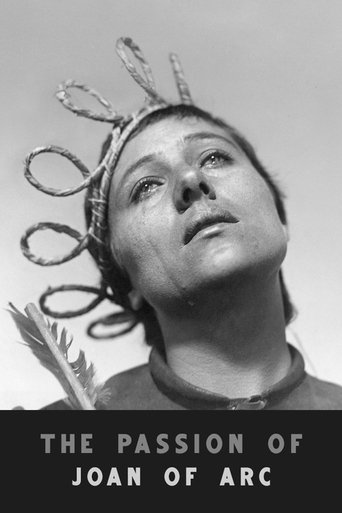
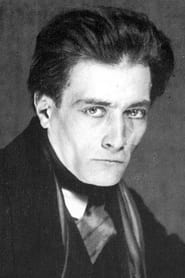
Revolutionary French playwright, poet, actor, and theater theorist: radical ideas would transform 20th-century performing arts. Born in Marseille in 1896, he moved to Paris in 1920 where he became involved with the surrealist movement before breaking away to develop his own artistic vision. His brief but memorable film career included his powerful performance as Jean Massieu in Carl Theodor Dreyer's masterpiece 'The Passion of Joan of Arc' (1928), where his intense, almost tormented acting style perfectly embodied his theories about theater. Artaud's most significant contribution was his development of the 'Theatre of Cruelty,' a concept that sought to assault the audience's senses and break through conventional theatrical boundaries. Throughout the 1930s, he wrote extensively about his theories, culminating in his work 'The Theatre and its Double' (1938). Plagued by mental health issues and drug addiction, he spent much of his later life in psychiatric institutions, where he continued to write and create until his death in 1948. His influence extended far beyond theater, impacting cinema, literature, and performance art for generations to come.
The Craft
On Screen
Artaud's acting style was intensely physical and emotionally raw, characterized by exaggerated gestures, contorted facial expressions, and a visceral approach that sought to bypass intellectual understanding and directly impact the audience's nervous system. His performance in The Passion of Joan of Arc demonstrated his belief in theater as a form of spiritual and physical assault, using his body as an instrument to convey extreme emotional states.
Milestones
- Performance in The Passion of Joan of Arc (1928)
- Development of Theatre of Cruelty theory
- Founding of the Alfred Jarry Theatre (1926)
- Publication of The Theatre and its Double (1938)
- Surrealist period collaboration (1924-1926)
- Radio broadcast To Have Done with the Judgment of God (1947)
Best Known For
Iconic Roles
Must-See Films
Accolades
Special Recognition
- Posthumous recognition as
- Numerous international theater festivals named in his honor
- The Antonin Artaud Collection at the Bibliothèque Nationale de France
Working Relationships
Worked Often With
Why They Matter
Impact on Culture
Antonin Artaud's impact on 20th-century theater and performance cannot be overstated. His Theatre of Cruelty revolutionized how artists thought about the relationship between performer and audience, emphasizing direct sensory and emotional impact over narrative coherence. His theories influenced the avant-garde theater movements of the 1960s and beyond, including the Living Theatre, the Open Theater, and performance art. In cinema, his ideas about breaking conventional forms influenced experimental filmmakers and the French New Wave directors who admired his radical approach to art. His writings on the plague as metaphor for theater and his concept of the 'body without organs' influenced postmodern theory and cultural studies.
Lasting Legacy
Artaud's legacy endures through the continued influence of his theories on contemporary theater, performance art, and experimental film. The Theatre of Cruelty remains a touchstone for artists seeking to challenge audiences and break theatrical conventions. His collected works are studied in universities worldwide, and his ideas about the transformative power of performance continue to inspire new generations of artists. Institutions like the Antonin Artaud Foundation preserve his writings and promote his artistic vision. His influence extends beyond theater into literature, philosophy, and psychology, making him.
Who They Inspired
Artaud directly influenced major theater directors including Peter Brook, who adapted Artaud's theories in his landmark production of Marat/Sade, and Jerzy Grotowski, whose 'poor theater' concept built upon Artaud's emphasis on the actor's physical presence. The Living Theatre, founded by Julian Beck and Judith Malina, explicitly embraced Artaud's vision of theater as revolutionary force. In cinema, directors like Alejandro Jodorowsky and David Lynch have cited Artaud's influence on their surreal, disturbing visual styles. His writings influenced postmodern theorists like Gilles Deleuze and Félix Guattari, who developed his concept of the 'body without organs' in their philosophical works.
Off Screen
Artaud struggled with mental health issues throughout his life, including depression and addiction to laudanum and opium. He never married and had no children, dedicating his life entirely to his artistic pursuits. His relationships were often tumultuous, and he maintained difficult friendships with figures like André Breton before breaking with the surrealists. He spent nearly nine years in psychiatric institutions, particularly the Rodez asylum, where he underwent electroshock therapy but continued to write prolifically.
Education
Attended schools in Marseille, later studied at the Collège Saint-Louis in Paris. Briefly attended medical school but abandoned his studies to pursue theater and writing.
Did You Know?
- Despite appearing in only one major film, his performance in The Passion of Joan of Arc is considered one of cinema's most powerful supporting roles
- He was expelled from the surrealist movement by André Breton in 1926
- During his nine years in psychiatric institutions, he wrote some of his most powerful works including 'Van Gogh, The Man Suicided by Society'
- His last work was a radio play called 'To Have Done with the Judgment of God' which was banned from broadcast shortly before his death
- He coined the term 'theatre of cruelty' not to mean violent theater, but theater that was difficult and cruel in its determination to break through cultural and personal barriers
- He suffered from meningitis as a child which may have contributed to his lifelong mental health struggles
- His drawings and paintings, created during his time in asylums, are now considered significant works of outsider art
- He briefly worked as a journalist for the newspaper Paris-Soir in the 1920s
- The actor Jean-Louis Barrault was one of his few close friends and supporters during his final years
- His theories influenced not just theater but also rock music, with The Doors and Jim Morrison citing him as an influence
In Their Own Words
The theater, which is in no thing, but makes use of everything—gestures, sounds, words, screams, light, darkness—rediscovers itself at precisely the point where the mind requires a language to express its manifestations.
No one has ever written, painted, sculpted, modeled, built, or invented except literally to get out of hell.
The theater of cruelty is not the representation of an existing reality, but the creation of a new reality, a new language.
All true language is incomprehensible, like the language of a child, a mystic, or a madman.
I am the man who has most honorably suffered the most terrible sufferings of the body and soul.
To break through language in order to touch life is to create or recreate the theatre.
Frequently Asked Questions
Who was Antonin Artaud?
French playwright, poet, with credits in this catalog. Though he only appeared in one major film, his theories profoundly influenced 20th-century theater, performance art, and experimental cinema.
What films is Antonin Artaud best known for?
Titles linked here include The Passion of Joan of Arc (1928).
When was Antonin Artaud born and when did he die?
Born September 4, 1896; died March 4, 1948.
What was the Theatre of Cruelty?
The Theatre of Cruelty was Artaud's revolutionary theatrical concept that sought to create a visceral, overwhelming experience for audiences through sensory stimulation rather than intellectual engagement. It aimed to break through cultural and psychological barriers by using extreme gestures, sounds, and imagery to directly impact the audience's nervous system.
How did Antonin Artaud influence modern theater?
Artaud's theories fundamentally changed how artists approach performance, emphasizing physical expression over text and audience participation over passive observation. His ideas influenced major movements including the avant-garde theater of the 1960s, experimental performance art, and directors like Peter Brook and Jerzy Grotowski who adapted his concepts for contemporary theater.
What were Antonin Artaud's major writings?
His most influential work was 'The Theatre and its Double' (1938), which outlined his Theatre of Cruelty theory. Other significant writings include 'The Nerve Meter,' 'Van Gogh, The Man Suicided by Society,' and 'To Have Done with the Judgment of God,' a radio play banned for its controversial content.
What was Artaud's relationship with the surrealist movement?
Artaud was initially an active member of the surrealist movement from 1924 to 1926, collaborating with André Breton and others. However, he was expelled in 1926 due to artistic and personal disagreements, after which he developed his own radical artistic vision independent of any formal movement.