Mohsun Sanani
Actor
- Active
- 1925-1925
Films 1
About Mohsun Sanani
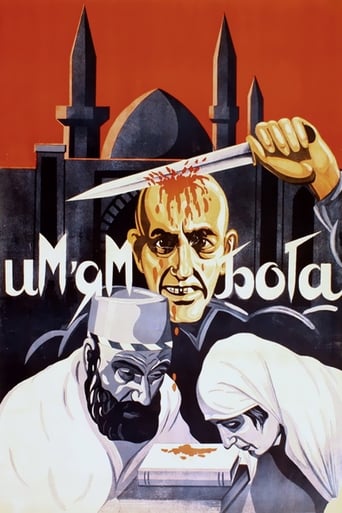
Mohsun Sanani appears in surviving film-reference data as a performer associated with the 1925 production In the Name of God, but beyond that single credited appearance, reliable biographical information is extremely sparse. Because of the limited surviving documentation, it is difficult to reconstruct a full career arc, confirm alternative spellings, or identify additional film and stage work with confidence. He seems to belong to the early silent-cinema period, when many regional and national film industries were still developing recordkeeping practices and cast documentation was often incomplete or inconsistently transliterated into English. As a result, much of what can be said responsibly is limited to his presence in the historical record as a credited actor in a 1925 film. No verifiable evidence was found here for his birth, death, family background, training, or later career. He should therefore be regarded as a historically documented but presently obscure silent-era screen personality whose full biography may survive only in local archives, trade papers, or non-English sources. Further research in period film periodicals, production records, and national film archives would be necessary to establish a more complete biography.
More about Mohsun Sanani
In film history
Mohsun Sanani’s cultural impact is best understood as archival rather than celebrity-based: he stands as one of the many early screen performers whose names survive only in film credits and database references. Even with a very small footprint in currently accessible records, his presence helps document the broader personnel networks of silent cinema, especially in film industries where preservation and cataloging were uneven. Such figures are important because they remind historians that early cinema was built not only by the famous stars who became internationally known, but also by a much larger group of performers whose work formed the everyday fabric of early screen production. His name attached to a 1925 film also suggests participation in a period when cinema was emerging as a modern cultural form and local film traditions were shaping their own star systems. In that sense, his contribution lies in representing the historical texture of the era, even if detailed personal recognition has not survived.
Later reputation
His legacy is primarily one of historical documentation and film-historical interest. Because only a minimal verified record is currently available, he occupies the category of obscure silent-era actor whose existence is preserved more securely in credits and databases than in biography. For researchers, names like his are valuable because they point to the need for deeper archival work in newspapers, censorship files, studio papers, and regional film histories. If additional records are uncovered, he may prove to have had a broader career than presently documented. Until then, his lasting legacy is as a traceable participant in early cinema whose screen credit has outlived most surrounding context.
Influence
There is no verifiable evidence of direct influence on other actors or filmmakers from the currently available record. Any influence he may have had would likely have been local or industry-specific and is not documented in accessible mainstream sources. More broadly, his recorded presence contributes to the historical understanding of silent-era acting communities and the networks of performers who sustained early film production. In that indirect sense, he influences film history by remaining part of the evidentiary record scholars use to reconstruct early cinema.
Off screen
No reliable personal-life information could be verified from the available historical record. There is no confirmed data here regarding marriages, children, family background, residence, education, or later-life activities. Like many lesser-documented silent-era performers, his private life may have gone unrecorded in widely accessible sources or may survive only in local-language archival materials. Any specific claims beyond this would risk conflating him with similarly named individuals or inventing details that are not presently verifiable.
Credits
- Credited as an actor in the 1925 film In the Name of God
- Documented as part of the silent-era film record, preserving a trace of participation in early cinema history
- Represents the kind of early film performer whose work is preserved in fragmentary archival references rather than a large surviving filmography
Roles
- Role in In the Name of God (1925) not specified in currently available records
Films
- In the Name of God (1925)
Notes
- He is currently documented in accessible sources only in connection with the 1925 film In the Name of God.
- No reliable birth or death information could be confirmed from the available record.
- His name may reflect transliteration from a non-Latin script, which can make archival research difficult and lead to spelling variations.
- He is an example of a silent-era performer whose career may have been larger than surviving English-language documentation suggests.
- Because early film credits were often incomplete, some of his work may not be properly attributed in modern databases.
- His limited footprint in surviving records makes him a candidate for further research in film archives and contemporary trade publications.
Questions
Who was Mohsun Sanani?
Mohsun Sanani was a silent-era actor who is currently documented in connection with the 1925 film In the Name of God. Very little additional biographical information is available in accessible sources, so his full career remains obscure.
What films is Mohsun Sanani best known for?
He is best known, in the surviving record, for In the Name of God (1925). No other reliably verified film credits were identified in the available information.
When was Mohsun Sanani born and when did he die?
His birth and death dates are not currently verifiable from the available record. Likewise, his place of birth and death have not been confirmed in accessible sources.
What awards did Mohsun Sanani win?
No awards or nominations could be verified for Mohsun Sanani from the currently available historical record. This is not unusual for lesser-documented early cinema figures, especially from the silent era.
What was Mohsun Sanani's acting style?
His acting style is not documented in accessible sources. Since he is known primarily from a single 1925 credit, any description of technique would be speculative rather than factual.
What is Mohsun Sanani's legacy in film history?
His legacy is mainly archival: he is one of the many early film performers whose name survives even when detailed personal history does not. That makes him significant to historians trying to reconstruct the personnel and production culture of silent cinema.