Also available on: Archive.org
In the Name of God

In the Name of God

1925 Soviet Union (Azerbaijan)
Anti-clericalismSoviet revolutionary justiceClass exploitationExposure of hypocrisyConflict between tradition and modernity

Plot

Set in the years of social upheaval surrounding the Bolshevik Revolution in Azerbaijan, the film follows a poor local peasant who has spent years being exploited by a greedy molla, a religious cleric who cheats him out of goods, services, and money while hiding behind piety. The molla is portrayed not as a moral authority but as a hypocrite who indulges in worldly pleasures and profits from the superstition and dependence of the villagers. When the Soviet order arrives, the peasant gains a new sense of legal and social power and recognizes the long-running deception. He brings the molla before the newly established People's Court, where the cleric is judged and punished, turning the story into a clear anti-clerical revolutionary parable. The narrative is less interested in psychological complexity than in ideological contrast, using the old order and the new order to dramatize the triumph of Soviet justice over religious exploitation.

About the Production

Release Date 1925
Production Azerbaijanfilm (historical predecessor or associated production entity; exact contemporary production credit not consistently documented)
Filmed In Azerbaijan, Baku (likely, based on production context; exact surviving location records are limited)

In the Name of God is notable as one of the early Soviet films made in Azerbaijan with a predominantly Azerbaijani cast and crew, rather than being imported or dominated by outside filmmakers. Directed by Abbas Mirza Sharifzadeh, a major Azerbaijani stage and screen figure, the film reflects the Soviet period's aggressive use of cinema as an instrument of ideological education and anti-religious messaging. Surviving documentation is limited, so many production details such as budget, shooting schedule, and exact studio credit are not firmly established in accessible records. The film’s significance lies partly in its local authorship: while it clearly served Soviet propaganda goals, it also emerged from Azerbaijani creative talent and is associated with a filmmaker who later became celebrated in Azerbaijani cultural history. Because of the era and the region's fragmented archival record, the film is also important as a rare example of early Azerbaijani Soviet cinema whose detailed production history is difficult to reconstruct fully.

Historical Background

In the Name of God was made in 1925, only a few years after the consolidation of Soviet power in Azerbaijan and at a moment when cinema was being mobilized as a tool of ideological transformation. The early Soviet state aggressively targeted religion, local elites, and traditional authority structures, and films like this one were designed to dramatize the moral and political legitimacy of the new order. In Azerbaijan, where Islam had deep cultural roots and the molla occupied a recognizable social role, anti-religious storytelling took on particular local significance. The film therefore matters not only as a piece of propaganda but also as a historical document of how Soviet ideology was adapted to the social realities of the Caucasus. It also belongs to the formative period of Azerbaijani national cinema, when local artists were negotiating between indigenous cultural identity and the demands of Soviet political messaging.

Why This Film Matters

The film is culturally significant because it represents one of the early moments when Azerbaijani cinema was used to express Soviet ideology through locally recognizable characters and situations. Rather than presenting a generic anti-religious message, it stages its conflict in a specifically Azerbaijani social world, making the propaganda more immediate for its intended audience. It is also important in the history of Azerbaijani film because it features a local director and cast who later became important to the region’s cultural memory, which complicates the film’s identity as both propaganda and national cinema. For historians, it demonstrates how cinema in the 1920s was used not just to entertain but to reshape social attitudes toward religion, justice, and authority. Its value today lies as much in what it reveals about Soviet policy and Azerbaijani cultural development as in its narrative content.

Making Of

The making of In the Name of God sits at the intersection of early Soviet cultural policy and the emergence of Azerbaijani screen art. Abbas Mirza Sharifzadeh, already an important theatrical figure, brought local artistic credibility to a project that was nevertheless aligned with the Soviet anti-religious agenda. The film’s casting of well-known Azerbaijani performers helped anchor its authority for local audiences, even as its message was shaped by the political priorities of the new regime. As with many films from the silent era in the Caucasus, archival information on exact production processes is incomplete, but the film is still regarded as significant for demonstrating that Azerbaijani filmmakers were not merely passive recipients of Soviet cinema, but active participants in constructing it. Its production also reflects the broader 1920s effort to use cinema as a mass medium for political re-education, especially in republics with strong religious and traditional social structures.

Visual Style

Specific shot-by-shot analysis is difficult because detailed surviving technical records are limited, but as a silent Soviet-era regional drama the film likely relied on direct visual contrast, expressive staging, and legible character typology. The visual approach would have been shaped by the need to make its ideological message immediately understandable without sound, using gestures, facial expression, and situation to distinguish the deceptive molla from the newly empowered peasant. Films of this type often emphasized clear spatial and moral separation between the old order and the revolutionary order, with straightforward composition over elaborate visual experimentation. The cinematography is historically interesting less for documented stylistic innovation than for its role in translating a politically charged story into a silent visual language accessible to a broad audience.

Innovations

No specific technical innovations are firmly documented for the film, but its historical importance lies in its successful use of silent-era cinematic storytelling for targeted ideological persuasion within an Azerbaijani context. The film helped demonstrate that local filmmakers and actors could produce Soviet narrative cinema in the republics, not just in the major Russian production centers. Its use of a clear moral-ideological framework, likely supported by strong visual contrasts and performance-driven storytelling, reflects the technical norms of silent propaganda cinema. The film’s broader achievement is industrial and cultural rather than technological: it is part of the early infrastructure of Azerbaijani cinema under Soviet rule.

Music

As a silent film, In the Name of God would originally have been accompanied by live music during screenings, but no original composed score is consistently documented in available sources. Like many silent productions of the period, accompaniment may have varied by venue, projection context, and local musicians. No standardized surviving soundtrack is known to be associated with the film in modern circulation. Any contemporary exhibition would likely use a reconstructed or newly commissioned accompaniment if the film is screened today.

Famous Quotes

No reliable surviving quotation is documented for this silent film.
Intertitles may have carried the film’s ideological statements, but no verified full quote survives in accessible sources.

Memorable Scenes

  • The peasant finally recognizes that the molla has been deceiving him for years and shifts from passive victimhood to action.
  • The scene of judgment before the newly created People's Court, where Soviet authority replaces the cleric's power, serves as the film's ideological climax.
  • The depiction of the molla's hypocrisy, in which he is shown delighting in worldly behavior while claiming religious authority, is the film's central satirical image.

Did You Know?

  • The film is an explicitly anti-clerical Soviet propaganda work aimed at criticizing religious authority, particularly the figure of the molla in Azerbaijani Muslim society.
  • Unlike some earlier propaganda films made in the region, this production is especially notable for being created by an almost entirely Azerbaijani cast and crew.
  • Director Abbas Mirza Sharifzadeh later became one of the best-known names in Azerbaijani performing arts, giving the film added historical interest beyond its propaganda purpose.
  • The story centers on the idea of the People's Court, a common early Soviet narrative device symbolizing the replacement of old religious or feudal structures with revolutionary justice.
  • The film is part of the early development of Azerbaijani cinema, which was taking shape within the larger Soviet film system during the 1920s.
  • Because it is from the silent era and from a region with uneven archival survival, detailed contemporary reception records are scarce.
  • The film’s portrayal of the molla as hypocritical and corrupt reflects the broader Soviet campaign against religion that intensified during the 1920s.
  • It is often discussed as an example of how local filmmakers in Azerbaijan participated in Soviet ideological cinema while still contributing to national screen culture.
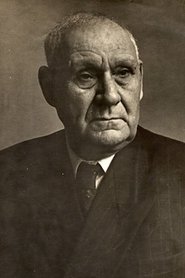
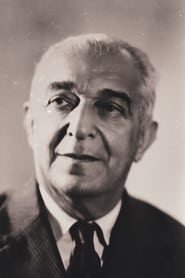
  • The cast includes major Azerbaijani performers such as Mirzaagha Aliyev and Mustafa Mardanov, both significant figures in regional theatrical and cinematic history.
  • The film is sometimes referenced in discussions of how Soviet cinema adapted propaganda narratives to local cultural and religious contexts in the Caucasus.

What Critics Said

Contemporary detailed critical reviews are not widely preserved in accessible sources, so the film’s immediate critical reception is difficult to reconstruct with certainty. In Soviet terms, it would likely have been understood as serving the correct ideological function: attacking superstition, exposing clerical hypocrisy, and endorsing revolutionary justice. Modern appraisal tends to focus less on formal innovation than on its historical and cultural importance as an early Azerbaijani Soviet production. Film historians generally regard it as noteworthy for its local authorship and for what it reveals about the relationship between propaganda and emerging national cinema in the Caucasus. Because of the limited availability of surviving documentation and possible loss or fragmentary preservation, critical discussion today is often contextual rather than evaluative in a conventional review sense.

What Audiences Thought

Audience reaction is not well documented in surviving sources, which is common for silent-era films from the region. Given its ideological purpose, the film was likely intended for Soviet-aligned audiences and screenings organized as part of broader political education efforts. It may have resonated with viewers familiar with exploitative local religious figures, while also provoking resistance or discomfort among more traditional audiences. Today, its audience is primarily historians, archivists, and cinephiles interested in early Azerbaijani and Soviet cinema. Any broader popular reception in 1925 is difficult to measure because systematic box-office reporting and audience studies were not typically preserved.

Film Connections

Influenced By

  • Early Soviet anti-religious propaganda cinema
  • Revolutionary melodramas of the 1920s
  • Soviet agitational theater and didactic storytelling
  • Local Azerbaijani stage traditions and popular performance styles

This Film Influenced

  • Later Azerbaijani Soviet ideological dramas
  • Regional anti-clerical propaganda films in the Soviet sphere

Film Restoration

Preservation status is not firmly documented in widely accessible sources. The film is known historically, but detailed public information about whether a complete print survives, whether it is fragmentary, or whether it has been restored is limited. It should therefore be treated cautiously as a film of uncertain archival availability until a specific archive or preservation catalog confirms otherwise.

Themes & Topics

mollapeasantPeople's CourtRevolutionanti-religious propagandaAzerbaijansilent film