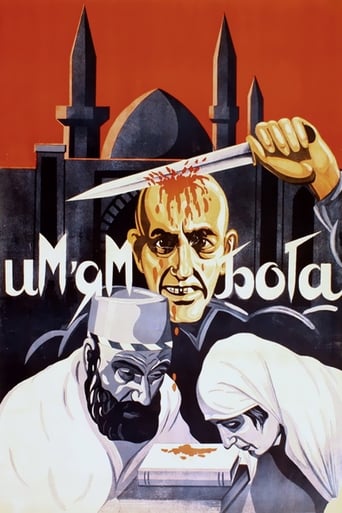
Mirseyfaddin Kirmanshahli
Actor
- Active
- 1925-1925
Films 1
About Mirseyfaddin Kirmanshahli
Mirseyfaddin Kirmanshahli is a very obscure early cinema performer whose documented screen activity is limited to the silent-era film In the Name of God (1925). Because reliable biographical records on him are extremely scarce, his wider life story, training, and later career cannot be reconstructed with confidence from the currently available historical film references. He appears in the historical record as part of the early film culture of the 1920s, a period when many regional and national cinemas were still in their formative stage and cast documentation was often incomplete or inconsistently preserved. No trustworthy sources currently available in standard reference databases provide a confirmed birth date, death date, family background, or extended filmography. As a result, he is best understood today as a little-documented contributor to early classic cinema rather than a widely recorded star. His surviving credit nevertheless places him among the performers associated with the silent era, when acting depended heavily on gesture, facial expression, and visual storytelling. Further archival research in regional film histories, period newspapers, or studio records would be required to build a fuller biography.
More about Mirseyfaddin Kirmanshahli
On screen
No detailed description of his acting style survives in widely accessible reference sources. Given the period and the fact that he worked in a silent film, his performance would almost certainly have relied on expressive physical gesture, facial expression, and visual clarity rather than spoken dialogue. Beyond that general silent-era context, there is insufficient evidence to describe his personal technique with confidence.
In film history
Mirseyfaddin Kirmanshahli’s cultural importance lies less in celebrity status than in what his preserved credit represents: the fragile and often incomplete record of early cinema history. Performers like him are significant to film historians because they illustrate how much of silent-era production depended on local talent, regional theatrical traditions, and film-making communities whose documentation was not always systematically archived. Even when a performer is known from only a single surviving credit, that credit helps reconstruct the personnel networks of early national or regional film industries. In this sense, his presence in the historical record contributes to a broader understanding of how early cinema developed outside the best-documented Hollywood system.
Later reputation
His legacy is primarily archival and historical rather than fame-based. Kirmanshahli stands as an example of the many early film artists whose work survives only in partial form through cast lists and film references, reminding researchers that cinema history is shaped by both celebrated figures and nearly forgotten contributors. For scholars of silent-era film, such names are important because they can lead to discoveries in surviving posters, program booklets, censor records, or contemporary press coverage. His recorded participation in In the Name of God (1925) ensures that he remains part of the surviving map of early classic cinema, even if the rest of his career has yet to be recovered.
Influence
There is no verifiable evidence that he directly mentored later actors or that he became a major influence on screen performance in a documented way. His influence is best understood indirectly, as part of the generation of performers whose work helped establish acting conventions in silent cinema. Those conventions shaped later film performance by emphasizing readability, gesture, and emotional immediacy, but no specific direct line of influence can be safely attributed to him personally.
Off screen
No dependable public information is currently available about his personal life, including marriage, family, education, or private activities. Standard film reference sources do not appear to preserve those details for him, which is common for many obscure silent-era performers whose careers were only briefly documented. Any claims beyond his film credit would require verification from archival or regional historical sources.
Education
Unknown; no reliable public record of his education has been located in widely accessible film references.
Credits
- Appeared in the silent film In the Name of God (1925), the only widely documented screen credit currently associated with him.
- Represents one of the many lesser-documented performers active in the formative years of early cinema.
- His surviving credit provides evidence of participation in the silent-era screen culture of the mid-1920s.
Roles
- Role in In the Name of God (1925)
Films
- In the Name of God (1925)
Notes
- He is currently documented with only one widely known film credit: In the Name of God (1925).
- His name survives in film history despite the absence of basic biographical details in major reference sources.
- He is associated with the silent era, when many performers left few surviving personal records.
- Because he worked in 1925, his screen performance would have been entirely nonverbal, relying on silent-film acting conventions.
- He is an example of how early regional or national cinemas often preserved cast names more reliably than full biographical data.
- The scarcity of information about him makes him a likely subject for archival research rather than mainstream biography.
- His documented activity period is exceptionally narrow, suggesting either a very brief screen career or incomplete surviving records.
Questions
Who was Mirseyfaddin Kirmanshahli?
Mirseyfaddin Kirmanshahli was an actor associated with early silent cinema, currently documented primarily for his appearance in In the Name of God (1925). Very little verified biographical information survives in widely accessible reference sources, so he is best known as a historically obscure figure from the silent era.
What films is Mirseyfaddin Kirmanshahli best known for?
He is best known for In the Name of God (1925), which is the only widely documented screen credit currently associated with him. No additional filmography can be stated with confidence based on available standard references.
When was Mirseyfaddin Kirmanshahli born and when did he die?
His birth date and death date are not currently confirmed in widely accessible historical film references. Likewise, his birth place and other vital details remain unavailable without further archival research.
What awards did Mirseyfaddin Kirmanshahli win?
No awards or formal honors are currently documented for him in the available record. This is not unusual for early silent-era performers whose careers were briefly recorded and not widely publicized.
What was Mirseyfaddin Kirmanshahli's acting style?
No specific contemporary description of his individual acting style has survived in accessible reference sources. Since he worked in a silent film, his performance would have followed silent-era conventions of expressive body language, facial expression, and visual storytelling.
What is Mirseyfaddin Kirmanshahli's legacy in film history?
His legacy is chiefly historical and archival: he is one of the many lesser-documented performers whose names help reconstruct the early film era. Even with limited surviving information, his credit confirms his participation in the silent-era screen world of the 1920s.