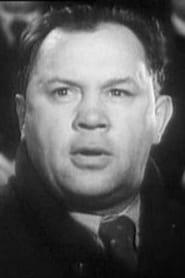

Battleship Potemkin
"Steps of Odessa"
Keys: Space play/pause · ←/→ 10s · F fullscreen · M mute · </> speed
About this film
Sergei Eisenstein's Odessa Steps montage dramatizes 1905 Potemkin mutiny and tsarist massacre.
Cast & crew
More films like this

More Drama films
View all →






More from Sergei Eisenstein
View all →
More about this film
About the production
Release dateDecember 21, 1925 (Moscow premiere)
BudgetState-funded by Soviet government; exact budget figures not recorded
Box officeBox office data not tracked for Soviet films of this era
ProductionGoskino, Proletkult
Filmed inOdessa, Ukrainian SSR, Black Sea coastal areas, Sevastopol
Filmed during the summer of 1925 with non-professional actors, including actual sailors from the Black Sea Fleet. Eisenstein used thousands of extras for the Odessa Steps sequence, many of whom were local citizens. The famous baby carriage scene was filmed using a weighted carriage and careful camera angles for safety. The film was shot on location despite challenging weather conditions and limited equipment. Eisenstein insisted on multiple takes to achieve his vision of perfect montage timing.
Themes
RevolutionOppressionCollective actionMartyrdomClass struggle
Themes & topics
mutinyrevolutionnavymassacrepropagandasilent filmblack and whitehistorical dramapoliticalavant-gardemontageOdessabattleshipczarist Russiacivil disobedience
Historical background
1925 placed Battleship Potemkin within Soviet Union cinema as Goskino navigated wartime markets, immigration audiences, and the shift from intertitles to sound.
Why this film matters
Archivists revisit Battleship Potemkin (1925) for Sergei Eisenstein style, genre norms at Goskino, and the exhibition context of 75 minutes (original version) programming.
Making of
Eisenstein developed his theory of 'intellectual montage' during the making of this film, believing that the collision of images could create new ideas in the viewer's mind. He spent months researching the historical events and consulting with actual mutiny participants. The casting process was revolutionary for its time - Eisenstein chose actors based on their physical appearance and ability to embody types rather than traditional acting skills. The Odessa Steps sequence took weeks to film and required precise coordination between hundreds of extras, soldiers, horses, and camera operators. Eisenstein often filmed the same scene from multiple angles and distances to create maximum editing flexibility. The film's production was supervised by the Soviet state, which provided unlimited resources but also imposed ideological requirements.
What critics said
Retrospective writing on Battleship Potemkin stresses craft by Sergei Eisenstein, print survival, and repertory value rather than opening-week gross alone.
Did you know?
- The Odessa Steps sequence, while the most famous part of the film, is entirely fictional - there was no massacre on the steps during the actual 1905 events
- The film was banned in several countries including the United Kingdom until 1954 due to its revolutionary content
- Charlie Chaplin called it 'the best film in the world' and screened it privately multiple times
- The film's editing techniques were so revolutionary that they were studied by filmmakers worldwide and became part of film school curricula
- Nazi propaganda minister Joseph Goebbels praised the film's technical mastery while condemning its political message
- The original negative was heavily damaged over time, with multiple restoration projects undertaken throughout the 20th century
- Eisenstein was only 27 years old when he directed this masterpiece
- The film was commissioned to celebrate the 20th anniversary of the 1905 Russian Revolution
- Many scenes were shot in reverse order to save time and resources
- The famous line 'Brothers!' was improvised by actor Aleksandr Antonov during filming
Awards & recognition
- 1958 - Brussels World's Fair: Named greatest film of all time by international jury of 117 film experts
- 1978 - British Film Institute: Voted 6th greatest film of all time
- 1998 - Cannes Film Festival: Selected for Cannes Classics section
- 2012 - Sight & Sound Critics' Poll: Ranked 11th greatest film of all time
Visual style
Eisenstein and cinematographer Eduard Tisse employed revolutionary techniques including dynamic camera movement, extreme close-ups, and dramatic angles. They used tracking shots, crane shots, and multiple camera positions to create visual variety and emotional impact. The black and white cinematography emphasized contrast and shadow, creating powerful symbolic imagery. Tisse developed new methods for filming crowd scenes, using multiple cameras to capture different perspectives simultaneously. The famous shots on the Odessa Steps use varying focal lengths and angles to create disorientation and tension. The cinematography emphasizes geometric patterns and architectural elements to reinforce the film's themes of order versus chaos.
Innovations
The film's primary technical achievement was Eisenstein's development of montage theory, particularly intellectual montage where the collision of images creates new meaning. The film pioneered techniques in rhythm editing, metric montage, and tonal montage. Eisenstein used over 1,300 individual shots to create the film's dynamic flow. The Odessa Steps sequence demonstrated how editing could manipulate time, stretching seconds of action into minutes of dramatic tension. The film's production techniques influenced the development of Soviet montage cinema and international filmmaking. Eisenstein's methods of storyboarding and precise planning before shooting became standard industry practice.
Music
Originally presented as a silent film with live musical accompaniment. The first known score was composed by Edmund Meisel for the German premiere in 1926. Dmitri Shostakovich considered scoring the film but never completed the project. Multiple composers have created new scores over the decades, including versions by Dmitri Tiomkin (1950s), Louis and Bebe Barron (1958), and Neil Brand (1999). The 2005 restoration featured a new score by the Pet Shop Boys, demonstrating the film's continuing cultural relevance. The lack of an original definitive score has allowed each generation to reinterpret the film through new musical perspectives.
Famous quotes
Brothers! Who are you shooting at?" - shouted by sailors to the troops
Comrades! The time has come!" - Vakulinchuk's call to mutiny
Down with the autocracy!" - chant from the Odessa crowd
All power to the Soviets!" - revolutionary slogan featured in intertitles
The people are awakening!" - intertitle describing the Odessa uprising
Memorable scenes
- The Odessa Steps massacre sequence - a masterclass in montage editing showing troops firing on civilians, including the iconic baby carriage rolling down the steps
- The mutiny begins - sailors refusing to eat the maggot-infested soup and the subsequent confrontation with officers
- Vakulinchuk's funeral - massive crowd gathering to honor the martyred sailor
- The stone lion sequence - three shots of a lion statue appearing to rise in anger, representing the awakening of the people
- The final confrontation - the Potemkin facing the fleet and the other ships joining the mutiny
What audiences thought
Soviet audiences responded enthusiastically to the film's patriotic message and dramatic storytelling, though some found its avant-garde techniques challenging. International audiences were shocked by its graphic violence and revolutionary themes, leading to both acclaim and censorship. The film became an underground sensation in countries where it was banned, with secret screenings organized by communist parties and film societies. Modern audiences often find the film surprisingly accessible despite its age, with the Odessa Steps sequence retaining its visceral impact. The film has been re-released multiple times with new scores, finding new generations of viewers. Online platforms have introduced the film to younger audiences who continue to discuss and analyze its techniques and messages.
Film connections
Influenced by
- D.W. Griffith's 'Intolerance' (1916)
- Soviet avant-garde theater
- Constructivist art movement
- Kuleshov effect experiments
- German Expressionist cinema
- Political pamphlets and propaganda
- Historical paintings of revolutionary events
This film influenced
- The Untouchables (1987) - Odessa Steps homage
- Star Wars Episode III: Revenge of the Sith (2005)
- October: Ten Days That Shook the World (1928)
- Strike (1925)
- The General Line (1929)
- Que Viva Mexico! (1932)
- Citizen Kane (1941) - montage techniques
- The Godfather (1972) - baptism sequence editing
Film restoration
The film has undergone multiple restorations due to damage to the original negative. The most complete restoration was completed in 2005 by the Deutsche Kinemathek in collaboration with the Russian State Archive. Several versions exist with different running times due to censorship cuts and varying restoration efforts. The film is preserved in the National Film Registry of the Library of Congress (selected in 2018). Original footage continues to be discovered in archives worldwide, occasionally leading to new restoration projects.
Where to watch
- The Criterion Collection (Blu-ray/DVD with multiple scores and special features)
- Kino Classics (DVD/Blu-ray)
- Mubi (streaming service)
- The Criterion Channel (streaming)
- YouTube (various public domain versions)
- Kanopy (library streaming service)
- Film Movement (DVD)
- Various public domain collections