Films
1 film
About Aleksandr Levshin
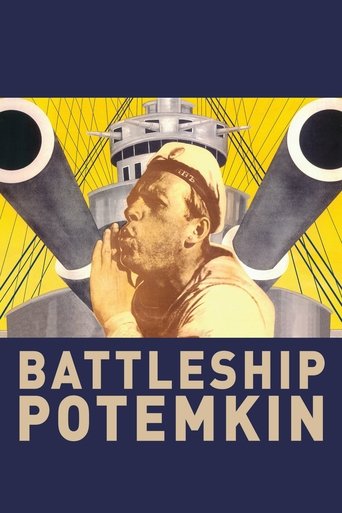
This archive lists one role for Aleksandr Levshin: Battleship Potemkin (1925). Most notably in Sergei Eisenstein's silent film Battleship Potemkin (1925). His career appears to have been extremely brief, with documented work limited to this single revolutionary film that would become movies in cinema history. Levshin portrayed an officer character in Eisenstein's masterpiece, which depicted the 1905 mutiny aboard a Russian battleship and became a landmark of montage theory and political cinema. Like many actors in early Soviet productions, Levshin was likely recruited from theatrical circles or was possibly a non-professional actor chosen for his appearance, as was common practice in Soviet filmmaking of this era. The limited documentation of his career suggests he may have been one of the countless actors who participated in the early Soviet film experiment but did not continue in the industry as it professionalized. His contribution, while small, places him within the historical context of cinema's most revolutionary period.
The Craft
Milestones
- Appeared in Sergei Eisenstein's Battleship Potemkin (1925) during the era of Soviet cinema
Best Known For
Iconic Roles
Must-See Films
Working Relationships
Worked Often With
Studios
Why They Matter
Impact on Culture
While Aleksandr Levshin's individual contribution to cinema was minimal due to his brief career, his participation in Battleship Potemkin places him within. The film revolutionized cinematic language through Eisenstein's innovative use of montage and influenced generations of filmmakers worldwide. Levshin, as part of this production, contributed to a work that demonstrated cinema's power as a political and artistic medium during the early Soviet period.
Lasting Legacy
Aleksandr Levshin's legacy is primarily tied to his association with Battleship Potemkin, a film that continues to be studied in film schools worldwide and regularly appears on lists of the greatest films ever made. Though his role was minor, he represents the many anonymous actors who participated in cinema's revolutionary early years, helping create foundational works that would shape the future of the medium.
Who They Inspired
Due to the limited scope of his career, there is no documented evidence of Aleksandr Levshin influencing other actors or directors. His influence is indirect, through his participation in a film that would become a touchstone for cinematic innovation and political filmmaking.
Off Screen
Very little is documented about Aleksandr Levshin's personal life, which is typical for many supporting actors from early Soviet cinema who had brief film careers. The lack of biographical information suggests he was not a prominent public figure outside of his single film appearance.
Did You Know?
- Appeared in what many consider
- Battleship Potemkin was initially banned in several countries including the United Kingdom and the United States for its revolutionary content
- The famous Odessa Steps sequence in the film, in which Levshin may have appeared, has been parodied and referenced in countless subsequent films
- Sergei Eisenstein often used non-professional actors in his films to achieve greater authenticity
- Battleship Potemkin was voted the greatest film of all time at the 1958 Brussels World's Fair
- The film was commissioned by the Soviet government to commemorate the 20th anniversary of the 1905 revolution
- Many cast members from early Soviet films like Levshin remain largely undocumented due to incomplete historical records
Frequently Asked Questions
Who was Aleksandr Levshin?
Soviet with credits in this catalog. His career appears to have been extremely brief, with this being his only documented film credit.
What films is Aleksandr Levshin best known for?
Titles linked here include Battleship Potemkin (1925).
When was Aleksandr Levshin born and when did he die?
Unfortunately, specific birth and death dates for Aleksandr Levshin are not documented in historical records, which is common for many supporting actors from early Soviet cinema who had brief careers.
What awards did Aleksandr Levshin win?
There are no documented awards or nominations for Aleksandr Levshin, as his film career was limited to a single appearance in 1925 before many formal film award systems were established.
What was Aleksandr Levshin's acting style?
Due to the limited documentation of his career and the brief nature of his appearance in Battleship Potemkin, there is insufficient information to characterize Aleksandr Levshin's specific acting style or techniques.
Why is Battleship Potemkin historically significant?
Battleship Potemkin is historically significant for revolutionizing film editing through Eisenstein's montage theory and for its powerful political messaging. The film influenced generations of filmmakers and remains a cornerstone of cinematic education worldwide.