Films
1 film
About Vladimir Barsky
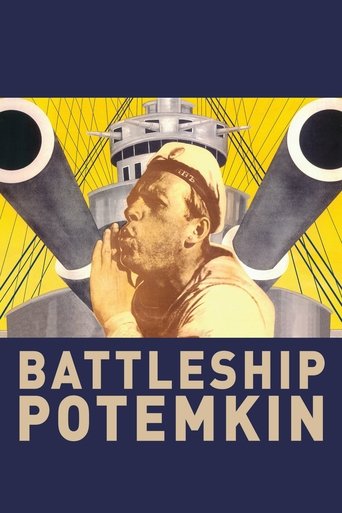
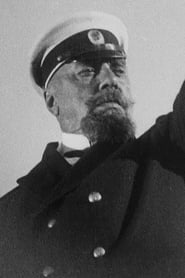
Soviet actor during the silent film era, best known for his role as the ship's doctor in Sergei Eisenstein's 1925 film 'Battleship Potemkin'. While detailed biographical information about Barsky remains scarce, his participation in one of cinema's most influential films places him within the important circle of early Soviet filmmakers. His performance in 'Battleship Potemkin' contributed to the film's powerful depiction of the 1905 revolution and its themes of social injustice and rebellion. Like many actors of his generation in Soviet cinema, Barsky's career was likely shaped by the political and artistic movements of post-revolutionary Russia, where film was seen as a crucial tool for social education and political propaganda. The limited documentation of his life reflects the broader challenge of preserving detailed records of many early Soviet film artists who worked primarily in supporting roles rather than as leading stars.
The Craft
On Screen
Likely employed the realistic, expressionistic style common in Soviet montage films of the 1920s, emphasizing clear character types that served the film's revolutionary narrative. His performance as the ship's doctor would have been designed to represent the bourgeois neglect and corruption that the film criticized as part of its political message.
Milestones
- Appeared in Sergei Eisenstein's 'Battleship Potemkin' (1925)
- Portrayed the ship's doctor in one of cinema's most influential films
- Participated in a film that exemplified Soviet montage theory and revolutionary cinema
Best Known For
Iconic Roles
Must-See Films
Working Relationships
Worked Often With
Studios
Why They Matter
Impact on Culture
Vladimir Barsky's contribution to cinema, while limited to primarily one documented role, is significant due to his participation in 'Battleship Potemkin', a film that revolutionized cinematic language and influenced generations of filmmakers worldwide. His portrayal of the ship's doctor helped establish the film's realistic depiction of the mutiny and its human cost, contributing to the film's powerful anti-authoritarian message. The film itself became a cornerstone of cinema history, with Barsky as part of the ensemble that created this enduring masterpiece of Soviet revolutionary art that continues to be studied and admired by filmmakers and scholars globally.
Lasting Legacy
Barsky's legacy is intrinsically tied to his role in. While he may not have been a major star with an extensive filmography, his contribution to 'Battleship Potemkin' ensures his place in film history as part of the ensemble that created this masterpiece of Soviet cinema. His performance, though brief, contributed to the film's lasting impact on cinematic storytelling and political expression, and he represents the many unsung actors who helped create the great works of early Soviet cinema.
Who They Inspired
As a supporting actor in a highly influential film, Barsky's performance contributed to the film's overall impact and its subsequent influence on cinematic techniques and storytelling approaches globally. His work exemplified the ensemble approach to Soviet revolutionary cinema, where individual performances served the greater ideological and artistic message of the film. The techniques and approaches demonstrated in 'Battleship Potemkin' influenced countless filmmakers, from Alfred Hitchcock to Brian De Palma, making Barsky's small contribution part of a much larger cinematic legacy.
Off Screen
Very limited information is available about Vladimir Barsky's personal life, which is common for many supporting actors from the early Soviet film era. Like many of his contemporaries, detailed records of his life outside of his film work were not systematically preserved, as the focus was often on the collective nature of Soviet artistic production rather than individual celebrity.
Did You Know?
- Appeared in what is widely considered one of the greatest films ever made
- His role as the ship's doctor was pivotal in depicting the medical neglect that sparked the mutiny
- Worked with legendary director Sergei Eisenstein during the height of Soviet montage theory development
- Participated in a film that was initially controversial but later praised internationally
- His performance contributed to a film that has been preserved in numerous film archives worldwide
- The film he appeared in was banned in several countries including Britain and France for its revolutionary content
- His character's examination of the maggot-infested meat is one of the catalyst moments in the film's narrative
- Like many Soviet actors of his era, he likely came from theater background before transitioning to film
- The film he appeared in was praised by figures like Charlie Chaplin and Douglas Fairbanks
- His performance contributed to a film that was voted the greatest film of all time at the 1958 World's Fair in Brussels
Frequently Asked Questions
Who was Vladimir Barsky?
Soviet with credits in this catalog.
What films is Vladimir Barsky best known for?
Titles linked here include Battleship Potemkin (1925).
What role did Vladimir Barsky play in 'Battleship Potemkin'?
Barsky portrayed the ship's doctor, a character whose examination of the maggot-infested meat helps trigger the famous mutiny sequence that drives the film's narrative.
When was Vladimir Barsky active as an actor?
Based on available records, Barsky was active in 1925, with his documented work being his appearance in 'Battleship Potemkin', though he may have had other undocumented roles during this period.
Did Vladimir Barsky work with other famous directors?
While documentation is limited, Barsky is confirmed to have worked with Sergei Eisenstein, one of cinema's most innovative and influential directors and a pioneer of montage theory.
What was Vladimir Barsky's contribution to Soviet cinema?
Barsky contributed to Soviet cinema through his participation in 'Battleship Potemkin', a landmark film that exemplified the artistic and political ideals of early Soviet filmmaking and montage theory.
Is Vladimir Barsky mentioned in film history books?
Barsky is occasionally mentioned in discussions of 'Battleship Potemkin' and its cast, though typically in reference to his specific role rather than as a major figure in cinema history.