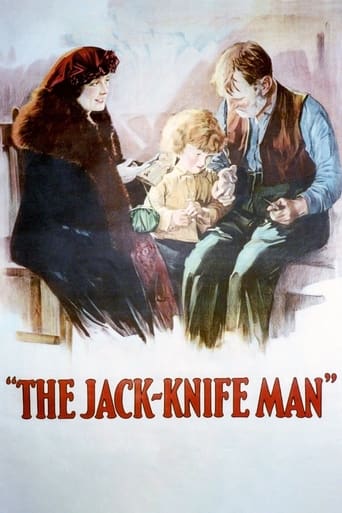
Bobby Kelso
Actor
- Active
- 1920-1920
Films 1
About Bobby Kelso
Bobby Kelso is a little-documented silent-era screen actor whose surviving credit trail places him in the 1920 production of The Jack-Knife Man. Available film reference sources indicate that he was active only briefly, or at least that only a single screen appearance has been securely preserved in widely consulted filmographies. Because the historical record is extremely sparse, there is no reliable evidence for a broader stage or screen career, and he does not appear to have become a major named personality in the way many contemporaries did. Like many performers from early American cinema, he may have worked in uncredited or poorly documented roles, with prints, studio paperwork, and trade notices providing only fragmentary survivals. His name remains of interest chiefly to historians and database researchers who reconstruct the cast lists of silent films and attempt to recover overlooked performers from the period. At present, no authoritative biographical narrative beyond his film credit can be verified with confidence, and the basic facts of his life outside that film remain unknown.
More about Bobby Kelso
In film history
Bobby Kelso's cultural impact is best understood as archival rather than celebrity-based. He represents the vast number of early film performers whose names appear in surviving credits but whose lives were not preserved in the same detail as major stars, yet whose work still formed part of the texture of silent-era cinema. His presence in The Jack-Knife Man contributes to the historical record of the film's cast and helps scholars trace production personnel in early 1920s American filmmaking. In that sense, his value lies in documentation and film history rather than in a widely recognized public persona.
Later reputation
His legacy is modest but meaningful to researchers of silent cinema because every verified cast name helps complete the historical record of a film that may otherwise be known only through surviving prints, reviews, or studio records. Bobby Kelso stands as an example of the many performers whose contributions were real but under-credited, reminding modern audiences that early film production relied on large pools of actors whose careers were often short-lived and poorly documented. For databases and historians, such names are important placeholders in the reconstruction of silent-era casting networks. His enduring significance is therefore as part of the documentary fabric of classic cinema, not as a widely mythologized star.
Influence
There is no verifiable evidence that Bobby Kelso directly influenced other actors or filmmakers in a documented, traceable way. However, his recorded participation in an early silent film contributes indirectly to the broader understanding of ensemble performance styles and casting practices of the era. In historical terms, performers like Kelso help illustrate how the silent film industry employed many minor players who supported the development of screen acting as a profession.
Off screen
No reliable public information has been located about Bobby Kelso's personal life, including family background, marriages, residence, education, or post-film career. Early film records frequently omit such details for minor or uncredited players, and no verified biographical source currently establishes them for him. As a result, any discussion of his family or private life would be speculative and should be avoided in a factual database entry.
Credits
- Screen credit for the silent feature The Jack-Knife Man (1920)
- Representation of the many lesser-known performers whose work survives only in fragmentary silent-era documentation
- Inclusion in historical cast records that preserve the personnel of early American cinema
Films
- The Jack-Knife Man (1920)
Notes
- His surviving filmography is extremely limited, with The Jack-Knife Man (1920) as the securely identified credit.
- He appears to be one of many silent-era performers whose careers are preserved more in cast lists than in biographical records.
- No reliable birth or death data has been confirmed from standard film-history references available for this entry.
- Because the record is so thin, he is a useful example of the archival gaps common in early cinema research.
- His name is of particular interest to historians reconstructing complete casts for silent features.
Questions
Who was Bobby Kelso?
Bobby Kelso was a silent-era film actor known from the surviving cast records of The Jack-Knife Man (1920). Beyond that credit, the historical record is very sparse, and no reliable extended biography has been preserved. He is mainly remembered by film historians and database researchers interested in early cinema cast reconstruction.
What films is Bobby Kelso best known for?
He is best known for The Jack-Knife Man (1920), which is the only securely identified film credit currently associated with him in the available record. No additional widely verified screen appearances can be confidently listed without risking error.
When was Bobby Kelso born and when did he die?
At present, Bobby Kelso's birth and death dates have not been reliably documented in the sources available for this entry. His place of birth and death, if any, are also unknown.
What awards did Bobby Kelso win?
No awards or formal honors are known for Bobby Kelso from the surviving historical record. This is not unusual for minor or poorly documented silent-era performers, many of whom worked before major film awards systems were established.
What was Bobby Kelso's acting style?
There is no surviving detailed critical description of Bobby Kelso's acting style. Given the era and the limited record, he would have performed within the expressive conventions of silent cinema, but any more specific characterization would be speculative.
What is Bobby Kelso's legacy in film history?
His legacy lies in the preservation of early cast records and the historical reconstruction of silent cinema. Even a small surviving credit helps scholars better understand the personnel and production environment of the period.