The Jack-Knife Man
Plot
After the death of a poor woman, her infant is left in the care of an elderly recluse known in the village as the Jack-Knife Man, a solitary old tinkerer and woodcarver who lives on the margins of the community. Though the townspeople view him as eccentric and unfit to raise a child, he grows deeply devoted to the boy and slowly proves his tenderness, patience, and sense of responsibility through years of quiet sacrifice. The child, Johnny, becomes the center of his life, and the old man’s makeshift household is transformed into a warm, unconventional home built from affection rather than comfort. As Johnny grows, the village’s mistrust of the old man continues to shadow their life together, and the threat of separation hangs over them when authorities and neighbors decide the child would be better off elsewhere. The film builds toward a poignant defense of chosen family and emotional legitimacy, emphasizing that love, not social status or age, defines a parent.
About the Production
The film was directed by King Vidor during the silent era, a period when he was building the humanistic style that would later define many of his major features. It is adapted from Juliana Horatia Ewing's story 'The Story of a Short Life' and reflects Vidor's interest in sympathetic outsiders, domestic feeling, and the dignity of ordinary labor. Surviving documentation on the production is limited, and precise details such as budget, full shooting schedule, and exact filming locations are not well preserved in standard references. The film is notable as an early example of Vidor's interest in sentimental realism and in narratives centered on morally worthy but socially marginalized characters.
Historical Background
The film was produced in 1920, just after World War I and during a period of major transition in American cinema, when feature-length narrative filmmaking had become the dominant form and studios were refining the language of visual storytelling. In the United States, the early 1920s were marked by rapid urbanization, changing family structures, and heightened interest in social reform, all of which made stories about guardianship, community judgment, and the value of unconventional households feel culturally resonant. Silent cinema in this era often used melodrama to explore social themes, and The Jack-Knife Man fits within that tradition while also pointing toward a more humane, character-centered realism. The film matters historically because it represents an early step in King Vidor's development as a director who would repeatedly examine the struggles of ordinary people and the moral pressures exerted by society.
Why This Film Matters
Although not one of Vidor's most famous titles, The Jack-Knife Man is significant as an early statement of the director's sympathy for isolated individuals and for forms of family that exist outside conventional respectability. The film's emotional core lies in the idea that love and responsibility can be demonstrated by someone whom society has dismissed as too old, too poor, or too odd to matter. That concern anticipates later American films about found families, caregiving, and the emotional labor of raising children in difficult circumstances. For historians of silent cinema, the film is also valuable as evidence of how mid-budget dramas could carry serious social feeling without needing spectacle, and it helps map the evolution of Vidor's humane, populist sensibility.
Making Of
The Jack-Knife Man was made at a time when King Vidor was establishing himself as one of Metro's notable directors, and the film fits neatly into the studio's output of modest-length dramatic features. Vidor was known for bringing sensitivity to material that might otherwise have been treated as straightforward melodrama, and this production appears to have been shaped by that instinct. Because surviving production records are sparse, there is little detailed evidence of elaborate set pieces or large-scale production challenges; the film was likely mounted efficiently, with the emphasis on performance, atmosphere, and emotional clarity. Its adaptation from a sentimental literary source suggests an effort to appeal to audiences who valued domestic drama and moral uplift, while also giving Vidor a vehicle for his interest in outsiders and the dignity of humble lives.
Visual Style
The film's cinematography is typical of early 1920s silent drama in its emphasis on clear storytelling, expressive framing, and emotional legibility over visual experimentation. Like many films of the period, it would have relied on composition, gesture, and carefully staged scenes to make the central relationship between the old man and the child immediately understandable without dialogue. Vidor's early work often shows an interest in naturalistic space and in using domestic settings to reflect character, so even in a modest production the visuals likely support the sense of a lived-in, humane environment. Surviving documentation does not identify especially famous technical flourishes, but the film likely uses the restrained camera style common to prestige silent dramas of the era.
Innovations
The film does not appear to be associated with major technical innovations, but it is technically notable as part of the maturing silent feature system in which performance, editing, and visual clarity carried the narrative. Its achievement lies more in its restrained storytelling and emotional control than in showy technique. For King Vidor's development, the film is significant because it demonstrates his ability to create empathy through simple dramatic construction and careful observation of character relationships. In the context of early Metro production, it reflects the studio's competence in producing polished, compact feature dramas.
Music
As a silent film, The Jack-Knife Man had no synchronized recorded score at release, and musical accompaniment would have varied from theater to theater. Exhibitors commonly used either a pianist, organist, or small ensemble, often selecting cue sheets or improvised music that matched the film's sentimental tone. No authoritative original score is widely documented in standard references. Modern presentations, when available, may use reconstructed or newly composed accompaniments tailored to archival screenings.
Famous Quotes
No widely documented surviving dialogue quotes are available from this silent film.
As a silent film, its original intertitles are not consistently preserved in modern reference sources.
Memorable Scenes
- The moment the old man takes in the motherless child and quietly accepts responsibility for raising him.
- Scenes showing the old man and the child building a daily life together, emphasizing tenderness through small acts of care.
- The village's collective suspicion and pressure as the community questions whether the child should remain with his elderly guardian.
- The emotional climax in which the old man's worth as a caregiver is tested against social prejudice.
Did You Know?
- The film is an early King Vidor feature and shows many of the compassionate social concerns that would recur throughout his career.
- It is based on a literary source by Juliana Horatia Ewing rather than an original screenplay.
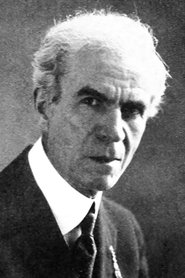
- Harry Todd, known for character roles, plays the title figure, emphasizing the story's focus on an older, working-class protagonist rather than a romantic lead.
- The film is often discussed as part of Vidor's early exploration of family, community judgment, and emotional resilience.
- Bobby Kelso appears as the child at the center of the story, and the film depends heavily on the relationship between the child and the elderly guardian.
- The title refers to the old man's habit of carving or crafting with a jack-knife, a detail that helps define him as a practical, self-made figure.
- As with many silent films from the period, surviving print availability has historically been limited, making documentation and viewing access difficult.
- The picture reflects the melodramatic but restrained style common to early 1920s prestige dramas.
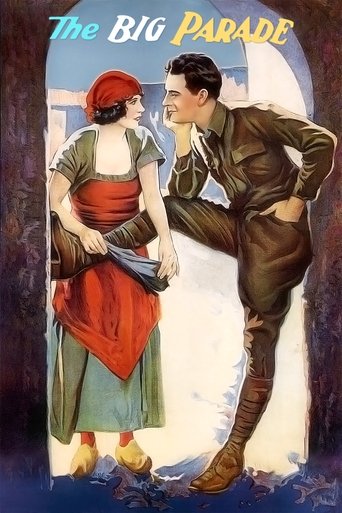
- King Vidor would later become famous for films such as The Big Parade and The Crowd, but this earlier work already shows his gift for emotional storytelling.
- The film's central conflict—whether an unconventional caregiver deserves custody—was unusually progressive in its empathy for an elderly, socially dismissed man.
What Critics Said
Contemporary critical reception is not extensively documented in widely accessible sources, but the film appears to have been received as a respectable sentimental drama in line with Metro's early 1920s offerings. Like many silent-era features outside the major canonical titles, it did not generate a large body of surviving review discourse, and much of its modern reputation comes from Vidor scholarship rather than from widespread audience memory. In later critical writing, the film is often treated as an interesting precursor to Vidor's more celebrated works, valued for its compassion, simplicity, and attention to marginalized figures. Today it is chiefly of interest to historians, archivists, and silent-film enthusiasts rather than to a broad mainstream audience.
What Audiences Thought
Specific audience reaction records are scarce, which is common for silent films from this period unless they were major box-office sensations. The film likely appealed to viewers who responded to sentimental family dramas and stories of moral virtue rewarded through hardship. Its emotional premise and child-centered plot would have made it accessible to general audiences of the time, especially those accustomed to the pathos-driven storytelling of the silent era. In the present day, audience reception is largely limited to viewers encountering the film through archival screenings, rare home-video circulation, or online database discovery.
Film Connections
Influenced By
- The Story of a Short Life by Juliana Horatia Ewing
- Sentimental Victorian children's literature
- Early 20th-century American social melodrama
This Film Influenced
- King Vidor's later socially conscious dramas
- Later American found-family melodramas
- Films about unconventional guardianship and custody disputes
You Might Also Like
More Drama Films
View allMore from King Vidor
View allFilm Restoration
The film is not generally described as a complete lost title, but it is not widely available and surviving access is limited; preservation status should be treated as uncertain without a readily circulating restoration. Copies may survive in archives or private collections, but the film is rarely screened and is not broadly distributed on commercial home video.