Irene Yeager
Actor
- Active
- 1920-1920
Films 1
About Irene Yeager
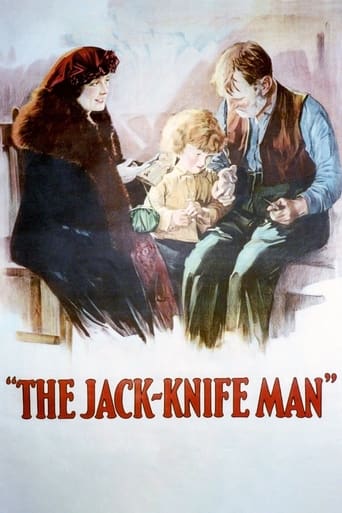
Irene Yeager is a little-documented silent-era screen performer who is credited in the 1920 feature The Jack-Knife Man, but very little else about her life and career has survived in standard film-reference sources. Her known screen work places her briefly within the early American motion-picture industry during the transition from the 1910s into the 1920s, when many actors appeared in only one or a handful of productions and left scant archival trace. Because surviving records do not clearly identify her in trade papers, studio publicity, or later reference books, it is difficult to reconstruct a full biography with confidence. What can be said with certainty is that she participated in silent cinema at an early stage of film history, when acting style was still closely tied to theatrical naturalism, expressive pantomime, and camera-facing presentation. Her contribution is therefore best understood as part of the larger pool of early film performers whose work helped build the silent-era screen language even when their names did not remain widely known. At present, she should be regarded as an obscure but documented classic-cinema personality associated with one surviving film credit rather than as a star with a substantial recorded career. Further archival research in studio records, censuses, and contemporary newspapers would be required to establish her birth, death, and broader personal history.
More about Irene Yeager
On screen
No detailed contemporary description of Irene Yeager's acting style survives in readily available reference sources. Given the period in which she worked, her performance likely relied on silent-era expressive technique, including clear physical gesture, facial expression, and visually legible emotion rather than spoken dialogue. Any assessment beyond that would be speculative, as no reviewed body of work or surviving commentary has been securely attributed to her.
In film history
Irene Yeager's cultural impact is indirect rather than widely celebrated: she is part of the large, often invisible workforce of silent-era screen talent whose appearances helped sustain the early American film industry. Performers like Yeager contributed to the building blocks of feature-film storytelling during the period when cinema was developing its own acting vocabulary, visual grammar, and production systems. Although she did not leave behind a known star persona or a documented body of major roles, her credit in The Jack-Knife Man places her within the historical record of silent film and makes her relevant to researchers studying cast lists, production histories, and the social makeup of early Hollywood and regional studios. Her presence in film history underscores how many early performers remain only partially documented, even though they were active participants in the medium's formative years.
Later reputation
Yeager's legacy lies primarily in her survival as a named credit from the silent era, which is historically valuable even when biographical details are sparse. For film historians and database researchers, such credits help preserve the broader cast of early cinema beyond the best-known stars and directors. Her name also serves as a reminder of the many actors whose contributions were real but under-archived, making them difficult to recover in later scholarship. In that sense, her lasting importance is archival: she is part of the documented fabric of early film history, even if her individual fame did not endure.
Influence
There is no documented evidence that Irene Yeager directly influenced later actors or filmmakers in a traceable, named way. Her broader influence would have been the same as that of many silent-era players: contributing, through performance, to the evolving conventions of screen acting in the early 20th century. As a result, her importance is better understood collectively, as part of the generation whose work helped normalize expressive acting for the camera during the silent period.
Off screen
No reliable biographical information about Irene Yeager's personal life has been found in the standard classic-cinema references available for this entry. Her marital status, family background, education, residence, and later life are all currently undocumented in the sources consulted. Because of that, no verified narrative of spouses, children, or personal associations can be responsibly supplied. She remains one of many silent-era film credits whose off-screen life has not yet been fully reconstructed by historians.
Credits
- Appeared in the 1920 silent feature The Jack-Knife Man, which is the surviving credit most commonly associated with her name
- Represents the kind of early, often under-documented screen performer active during the silent era
- Participated in American cinema at a formative moment when feature-length storytelling and silent performance conventions were still evolving
Roles
- Role in The Jack-Knife Man (1920)
Films
- The Jack-Knife Man (1920)
Notes
- Irene Yeager is known primarily from a single surviving screen credit in The Jack-Knife Man (1920).
- Her biography is difficult to reconstruct because standard film references do not provide verified birth, death, or family details.
- She worked during the silent era, a period when many performers appeared in films without receiving durable historical documentation.
- Her name appears in classic-cinema records, but she is not associated with a widely known star persona.
- She is an example of an early film actor whose importance is preserved more by archival credit than by surviving publicity.
- Because no confirmed photographs, interviews, or trade-paper profiles are readily associated with her, visual and personal details remain uncertain.
- Her film credit is useful to historians studying cast lists and the labor structure of early 20th-century filmmaking.
Questions
Who was Irene Yeager?
Irene Yeager was a silent-era film actor best known from her credit in The Jack-Knife Man (1920). She remains an obscure early-cinema figure, with very limited surviving biographical documentation. Her importance today is mainly historical and archival, reflecting the many under-recorded performers of the silent period.
What films is Irene Yeager best known for?
She is best known for The Jack-Knife Man (1920), which is the principal film credit associated with her name. No additional verified filmography is readily available in standard reference sources. As a result, that film remains the key basis for her presence in classic-cinema history.
When was Irene Yeager born and when did she die?
Her birth and death dates are not currently verified in the available classic-cinema references. Likewise, her birth place and later-life details are not securely documented. She should therefore be listed as having unknown vital statistics unless new archival evidence emerges.
What awards did Irene Yeager win?
No awards or formal nominations are known for Irene Yeager. This is not unusual for lesser-documented silent-era performers, especially those whose surviving record consists of only one or a few film credits. At present, no verified honors can be attributed to her.
What was Irene Yeager's acting style?
There is no surviving contemporary criticism that clearly describes her personal style. Since she worked in silent cinema, her performance would have depended on expressive gesture, facial communication, and visually clear emotion. Beyond that, any more specific assessment would be speculative.
What is Irene Yeager's legacy in film history?
Her legacy is primarily archival: she is one of many silent-era performers whose names survive in cast records even when personal histories are largely lost. That makes her useful to researchers studying early film labor, cast documentation, and the development of silent cinema. She represents the many contributors who helped shape the medium without becoming widely famous.