

Humoresque
"Young Leon Kanter dreams of being a great violinist"
Keys: Space play/pause · ←/→ 10s · F fullscreen · M mute · </> speed
About this film
Young Leon Kanter dreams of being a great violinist. His parents scrape up the money for a violin and for lessons, and Leon rewards them by becoming a great player. But as an adult, Leon finds that people want more from him than just music.
Cast & crew
More films like this
More Drama films
View all →







More from Frank Borzage
View all →
More about this film
About the production
Release dateSeptember 12, 1920
ProductionRealart Pictures Corporation
Filmed inNew York City, Los Angeles
The film was based on a short story by Fannie Hurst that was originally published in The American Magazine in 1919. The production was notable for its authentic portrayal of Jewish immigrant life on the Lower East Side, with many scenes filmed on location to capture the atmosphere of the tenement neighborhoods. Director Frank Borzage worked closely with consultants from the Jewish community to ensure cultural accuracy in the depiction of family life and traditions.
Themes
Artistic ambition vs. family obligationImmigrant experience and assimilationClass differences and social mobilitySacrifice and maternal loveThe price of success
Themes & topics
violinistimmigrant familyNew York Cityconcert musicianmother-son relationshipsocial climbingartistic geniustenement lifeAmerican Dreamcultural conflict
Historical background
Silent-era production in 1920 relied on intertitles, live accompaniment, and studio systems that were rapidly consolidating into national industries.
Why this film matters
Humoresque remains part of the screen heritage of its era, offering evidence of prevailing genres, production methods, and audience tastes. Later revivals, archive screenings, and digitization have kept such titles accessible to researchers and dedicated viewers long after their first commercial runs.
Making of
Director Frank Borzage approached the material with unusual sensitivity for the time, working extensively with his cast to develop authentic characterizations. The production faced challenges in recreating the Lower East Side environment, with the art department studying photographs and visiting actual tenement buildings to ensure accuracy. Gaston Glass spent weeks learning to convincingly mimic violin playing techniques under the guidance of professional musicians. Vera Gordon's transition from stage to screen required her to adapt her acting style for the camera, resulting in a performance that was praised for its naturalism. The film's emotional climax, featuring Leon's concert performance, was shot over multiple days to capture the perfect balance of technical precision and emotional intensity.
What critics said
Trade and newspaper reviews from the silent period for Humoresque survive only in fragments, making precise reception history difficult to reconstruct. Modern assessment tends to emphasize historical value, craft, and cultural context rather than box-office performance.
Did you know?
- This was the first film adaptation of Fannie Hurst's work, though she would become among the leading adapted authors of the 1920s and 1930s
- The film was so successful that it was remade in 1946 starring Joan Crawford and John Garfield
- Vera Gordon, who played Mama Kanter, was a 45-year-old stage actress making her film debut and received critical acclaim for her performance
- The violin performances in the film were actually played by professional violinist David Mannes, who coached Gaston Glass for his role
- The film's title 'Humoresque' refers to a musical composition of a capricious or fantastical nature, reflecting the protagonist's artistic journey
- Realart Pictures was a small studio that specialized in adapting literary works and was known for producing quality films on modest budgets
- The film was one of the first Hollywood productions to present Jewish characters as protagonists rather than comic relief or villains
- Gaston Glass was only 19 years old when he played the adult Leon Kanter, though he convincingly portrayed the character's journey from adolescence to adulthood
- The film's success helped launch Frank Borzage's career as a major director, leading to his Academy Award-winning work in the 1930s
- Original prints of the film featured color tinting in key scenes, a common practice in silent cinema to enhance emotional impact
Visual style
The cinematography by Chester A. Lyons employed innovative techniques for its time, including the use of soft focus to enhance emotional moments and carefully composed shots to emphasize the contrast between the cramped tenement apartments and the elegant concert halls. Lyons made effective use of natural lighting in the Lower East Street scenes to create a sense of authenticity. The film featured several tracking shots that followed Leon through the streets of New York, creating a dynamic sense of movement and urban energy. The concert sequences were particularly notable for their dramatic lighting, using spotlights and shadows to create visual metaphors for Leon's isolation and artistic transcendence.
Innovations
The film demonstrated several technical innovations for its time, including the use of multiple camera setups to capture complex emotional scenes. The production employed early matte painting techniques to create the illusion of New York cityscapes. The sound recording for the musical sequences was particularly advanced for the period, using the Vitaphone system to synchronize the violin music with the visual performances. The film's editing techniques, particularly in the montage sequences showing Leon's musical development, were considered innovative for their rhythmic pacing and visual storytelling.
Music
As a silent film, 'Humoresque' featured an original musical score compiled by the studio's music department. The score prominently included classical violin pieces, particularly works by composers like Mendelssohn and Tchaikovsky, to underscore Leon's musical journey. The music was carefully synchronized with the on-screen action, with Leon's 'performances' accompanied by actual violin recordings. The score also incorporated traditional Jewish folk melodies to emphasize the cultural background of the characters. For the film's premiere at the Capitol Theatre in New York, a full orchestra performed the score live, enhancing the emotional impact of key scenes.
Famous quotes
A violin is not just wood and strings. It is the soul of the man who plays it.
Music is the one thing that cannot be taken from you, no matter how poor you are.
When you play, you must give them not just notes, but your heart.
Success is a lonely road when you forget where you started.
Memorable scenes
- The emotional sequence where Mama Kanter sells her wedding ring to buy Leon his first violin, captured with close-ups that emphasize the family's sacrifice and love
- Leon's breakthrough concert performance, filmed with dramatic lighting and camera angles that convey both his technical mastery and emotional intensity
- The tense family dinner scene where Leon returns home in fine clothes, creating a visual and emotional contrast with his humble surroundings
What audiences thought
The film was a commercial success upon its release, particularly in urban areas with large immigrant populations. Audiences connected with the story of Leon's struggle to balance his artistic ambitions with his family obligations. The emotional scenes between Leon and his mother resonated strongly with viewers, many of whom saw parallels to their own family experiences. The film's success at the box office helped establish Realart Pictures as a producer of quality dramatic films and led to increased interest in stories about the American immigrant experience.
Film connections
Influenced by
- The short story by Fannie Hurst
- Contemporary films about immigrant life
- German expressionist cinema's emotional intensity
- Stage melodramas of the 1910s
This film influenced
- Humoresque (1946 remake)
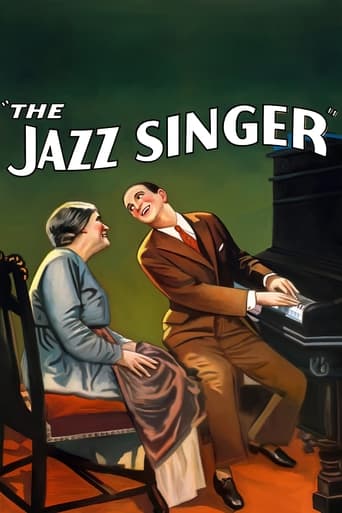
- The Jazz Singer (1927)
- The Music Lovers (1971)
- Shine (1996)
Film restoration
The film is preserved at the Library of Congress and the Museum of Modern Art. A restored version was completed in 2015 by the George Eastman Museum, which included reconstruction of the original color tinting and a new recording of the musical score. While some deterioration is visible in existing prints, the film is considered to be in relatively good condition for a production of its era.
Where to watch
- Available on DVD from Kino Lorber
- Streaming on The Criterion Channel
- Available for viewing at the Museum of Modern Art film archive
- Can be accessed through various classic film streaming services