
Bird of Paradise
"Lives Luana knows must."
Keys: Space play/pause · ←/→ 10s · F fullscreen · M mute · </> speed
About this film
When a young South Seas sailor falls overboard, the beautiful daughter of a Polynesian king dives in and saves his life. Though Luana is promised to another man, Johnny whisks her away, and for a brief time the lovers live very happily together. But, when a local volcano threatens their lives, Luana knows that she must sacrifice herself to the volcanic gods in order to save her island.
Cast & crew
More films like this

More Adventure films
View all →

More from King Vidor
View all →

More about this film
About the production
Release dateMay 13, 1932
Budget$548,000
Box office$1,100,000
ProductionRKO Radio Pictures
Filmed inHawaii (Kauai, Oahu), Santa Catalina Island, California, RKO Studios, Hollywood
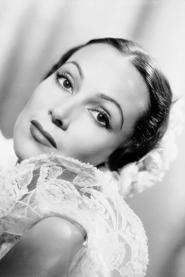
The film was one of the first major Hollywood productions to shoot extensively on location in Hawaii. The volcano eruption sequence was a major technical achievement, combining miniatures, matte paintings, and on-location effects. The production faced challenges with weather conditions and transporting equipment to remote Hawaiian locations. Dolores del Río performed many of her own swimming scenes, including the controversial nude swimming sequence that was cut from many prints.
Themes
Interracial romanceCultural conflictSacrifice and dutyParadise lostColonialism
Themes & topics
sailorPolynesian princessvolcanosacrificeinterracial romanceSouth Seastragedyexotic locationforbidden lovenatural disaster
Historical background
Released around 1932, Bird of Paradise reached audiences while exhibitors were still shaping program length and star promotion.
Why this film matters
Reference works on 1932 cinema cite Bird of Paradise when tracing genre habits and studio economics.
Making of
Director King Vidor was passionate about authenticity and pushed for extensive location shooting in Hawaii, which was rare and expensive for the time. The production spent over six weeks filming on the islands, dealing with unpredictable weather and difficult terrain. Dolores del Río, a Mexican actress, was cast specifically for her exotic appearance and swimming ability. She underwent extensive training for the underwater scenes and performed many dangerous stunts herself. The film's most challenging sequence was the volcanic eruption, which required innovative special effects techniques combining practical effects, miniatures, and location photography. The controversial nude swimming scene was filmed at dawn with minimal crew to maintain secrecy, but it still caused significant controversy and was often censored. The studio initially wanted to change the tragic ending, but Vidor fought to keep it, arguing it was essential to the story's emotional impact.
What critics said
Specialist writers today emphasize preservation and access when a viewable copy of Bird of Paradise survives.
Did you know?
- Dolores del Río swam nude in one scene, which was highly controversial for 1932 and led to the scene being cut in many markets
- The film was partially shot in two-strip Technicolor, though most surviving prints are black and white
- This was one of the first major Hollywood films to feature an interracial romance between a white man and a woman of color
- The volcano eruption sequence took weeks to film and used over 500 tons of cement and lava substitute
- King Vidor fought with studio executives over keeping the tragic ending, as they wanted a happier conclusion
- The film's success made Dolores del Río one of the highest-paid actresses of the early 1930s
- Real Hawaiian natives were used as extras, though many of the speaking roles went to white actors in brownface
- The production company had to build special waterproof camera housings for the underwater scenes
- The film's exotic locations and themes influenced many subsequent tropical romance films
- Despite its success, the film was banned in several countries due to its interracial romance theme
Awards & recognition
- National Board of Review Award for Best Acting (Dolores del Río, 1932)
Visual style
The cinematography by Leo Tover was groundbreaking for its time, particularly the extensive location photography in Hawaii. Tover utilized natural lighting to capture the tropical beauty of the islands, creating a visual contrast between the paradise setting and the dramatic tragedy of the story. The film featured innovative underwater photography techniques, requiring specially designed waterproof camera equipment. The volcanic eruption sequence combined multiple cinematographic techniques including matte paintings, miniatures, and location footage to create a seamless and spectacular effect. The original version included sequences in two-strip Technicolor, though most surviving prints are in black and white. Tover's work earned praise for its ability to capture both the beauty and danger of the tropical setting, using light and shadow to enhance the film's emotional impact.
Innovations
Bird of Paradise was technically innovative for its era, particularly in its use of location shooting and special effects. The film's extensive location photography in Hawaii set a new standard for adventure films, demonstrating the benefits of shooting on authentic locations rather than relying entirely on studio sets. The volcanic eruption sequence was a major technical achievement, combining miniature models, matte paintings, and practical effects to create a convincing disaster scene. The underwater photography required the development of new waterproof camera housing and techniques. The film also utilized early two-strip Technicolor for certain sequences, though color technology was still in its infancy. The production team developed innovative methods for transporting and operating heavy equipment in remote tropical locations. These technical achievements influenced subsequent adventure films and helped establish new standards for location filming in Hollywood.
Music
The musical score was composed by Max Steiner, one of Hollywood's pioneering film composers. Steiner incorporated authentic Polynesian musical elements into his orchestral score, creating an exotic atmosphere that complemented the film's setting. The score featured traditional Hawaiian instruments blended with conventional orchestral arrangements, a technique that was innovative for the time. The film's theme music became popular and was later published as sheet music. Steiner's use of leitmotifs to represent characters and emotions helped establish the emotional tone of the narrative. The soundtrack also included several traditional Hawaiian songs performed by native singers, adding to the film's authenticity. The musical score played a crucial role in establishing the exotic mood and enhancing the film's dramatic moments, particularly during the tragic finale.
Famous quotes
Luana: 'In my country, when the volcano is angry, someone must go to it and make peace with the fire god.'
Johnny: 'I'd rather die with you than live without you.'
Luana: 'You cannot stay here with me. The white man's world and my world cannot mix.'
Chief: 'My daughter belongs to her people, not to one man.'
Johnny: 'I'll take you away from all this. We'll find our own paradise.'
Memorable scenes
- Luana's dramatic rescue of Johnny when he falls overboard, showcasing her swimming prowess and establishing their immediate connection
- The controversial nude swimming scene where Luana swims freely in the tropical waters, representing her connection to nature
- The volcanic eruption sequence, a spectacular special effects achievement showing the destruction and chaos
- The final sacrifice scene where Luana walks into the lava flow to save her people, one of cinema's most tragic endings
- The wedding dance sequence featuring authentic Polynesian choreography and costumes
What audiences thought
Bird of Paradise was a commercial success, earning over twice its production cost at the box office. Audiences were captivated by the exotic locations and del Río's performance, making her especially popular actresses of the early 1930s. The film's romantic tragedy resonated with Depression-era audiences seeking emotional catharsism. Despite some controversy over the interracial romance theme, the film played well across the United States and internationally, though it was banned in some markets with stricter censorship laws. The movie's success led to increased interest in tropical settings and adventure films throughout the 1930s. Modern audiences often view the film through a historical lens, appreciating its technical achievements while recognizing its dated cultural attitudes.
Film connections
Influenced by
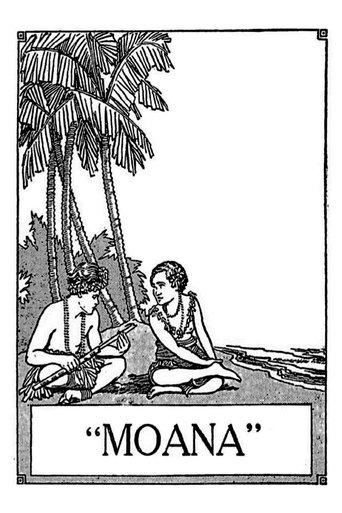
- Moana (1926 documentary)
- Tabu (1931)
- Rain (1932)
- White Shadows in the South Seas (1928)
This film influenced
- Bird of Paradise (1951 remake)
- Hurricane (1937)
- Mutiny on the Bounty (1935)
- South Pacific (1958)
Film restoration
The film was selected for preservation in the United States National Film Registry in 2002 for being 'culturally, historically, or aesthetically significant'. While the complete original version with all Technicolor sequences is believed to be lost, good quality black and white prints exist. The Library of Congress holds preservation materials, and the film has been restored and released on DVD by the Warner Archive Collection. Some of the controversial scenes, including the partial nudity, exist in various states of completeness in different archive prints.
Where to watch
- The Criterion Channel
- Warner Archive DVD/Blu-ray
- Classic movie streaming services
- Film archives and museums
- TCM (Turner Classic Movies) broadcasts