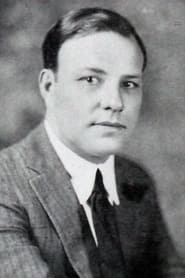
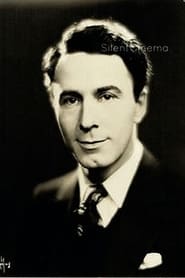
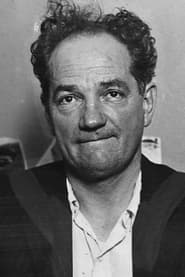

Broken Blossoms or The Yellow Man and the Girl
"An abused girl finds refuge with a gentle stranger."
Keys: Space play/pause · ←/→ 10s · F fullscreen · M mute · </> speed
About this film
The love story of an abused English girl and a Chinese Buddhist in a time when London was a brutal and harsh place to live. Broken Blossoms or The Yellow Man and the Girl, often referred to simply as Broken Blossoms, is a 1919 American silent melodrama film directed by D. It was the first film distributed by United Artists.
Cast & crew
More Drama films
View all →






More from D.W. Griffith
View all →
More about this film
About the production
Release dateMay 13, 1919 (premiered in New York City)
BudgetApproximately $90,000
Box officeVery successful commercially, though exact figures are not well documented for the period
ProductionD.W. Griffith Productions, Artcraft Pictures Corporation
Filmed inFilmed at Griffith's studio in Hollywood, California, with sets designed to recreate London's Limehouse district
The film was adapted from Thomas Burke's short story 'The Chink and the Child' from his 1916 collection 'Limehouse Nights.' Griffith initially wanted a Chinese actor for the lead role but cast Richard Barthelmess, a white actor, in yellowface makeup due to racial casting limitations of the era. Lillian Gish's performance was particularly praised for its subtlety and emotional depth, especially in the 'closet scene' where her character shows terror by contorting her face and hands. The film was shot quickly and efficiently compared to Griffith's earlier epics, with a focus on intimate storytelling rather than grand spectacle.
Themes
Love transcending cultural and racial boundariesThe destructive nature of violence and abuseThe contrast between Eastern spirituality and Western materialismThe innocence and purity of true loveThe brutality of urban poverty and desperation
Themes & topics
abuseforbidden lovecross-cultural romancetragedyLondonpovertyboxerBuddhisminnocenceviolenceredemptionsacrificeprejudiceurban decaymelodramasilent filmyellowfacedomestic violenceunrequited lovefatalism
Historical background
Production circa 1919 placed Broken Blossoms or The Yellow Man and the Girl within the technical habits of its era—intertitles, studio sets, and regional distribution networks.
Why this film matters
For historians, Broken Blossoms or The Yellow Man and the Girl documents what typical program fare looked like in 1919, not only marquee blockbusters.
Making of
The production of 'Broken Blossoms' marked a significant departure from D.W. Griffith's previous large-scale epics like 'The Birth of a Nation' and 'Intolerance.' Instead of thousands of extras and massive sets, Griffith focused on intimate storytelling with a small cast. The film was shot quickly and efficiently at Griffith's studio in Hollywood, with carefully constructed sets designed to recreate London's Limehouse district. Lillian Gish and D.W. Griffith had a close professional relationship, and she was given considerable creative freedom in developing her character's emotional journey. The famous 'closet scene' where Lucy expresses terror was largely improvised by Gish, who drew on techniques she had developed in stage acting. Despite the film's relatively small scale, Griffith employed his signature techniques of cross-cutting and close-ups to heighten emotional impact. The production faced some controversy over the casting of Richard Barthelmess, a white actor, in the role of Cheng Huan using yellowface makeup, though Griffith maintained he had sought to cast an actual Chinese actor but faced studio resistance.
What critics said
Specialist writers today emphasize preservation and access when a viewable copy of Broken Blossoms or The Yellow Man and the Girl survives.
Did you know?
- The film was adapted from Thomas Burke's short story 'The Chink and the Child,' but Griffith changed the title to be more sensitive, though still using the problematic subtitle 'The Yellow Man and the Girl.'
- Lillian Gish was 26 years old when she played 15-year-old Lucy, demonstrating her remarkable ability to portray youth convincingly.
- The famous 'closet scene,' where Lucy shows terror by contorting her face and hands, was improvised by Gish during filming.
- Despite being a silent film, Griffith insisted on having the actors speak their lines during filming to ensure authentic emotional expression.
- The film was a commercial success and helped establish United Artists, the distribution company co-founded by Griffith, Charlie Chaplin, Mary Pickford, and Douglas Fairbanks.
- Richard Barthelmess was nominated for the first Academy Award for Best Actor for his performance, though the award ceremony wouldn't occur until 1929.
- The film was considered Griffith's 'atonement' for the racial controversy surrounding 'The Birth of a Nation' (1915), presenting a more sympathetic portrayal of a non-white character.
- The film's success led to a 1936 sound remake directed by John Brahm, though it was not as well-received.
- Griffith originally wanted to cast an actual Chinese actor in the lead role but faced studio resistance and racial casting limitations of the era.
- The film's title was often shortened to just 'Broken Blossoms' in subsequent releases and references.
Awards & recognition
- Selected for preservation in the United States National Film Registry by the Library of Congress (1996)
- Photoplay Magazine Medal of Honor (1919)
- Recognized by the American Film Institute as among the pivotal American films
Visual style
The cinematography of 'Broken Blossoms' was groundbreaking for its time, featuring innovative techniques that enhanced the film's emotional impact. Billy Bitzer, Griffith's regular cinematographer, employed a soft-focus style that created a dreamlike, poetic quality perfectly suited to the film's romantic tragedy. The film made extensive use of close-ups, a technique Griffith had pioneered, to capture the subtle emotional performances of the actors, particularly Lillian Gish's expressive face. The lighting design was particularly sophisticated, with dramatic use of shadows and light to create mood and emphasize the contrast between the harsh world of Lucy's father and the gentle sanctuary of Cheng's shop. The film's visual composition was carefully crafted, with each frame serving the emotional narrative. The famous 'closet scene' featured innovative camera work that heightened Lucy's terror through tight framing and dramatic lighting. The visual style of 'Broken Blossoms' influenced countless later films, particularly in its use of cinematography to convey psychological states and emotions. The film's aesthetic represented a move toward more naturalistic and poetic visual storytelling in cinema, moving away from the theatrical style of earlier films.
Innovations
'Broken Blossoms' featured several technical achievements that advanced the art of cinema. The film's innovative use of lighting, particularly in creating mood and atmosphere, represented a significant advancement in cinematographic techniques. The extensive use of close-ups to convey emotion was groundbreaking, demonstrating how the camera could capture subtle performances in ways impossible on stage. The film's editing techniques, particularly Griffith's use of cross-cutting to build tension and create emotional resonance, were highly sophisticated for the era. The production design, which convincingly recreated London's Limehouse district on a Hollywood soundstage, showcased the growing technical capabilities of film studios. The film's makeup effects, particularly the yellowface applied to Richard Barthelmess, while problematic by modern standards, were technically advanced for their time in creating a convincing transformation. The film's pacing and rhythm, achieved through careful editing and performance, demonstrated a sophisticated understanding of cinematic timing. The technical achievements of 'Broken Blossoms' contributed to the evolution of film as an art form, particularly in demonstrating how technical elements could serve artistic and emotional purposes rather than merely documenting performances.
Music
As a silent film, 'Broken Blossoms' was originally accompanied by live musical performances in theaters. The film's score was composed by Louis F. Gottschalk, who created a romantic, evocative score that enhanced the film's emotional journey. The music featured delicate, Asian-inspired motifs for Cheng's scenes, contrasting with more dramatic, dissonant passages for scenes of violence and conflict. The score emphasized the film's romantic elements while underscoring its tragic nature. Many theaters also used popular songs of the era that complemented the film's themes of love and loss. The original score was considered innovative for its time, moving beyond the generic accompaniment common in earlier silent films. In modern restorations, various composers have created new scores for the film, including orchestral arrangements that attempt to capture the spirit of the original while appealing to contemporary audiences. The musical accompaniment was crucial to the film's emotional impact, as silent films relied heavily on music to convey mood and enhance narrative. The soundtrack of 'Broken Blossoms' represented an early example of how music could be integrated with visual storytelling to create a cohesive artistic experience.
What audiences thought
'Broken Blossoms' was a commercial success upon its release, resonating strongly with audiences of 1919. The film's emotional power and tragic romance struck a chord with post-war audiences seeking more sophisticated storytelling. Many viewers were particularly moved by Lillian Gish's performance and the film's unflinching portrayal of domestic abuse, which was unusual for the era. The film's sympathetic treatment of a Chinese character also generated discussion among audiences, challenging prevailing racial attitudes of the time. Despite its serious themes and tragic ending, the film found a wide audience and played in theaters for extended runs. The success of 'Broken Blossoms' helped establish United Artists as a viable distribution company, proving that artist-driven films could find commercial success. Over the decades, the film has maintained its reputation as a classic of silent cinema, with screenings at film festivals and revival theaters continuing to draw audiences. Modern viewers often find the film both emotionally powerful and historically significant, though some elements, particularly the use of yellowface, are viewed as problematic by contemporary standards.
Film connections
Influenced by
- Thomas Burke's short story 'The Chink and the Child' from his collection 'Limehouse Nights' (1916)
- Victorian melodrama traditions
- Griffith's own earlier work on intimate character studies
- Contemporary literary trends toward realism and social commentary
- The growing interest in Eastern philosophy and spirituality in the West
- Post-war disillusionment and questioning of Western values
- The development of psychological realism in literature and theater
This film influenced
- Sunrise: A Song of Two Humans (1927) - for its visual poetry and romantic tragedy
Where to watch
- Internet Archive: https://archive.org/details/brokenblossoms1919
- YouTube: https://www.youtube.com/watch?v=o3qHmAQzg9M
- Wikimedia Commons: https://commons.wikimedia.org/wiki/File:Broken%20Blossoms.webm