

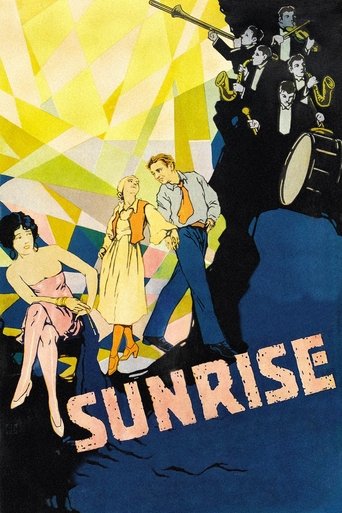
Wild Oranges
"Oranges on a lonely shore"
Keys: Space play/pause · ←/→ 10s · F fullscreen · M mute · </> speed
About this film
King Vidor places widower John Woolfolk on an island where fugitive Nicholas terrorizes Millie Stope. Millie Stope lives with her grandfather on a remote island. Man-child Nicholas, a fugitive from justice, also lives there and is terrorizing them - and he's interested in Millie. One day widower John Woolfolk, sailing on his yacht, happens upon the island.
Cast & crew
More films like this
More Drama films
View all →







More from King Vidor
View all →

More about this film
About the production
Release dateMarch 30, 1924
Box officeUnknown - moderate commercial success for its time
ProductionMetro-Goldwyn Pictures Corporation
Filmed inCatalina Island, California, MGM Studios, Culver City, California
Director King Vidor was particularly proud of this film's atmospheric qualities and considered it one of his most personal works. The production faced challenges filming on location at Catalina Island, where the crew had to deal with unpredictable weather and difficult terrain. The orange groves featured in the film were specially planted for the production. Vidor insisted on extensive location shooting to achieve the authentic, isolated atmosphere he wanted, which was unusual for the time when most films were shot entirely on studio sets.
Themes
Isolation and lonelinessCivilization versus primal natureObsessive love and jealousyPsychological terrorThe corrupting influence of fear
Themes & topics
islandfugitiveobsessive lovepsychological dramasailingorange groveterrorwidowergrandfather-granddaughter relationshipremote locationjealousyromancedangersurvival
Historical background
1924 placed Wild Oranges within United States cinema as Metro-Goldwyn Pictures Corporation navigated wartime markets, immigration audiences, and the shift from intertitles to sound.
Why this film matters
Archivists revisit Wild Oranges (1924) for King Vidor style, genre norms at Metro-Goldwyn Pictures Corporation, and the exhibition context of 70 minutes (7 reels) programming.
Making of
King Vidor fought hard with MGM executives to make this film, as they considered it too dark and psychological for mainstream audiences. Vidor saw the project as an opportunity to explore more mature themes and complex character psychology than was typical in silent cinema. The casting of Ford Sterling as the villain was particularly controversial, as he was primarily known for his work in Mack Sennett comedies. Vidor believed Sterling's expressive face would be perfect for the tormented Nicholas character, a gamble that paid off critically. The production spent nearly a month on Catalina Island, a significant expense at the time, but Vidor insisted the authentic location was essential to the film's atmosphere. The director worked closely with cinematographer John Arnold to develop a visual style that emphasized the contrast between the natural beauty of the island and the psychological darkness of the story.
What critics said
Retrospective writing on Wild Oranges stresses craft by King Vidor, print survival, and repertory value rather than opening-week gross alone.
Did you know?
- King Vidor considered this one of his most personal and artistically satisfying films from his silent era work
- The film was based on a short story by Joseph Hergesheimer titled 'Wild Oranges'
- Frank Mayo was not the first choice for the lead role; Vidor had to fight with the studio to cast him
- The island scenes were filmed on Catalina Island, which required the entire production company to relocate for several weeks
- Virginia Valli was one of MGM's top stars at the time and was loaned to Vidor's production unit specifically for this film
- The film's psychological intensity and adult themes were considered quite daring for 1924
- Ford Sterling, primarily known for comedy roles, played against type as the menacing Nicholas
- The original story was set in Florida but was changed to a Georgia island for the film adaptation
- Vidor used innovative camera techniques to create the claustrophobic feeling of island isolation
- The film was one of the first to extensively use natural lighting for outdoor scenes rather than relying solely on artificial lighting
Awards & recognition
- None - the film was released before the first Academy Awards ceremony
Visual style
John Arnold's cinematography was particularly praised for its innovative use of natural lighting and atmospheric effects. The film features extensive location photography on Catalina Island, allowing Arnold to capture the stark beauty of the coastal landscape. The cinematography emphasizes the isolation of the setting through wide shots that show the characters dwarfed by their surroundings. Arnold used soft focus techniques to create dreamlike sequences that contrast with the harsh reality of the island. The visual style employs strong shadows and silhouettes to enhance the psychological tension, prefiguring the film noir aesthetic that would emerge in the following decade. The orange grove scenes are particularly notable for their use of filtered sunlight to create an almost painterly effect.
Innovations
Wild Oranges was notable for its extensive use of location shooting at a time when most films were primarily studio-bound. The production pioneered techniques for filming in natural light conditions, using reflectors and filters to maintain visual consistency. The film's editing rhythm, particularly in the suspense sequences, was considered innovative for its time. Vidor and his cinematographer developed new methods for creating depth in outdoor scenes without the benefit of artificial lighting. The soundstage sequences were enhanced by the use of forced perspective to create the illusion of the island's isolation. The film also featured early examples of subjective camera techniques to represent the psychological states of the characters.
Music
As a silent film, Wild Oranges would have been accompanied by live musical performance during its original theatrical run. The typical score would have been compiled from classical pieces and mood music provided by the studio's music department. The film's romantic and suspenseful elements would have been underscored by appropriate musical selections. Unfortunately, no original cue sheets or specific musical documentation for the film's initial release survive. Modern screenings are typically accompanied by specially commissioned scores or improvisation by silent film accompanists. The film's atmospheric qualities make it particularly suitable for musical interpretation, with many modern musicians finding inspiration in its visual rhythms and emotional dynamics.
Famous quotes
Nicholas: 'This island is mine... and everything on it.'
John Woolfolk: 'In the middle of nowhere, I found everything.'
Millie Stope: 'Some oranges are wild because no one has ever tended them... like some people.'
Grandfather Stope: 'The sea brings what it will, and takes what it wants.'
Memorable scenes
- The tense confrontation between Nicholas and John in the orange grove at sunset, with the shadows of the trees creating a prison-like atmosphere
- Millie's first sighting of John's yacht on the horizon, representing hope and escape from her isolated existence
- Nicholas's obsessive watching of Millie through the window, filmed through distorted glass to emphasize his disturbed psychology
- The final chase sequence across the rocky island coastline, utilizing the natural landscape to enhance the dramatic tension
What audiences thought
Initial audience response was mixed, with many viewers finding the film's psychological intensity unsettling compared to the more straightforward entertainments typical of the period. However, the film developed a strong following among more sophisticated urban audiences who appreciated its artistic qualities. The performances, particularly Ford Sterling's against-type casting as the villain, generated significant discussion among moviegoers. Over time, the film has gained appreciation among silent film enthusiasts and is now considered a cult classic among Vidor's work. Modern audiences at revival screenings have responded positively to the film's atmospheric qualities and psychological depth.
Film connections
Influenced by
- The psychological dramas of German Expressionist cinema
- F.W. Murnau's 'Sunrise' (1927) which shared similar themes of nature versus civilization
- The literary works of Joseph Conrad, particularly 'Lord of the Jim'
- Swedish naturalist cinema of the 1920s
This film influenced
- King Vidor's later psychological dramas including 'The Crowd' (1928)
- The island thriller subgenre that would become popular in the 1930s
- Early film noir through its use of psychological tension and moral ambiguity
Film restoration
Wild Oranges survives in complete form and has been preserved by major film archives. The Library of Congress holds a 35mm nitrate print in their collection. The film underwent restoration in the 1990s as part of a broader effort to preserve King Vidor's silent works. A restored version was screened at the 1995 Telluride Film Festival. The film is also held in the MGM/UA archives and has been transferred to safety film stock. While not as widely available as some silent classics, it is considered well-preserved for a film of its era, with good image quality in surviving prints.
Where to watch
- The film is occasionally screened at silent film festivals and cinematheques
- Available on DVD through Warner Archive Collection as part of King Vidor collections
- Can be accessed through some academic film archives and library special collections
- Occasionally broadcast on Turner Classic Movies during silent film programming blocks
- Available for streaming on some specialized classic film platforms