
Films
1 film
About Alphons Fryland
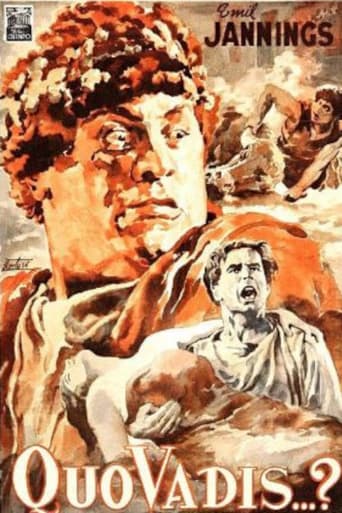
The 1924 film Quo Vadis? is the only title linked here for Alphons Fryland. Best known for his role in the 1924 epic production 'Quo Vadis?'. His career appears to have been brief, with his only documented film work being in this ambitious Italian-German co-production directed by Gabriellino D'Annunzio and Georg Jacoby. The film was one of several adaptations of Henryk Sienkiewicz's classic novel about early Christian persecution in ancient Rome. Fryland was part of a large ensemble cast that brought this historical epic to life during the height of silent cinema's grand productions. Like many supporting actors of the silent era, particularly in European productions, detailed records of his life and career are scarce. His participation in such a prestigious production suggests he was likely a professional actor with some standing in European cinema circles, though he never achieved the lasting fame of the film's stars.
The Craft
Milestones
- Appeared in the 1924 epic silent film 'Quo Vadis?'
Best Known For
Iconic Roles
Must-See Films
Why They Matter
Impact on Culture
Alphons Fryland's contribution to cinema, while minimal in scope, is part of the broader tapestry of silent era filmmaking. His participation in 'Quo Vadis?' (1924) places him within the context of early epic filmmaking, a genre that pushed the boundaries of cinematic spectacle and storytelling during the 1920s. The film itself was part of a wave of historical epics that characterized late silent cinema, showcasing the industry's ambition to create grand, theatrical experiences on screen. While Fryland himself did not achieve lasting fame, his work contributes to our understanding of the collaborative nature of film production during this period, where hundreds of actors, many now forgotten, worked together to create cinematic milestones.
Lasting Legacy
Alphons Fryland represents the countless supporting actors who contributed to the golden age of silent cinema but whose names have faded from historical memory. His legacy is intrinsically tied to 'Quo Vadis?' (1924), a film that stands as an example of the ambitious international co-productions of the silent era. While individual details about his career and life remain obscure, his participation in this significant production marks him as part of cinema's early history. The scarcity of information about actors like Fryland highlights the challenges of film preservation and historical documentation, particularly for European cinema of the 1920s. His story serves as a reminder of the many anonymous contributors who helped build the foundation of modern cinema.
Who They Inspired
There is no documented evidence of Alphons Fryland's influence on other actors or directors, which is typical for supporting actors with brief careers in the silent era. His influence, if any, would be limited to his immediate work on 'Quo Vadis?' and any potential collaborations with fellow cast and crew members during production.
Off Screen
Very little is documented about Alphons Fryland's personal life, which is not uncommon for supporting actors from the silent era, particularly those who worked primarily in European cinema productions.
Did You Know?
- Alphons Fryland appeared in the 1924 Italian-German co-production 'Quo Vadis?', one of several film adaptations of Henryk Sienkiewicz's novel
- The 1924 'Quo Vadis?' was an ambitious epic that showcased the grand scale of silent era filmmaking
- Fryland's career appears to have been extremely brief, with only one documented film credit
- The film was directed by both Gabriellino D'Annunzio and Georg Jacoby, reflecting its international production nature
- Like many European silent films, 'Quo Vadis?' featured large ensemble casts with many actors whose careers were short-lived
- The scarcity of information about Fryland is typical for supporting actors from this period of European cinema
- His participation in such a major production suggests he was likely a professional actor with some experience
- The film was part of the trend of historical epics that characterized late silent cinema
Frequently Asked Questions
Who was Alphons Fryland?
European with credits in this catalog. His career appears to have been very brief, with this being his only documented film role.
What films is Alphons Fryland best known for?
Titles linked here include Quo Vadis? (1924).
When was Alphons Fryland born and when did he die?
Unfortunately, specific birth and death dates for Alphons Fryland are not documented in available historical records, which is common for supporting actors from the silent era, particularly those who worked in European cinema.
What awards did Alphons Fryland win?
There are no documented awards or nominations for Alphons Fryland, which is not unusual for a supporting actor with such a brief film career in the 1920s.
What was Alphons Fryland's acting style?
Specific details about Alphons Fryland's acting style are not documented in available sources. As a silent era actor, he would have employed the dramatic physical acting techniques typical of the period.
Why is there so little information about Alphons Fryland?
The scarcity of information about Alphons Fryland reflects the challenges of preserving complete records for supporting actors from the silent era, particularly in European cinema where many film archives and documentation were lost over time.