
Quo Vadis?
"Unione Cinematografica Italiana's lavish production of the oft-told."
Keys: Space play/pause · ←/→ 10s · F fullscreen · M mute · </> speed
About this film
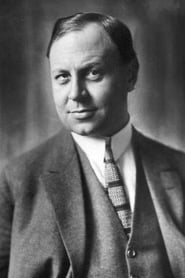
"The Roman Banquet, the golden glories, the unrivaled luxuries, the wine, the dance, the song, the beautiful women, the sumptuous splendors that taxed a barbaric world for a night of feasting and revel-- Re-created for your entertainment in the most colossal drama produced", reads an ad in the Daily Argus of New York. Unione Cinematografica Italiana's lavish production of the oft-told tale stars Emil Jannings as Nero.
Cast & crew
More films like this
More Drama films
View all →







More from Gabriellino D'Annunzio
View all →
More about this film
About the production
Release dateOctober 1924
Box officeUnknown - but was considered a commercial success in Europe
ProductionUnione Cinematografica Italiana (UCI)
Filmed inRome, Italy, Cinecittà Studios (under construction at the time)
The film featured massive sets including reconstructions of ancient Rome and the Colosseum. Thousands of extras were employed for the crowd scenes, particularly the arena sequences. The production was known for its attention to historical detail in costumes and props. Emil Jannings, though German, delivered his performance in Italian, requiring him to learn his lines phonetically.
Themes
Christian persecutionMoral corruption vs. spiritual purityThe conflict between earthly power and divine faithLove transcending cultural and religious boundariesThe decline of empire
Themes & topics
ancient RomeChristian persecutionEmperor Neromartyrdomgladiator arenareligious conversionimperial decadenceforbidden loveearly ChristianityRoman Empire
Historical background
Production circa 1924 meant fixed cameras, intertitles or early sound rigs, and studio economies that shaped every scene in Quo Vadis?.
Why this film matters
Historians treat Quo Vadis? as evidence of what typical 1924 audiences could see in a program slot.
Making of
The production was a massive undertaking for the Italian film industry, which was competing with Hollywood's big-budget epics. Gabriellino D'Annunzio faced significant pressure to deliver a spectacle that would showcase Italian cinema's capabilities. Emil Jannings, despite being German, was cast as Nero because of his international reputation and ability to portray complex, tyrannical characters. The film's production was marked by several delays due to the complexity of the sets and the coordination of thousands of extras. There were reported tensions on set between the Italian crew and the German star, though these were professional rather than personal. The banquet scenes were particularly challenging to film, requiring precise choreography of hundreds of performers while maintaining period authenticity. The arena sequences used innovative camera techniques for the time, including early forms of crane shots to capture the scale of the action.
What critics said
Modern retrospectives screen Quo Vadis? to illustrate 1924 pacing and camera norms.
Did you know?
- This was the first major film adaptation of Henryk Sienkiewicz's novel, predating the more famous 1951 Hollywood version
- Emil Jannings was paid an unprecedented salary for his role as Nero, making him one of the highest-paid actors of the silent era
- The film's banquet scenes reportedly used real food and wine, with extras actually consuming the provisions during filming
- Director Gabriellino D'Annunzio was the son of famous Italian poet Gabriele D'Annunzio, who reportedly contributed to the screenplay
- The arena sequences featured real animals including lions, though no actual harm came to human performers
- The film was shot using the largest film stock available at the time to create grander visual compositions
- Original intertitles were written in multiple languages for international distribution
- The production employed over 5,000 extras throughout filming
- Sets were so elaborate that some remained standing for years after filming
- Jannings' makeup as Nero took over three hours to apply each day
Awards & recognition
- Italian Film Award for Best Production Design (1925)
- International Film Exhibition Gold Medal (Berlin, 1925)
Visual style
The cinematography, credited to Ubaldo Arata, employed innovative techniques for the time including dramatic lighting effects for the arena scenes and elaborate camera movements during the banquet sequences. The film used special filters and lighting techniques to create the illusion of torchlight and candlelight in interior scenes. Wide-angle lenses were used to capture the scale of the massive sets, while close-ups emphasized the emotional intensity of the performances. The cinematography particularly excelled in the contrast between the dark, claustrophobic Christian meeting places and the bright, decadent Roman palaces.
Innovations
The film pioneered several technical innovations in Italian cinema, including the use of multiple cameras for complex crowd scenes and early matte painting techniques to extend the apparent size of sets. The production developed new methods for creating realistic fire effects for the burning of Rome sequence. The arena sequences featured innovative rigging systems for creating the illusion of trapdoors and lifting mechanisms. The film also experimented with color tinting, using amber tones for interior scenes and blue tints for night sequences. The makeup techniques used to transform Emil Jannings into Nero were considered groundbreaking for their realism.
Music
As a silent film, the original score was composed by Giulio Ricordi and performed by live orchestras in theaters. The music incorporated elements of ancient Roman musical themes adapted for modern orchestration. Different theaters received varying scores depending on the size of their orchestras, with major cinemas receiving full symphonic arrangements while smaller venues used piano or organ accompaniments. The score emphasized dramatic contrasts between Christian and Roman themes, using Gregorian chant-inspired melodies for Christian scenes and more bombastic, martial music for Roman sequences.
Famous quotes
Nero: 'The people need spectacles! Let them have bread and circuses while Rome burns!'
Lygia: 'My faith is my strength, even in the face of death'
Marcus Vinicius: 'I would rather die with you than live without you'
Nero: 'What is Rome but a stage upon which I play the leading role?'
Memorable scenes
- The grand Roman banquet scene featuring hundreds of extras in elaborate period costumes
- The burning of Rome sequence with innovative fire effects and mass panic
- The arena martyrdom scenes with Christians facing lions and gladiators
- Emil Jannings' dramatic performance as Nero playing his lyre while Rome burns
- The secret Christian meeting in the catacombs with dramatic lighting effects
What audiences thought
The film was a commercial success across Europe, particularly in Italy and Germany where Jannings was a major star. Italian audiences embraced the film as a demonstration of their cinema's grandeur, while international audiences were drawn to the spectacle and the novelty of seeing a German star in an Italian production. The film's religious themes resonated strongly with Catholic audiences in Europe and America. However, the film's length and deliberate pacing proved challenging for some viewers accustomed to faster-paced American films. Despite this, it ran successfully in major cities for weeks and was frequently revived during the Christmas and Easter seasons due to its religious content.
Film connections
Influenced by
- Henryk Sienkiewicz's novel 'Quo Vadis' (1896)
- Italian historical painting traditions
- Grand Opera productions of the 19th century
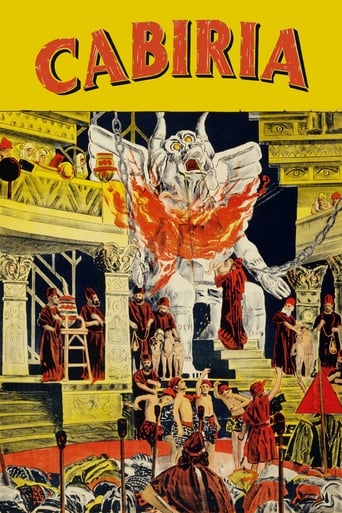
- Earlier Italian epics like 'Cabiria' (1914)
- German Expressionist cinema (particularly in Jannings' performance style)
This film influenced
- Quo Vadis (1951)
- Ben-Hur (1959)
- The Sign of the Cross (1932)
- Spartacus (1960)
- The Robe (1953)
- Demetrius and the Gladiators (1954)
Film restoration
The film is partially preserved with some reels missing from various archives. The Italian National Film Archive holds an incomplete version, while fragments exist in other European archives. A restoration effort in the 1990s combined existing footage with still photographs to recreate the narrative flow. Some scenes, particularly from the third act, remain lost. The existing footage shows varying degrees of deterioration but remains viewable.
Where to watch
- Available on DVD from specialty distributors
- Streaming on European classic film platforms
- Occasionally screened at film festivals and cinematheques
- Accessible through some university film archives
- Available for viewing at the Museum of Modern Art's film collection