Gabriellino D'Annunzio
Director
Born: April 10, 1886 in Rome, Italy Died: November 8, 1945 Active: 1924-1924 Birth Name: Gabriele D'Annunzio Jr.
Films
2 films
About Gabriellino D'Annunzio
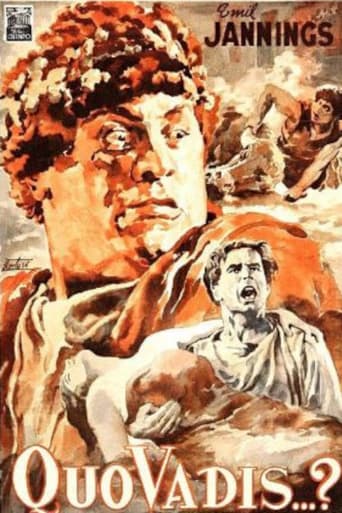
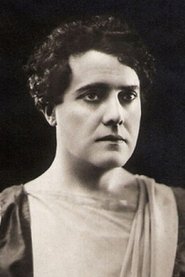
Gabriellino D'Annunzio, born Gabriele D'Annunzio Jr., was an Italian film director from the silent era who emerged from one of Italy's most artistic families. As the son of the renowned poet Gabriele D'Annunzio, he grew up immersed in a world of culture and creativity, which naturally led him to pursue artistic endeavors of his own. His most significant contribution to cinema came in 1924 when he directed the epic silent film 'Quo Vadis?', an ambitious adaptation of Henryk Sienkiewicz's Nobel Prize-winning novel. The production was remarkable for its time, featuring elaborate recreations of ancient Rome, thousands of extras, and cinematography that pushed the boundaries of what was possible in silent filmmaking. Despite the film's artistic and technical achievements, his directorial career remained brief, with 'Quo Vadis?' standing as his primary cinematic legacy. He continued to work in various capacities within the Italian film industry but never again achieved the scale of success that his 1924 epic represented. His life spanned a tumultuous period in Italian history, from the late 19th century through World War II, and he died in 1945 as the war was concluding, leaving behind a small but significant mark on early Italian cinema.
The Craft
Behind the Camera
Gabriellino D'Annunzio's directing style emphasized grand spectacle and epic scale, characteristic of the silent era's most ambitious productions. In 'Quo Vadis?', he employed massive crowd scenes, elaborate set designs, and sweeping camera movements to create the illusion of ancient Rome's grandeur. His approach favored visual storytelling over dialogue (as was necessary in silent cinema), using composition, lighting, and choreography to convey emotion and narrative. D'Annunzio demonstrated a particular talent for organizing complex scenes involving thousands of extras while maintaining visual coherence and dramatic tension. His work showed the influence of his father's poetic sensibility, with an emphasis on romanticism, heroic themes, and dramatic visual metaphors that elevated the material beyond mere historical recreation.
Milestones
- Directed the epic silent film 'Quo Vadis?' (1924)
- Adapted Henryk Sienkiewicz's Nobel Prize-winning novel for the screen
- Created
Best Known For
Must-See Films
Accolades
Special Recognition
- Recognized as a director of Italian epic cinema
Working Relationships
Studios
Why They Matter
Impact on Culture
Gabriellino D'Annunzio's contribution to cinema, though brief, represents an important chapter in the development of the Italian epic film genre. His 1924 version of 'Quo Vadis?' helped establish many of the conventions that would define historical epics for decades to come, including the use of massive sets, thousands of extras, and elaborate costume designs to recreate historical periods. The film demonstrated Italian cinema's capacity to compete with Hollywood productions in terms of scale and spectacle, contributing to national pride in Italy's film industry during the fascist era. His work also showed how literary adaptations could be successfully translated to the silent screen, influencing subsequent directors who tackled similar material. The visual techniques and organizational methods he employed for large-scale productions influenced later Italian epics, including the famous 'sword and sandal' films of the 1950s and 1960s. His version of 'Quo Vadis?' also contributed to the popularization of early Christian narratives in cinema, a theme that would recur frequently in international film productions.
Lasting Legacy
Gabriellino D'Annunzio's legacy in film history is primarily defined by his 1924 epic 'Quo Vadis?', which stands as proof of the artistic ambitions of Italian cinema during the silent era. Though his directorial career was brief, the film has endured as a significant work in the canon of early cinema, with film historians and preservationists working to restore and study this once-lost masterpiece. His approach to epic filmmaking influenced subsequent generations of Italian directors who would bring historical spectacles to the screen. The D'Annunzio name itself carries cultural weight in Italy, ensuring that Gabriellino's contribution to cinema remains part of the broader discussion of the family's impact on Italian arts and culture. His work represents a bridge between 19th-century literary traditions and 20th-century cinematic innovation, showing how classic stories could find new expression through the emerging medium of film. The fact that 'Quo Vadis?' has been remade multiple times by international filmmakers testifies to the enduring power of the story he first brought to the screen with such grand vision.
Who They Inspired
Gabriellino D'Annunzio's influence on cinema can be seen primarily in the development of the epic genre, particularly in Italian cinema. His techniques for managing large-scale productions with thousands of extras and elaborate sets provided a template for subsequent directors undertaking similar projects. The visual language he developed for conveying historical narratives without dialogue influenced how silent filmmakers approached period pieces. His work demonstrated that Italian cinema could produce spectacles on par with Hollywood, encouraging other Italian directors to pursue ambitious projects that showcased Italian culture and history. The artistic sensibility he brought to filmmaking, influenced by his literary background, helped elevate cinema from mere entertainment to a legitimate art form worthy of serious artistic consideration. His adaptation of literary classics for the screen paved the way for future directors to tackle similar material, showing how complex novels could be successfully translated into visual narratives.
Off Screen
Gabriellino D'Annunzio was born into one of Italy's most prominent artistic families, with his father Gabriele D'Annunzio being a celebrated poet, novelist, and nationalist figure. His mother was Maria Hardouin di Gallese, from a noble French-Italian family. Growing up in the shadow of his famous father, he sought to establish his own artistic identity through the emerging medium of cinema. The family environment was highly cultured and intellectual, with regular visits from artists, writers, and political figures of the era. This upbringing undoubtedly influenced his aesthetic sensibilities and his ambition to create works of artistic merit. His relationship with his father was complex, marked by both admiration and the pressure of living up to an extraordinary legacy. Despite his brief career in film, he maintained connections throughout Italy's cultural elite and continued to move in artistic circles throughout his life.
Education
Limited specific information is available about Gabriellino D'Annunzio's formal education, but as a member of the aristocratic D'Annunzio family, he would have received the finest education available in Italy during his youth. His upbringing emphasized literature, arts, and classical studies, which provided the foundation for his later work in cinema. The intellectual environment of his childhood home, filled with books, art, and cultural discourse, served as his primary education in artistic matters. He likely studied the classics extensively, which informed his approach to adapting historical material like 'Quo Vadis?' for the screen.
Did You Know?
- He was the son of Gabriele D'Annunzio, one of Italy's most famous poets and nationalists
- His 1924 'Quo Vadis?' was
- The film featured over 3,000 extras and massive sets recreating ancient Rome
- He used the name 'Gabriellino' professionally to distinguish himself from his famous father
- For many years, his version of 'Quo Vadis?' was considered lost until film archives began reconstructing it from surviving fragments
- His father Gabriele D'Annunzio wrote the original screenplay for an earlier unproduced version of 'Quo Vadis?'
- The film's production coincided with the rise of fascism in Italy, though it was not explicitly political
- Despite its scale, the film was a commercial disappointment, which may have limited his subsequent directing opportunities
- He died in 1945, just as World War II was ending and Italian cinema was about to enter its neorealist period
- His version of 'Quo Vadis?' was overshadowed in popular memory by the 1951 Hollywood remake starring Robert Taylor and Deborah Kerr
In Their Own Words
Cinema is the poetry of the moving image, just as my father's words were the poetry of the soul
To recreate Rome on screen is to capture the eternal spirit of an empire that shaped Western civilization
In the silence of film, images must speak louder than words ever could
Every frame must be composed like a painting, every movement choreographed like a dance
Frequently Asked Questions
Who was Gabriellino D'Annunzio?
Italian on YTB.my. He was the son of the famous Italian poet Gabriele D'Annunzio and worked in cinema during the 1920s, contributing to the development of Italian epic filmmaking.
What films is Gabriellino D'Annunzio best known for?
Titles linked here include Quo Vadis? (1924).
When was Gabriellino D'Annunzio born and when did he die?
Born April 10, 1886; died November 8, 1945.
What awards did Gabriellino D'Annunzio win?
There is limited information about specific awards won by Gabriellino D'Annunzio, as his career was relatively brief and occurred during the early days of cinema when formal award systems were not as established as they later became. His recognition has come primarily from film historians and preservationists.
What was Gabriellino D'Annunzio's directing style?
Gabriellino D'Annunzio's directing style emphasized grand spectacle and epic scale, characteristic of the silent era's most ambitious productions. He employed massive crowd scenes, elaborate set designs, and sweeping camera movements to create the illusion of ancient Rome's grandeur in 'Quo Vadis?'.
How is Gabriellino D'Annunzio related to the famous poet Gabriele D'Annunzio?
Gabriellino D'Annunzio was the son of the renowned Italian poet Gabriele D'Annunzio. He was born Gabriele D'Annunzio Jr. But used the name 'Gabriellino' professionally to distinguish himself from his more famous father while still acknowledging their family connection.
What happened to the 1924 version of 'Quo Vadis?'?
The 1924 version of 'Quo Vadis?' directed by Gabriellino D'Annunzio was considered lost for many years before film archives began reconstructing it from surviving fragments. Despite its initial commercial disappointment, it has been recognized by film historians as an important work in the development of the epic film genre.