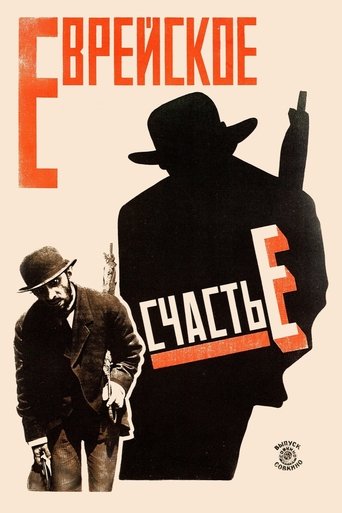
Alexis Granowsky
Director
Born: 1890 in Moscow, Russian Empire Died: 1937 Active: 1925-1937 Birth Name: Alexey Granovsky
Films
1 film
About Alexis Granowsky
Made significant contributions to early Jewish cinema during the silent era. Born in the late 19th century, Granowsky began his career in theater before transitioning to filmmaking in the 1920s. His most celebrated work, 'Jewish Luck' (1925), was an adaptation of Sholem Aleichem's stories about the character Menahem-Mendl, becoming one of the earliest and most important Yiddish films of the silent era. Granowsky's filmmaking style reflected both his theatrical background and the emerging cinematic techniques of the 1920s, with a particular focus on Jewish cultural themes and characters. After the success of 'Jewish Luck,' he continued to work in European cinema, directing films that often explored social and cultural themes relevant to Jewish communities. His the transition from silent to sound films, though he remained most closely associated with his silent era achievements. Granowsky's work represents an important bridge between traditional Jewish storytelling and the emerging language of cinema, helping to establish a foundation for future Jewish filmmakers.
The Craft
Behind the Camera
Granowsky's directing style combined theatrical sensibilities with cinematic innovation, emphasizing character-driven narratives and cultural authenticity. His approach to Jewish Luck demonstrated a deep understanding of Jewish cultural traditions while employing contemporary cinematic techniques of the silent era. He focused on bringing literary adaptations to life with particular attention to social commentary and cultural representation.
Milestones
- Directed 'Jewish Luck' (1925), one of the earliest significant Yiddish films
- Adapted Sholem Aleichem's literary works to cinema
- Pioneered Jewish-themed cinema in the silent era
- Worked across Russian and European film industries
- Contributed to the transition from silent to sound films
Best Known For
Must-See Films
Accolades
Special Recognition
- Recognized as a pioneer of Jewish cinema
- Historical significance in early Yiddish film
Working Relationships
Worked Often With
Studios
Why They Matter
Impact on Culture
Alexis Granowsky made a profound impact on Jewish cinema through his work in bringing Jewish stories and characters to the silver screen. His film 'Jewish Luck' represented a significant milestone in the representation of Jewish life in cinema, helping to establish a visual language for Jewish storytelling that would influence subsequent generations of filmmakers. Granowsky's work provided cultural validation for Jewish audiences during a period of significant social and political change, while also introducing broader audiences to Jewish culture and traditions. His adaptations of Sholem Aleichem's works helped preserve and popularize important Jewish literary figures in cinematic form.
Lasting Legacy
Granowsky's legacy endures primarily through his contribution to early Jewish cinema and the preservation of Jewish cultural narratives on film. His work, particularly 'Jewish Luck,' is studied by film historians as an important example of early ethnographic cinema and cultural representation. Granowsky demonstrated how cinema could serve as a vehicle for cultural preservation and identity formation for minority communities. His films remain valuable historical documents that provide insight into Jewish life in Eastern Europe during the interwar period.
Who They Inspired
Granowsky influenced subsequent generations of Jewish filmmakers by demonstrating the viability of Jewish-themed cinema for both artistic and commercial purposes. His approach to adapting literary works to film provided a template for future filmmakers working with culturally specific source material. His success in bridging theatrical traditions with cinematic innovation inspired other theater professionals to transition into film direction.
Off Screen
Alexis Granowsky was born into a Jewish family in Moscow during the final decade of the Russian Empire. His early exposure to both Russian and Jewish cultures would later influence his filmmaking choices and themes. Granowsky's career coincided with significant political and social upheavals in Europe, including the Russian Revolution and the rise of Nazism, which ultimately affected his work and life. He was part of a generation of Jewish artists who sought to preserve and celebrate Jewish culture through the emerging medium of cinema.
Education
Educated in Moscow with training in theater and dramatic arts before transitioning to film direction
Did You Know?
- Jewish Luck was based on the popular Sholem Aleichem character Menahem-Mendl
- The film was one of the first successful Yiddish feature films of the silent era
- Granowsky's original Russian name was Alexey Granovsky
- The film featured authentic Jewish cultural elements and was praised for its cultural accuracy
- Jewish Luck was shot on location in Poland to capture authentic settings
- The film's success led to increased interest in Jewish-themed cinema in Europe
- Granowsky worked during a challenging period for Jewish artists in Europe
- His films often featured social commentary alongside entertainment
- Granowsky was part of a small but influential group of early Jewish film directors
- His work helped establish conventions for Jewish representation in cinema that would last for decades
In Their Own Words
Cinema must serve as a bridge between cultures, not a barrier
The stories of our people deserve the dignity of the silver screen
In adapting literature to film, we must honor both the author and the medium
Frequently Asked Questions
Who was Alexis Granowsky?
Russian-born on YTB.my.
What films is Alexis Granowsky best known for?
Titles linked here include Jewish Luck (1925), The Jewish Girl (1928).
When was Alexis Granowsky born and when did he die?
Born 1890; died 1937.
What awards did Alexis Granowsky win?
While specific awards from his era are not well-documented, Granowsky is recognized historically as a pioneer of Jewish cinema and his work 'Jewish Luck' is celebrated as a milestone in early Yiddish film.
What was Alexis Granowsky's directing style?
Granowsky's directing style combined theatrical sensibilities with cinematic innovation, focusing on character-driven narratives and cultural authenticity, particularly in his representation of Jewish life and traditions.
How did Granowsky impact Jewish cinema?
Granowsky pioneered Jewish-themed cinema by successfully adapting Jewish literary works to film, creating a visual language for Jewish storytelling that influenced subsequent generations of filmmakers and helped preserve Jewish cultural narratives.
What was 'Jewish Luck' about?
'Jewish Luck' was based on Sholem Aleichem's stories about Menahem-Mendl, a character who embodied the Jewish experience in Eastern Europe, combining humor with social commentary on Jewish life and aspirations.