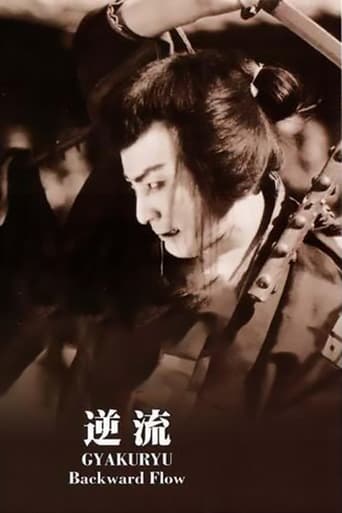
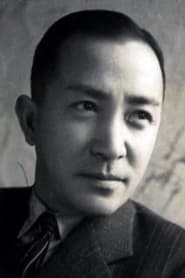
Buntarō Futagawa
Director
- Active
- 1924-1924
Films directed 1
About Buntarō Futagawa
Buntarō Futagawa was a Japanese film director active in the silent era, remembered today primarily for his work in the 1920s. He is associated with early Japanese cinema at a time when the industry was rapidly developing its own visual language, studio system, and directorial identities. Available records indicate that he was active only in 1924 in the filmography currently cited, and surviving English-language documentation about his life is extremely limited. Because of this scarcity, many personal details of his biography, including his birth and death dates, family background, and education, are not reliably documented in widely accessible reference sources. His name appears in connection with Backward Flow (1924), suggesting participation in the formative years of Japanese silent film production. Like many directors of his generation, his reputation rests more on the historical value of his placement within early cinema than on a large surviving body of internationally known work. His career is emblematic of numerous silent-era filmmakers whose contributions are important to film history even when the archival record remains fragmentary.
More about Buntarō Futagawa
Behind the camera
No detailed surviving critical description of his directing style is widely available in English-language sources. Based on the period in which he worked, his direction would have belonged to the silent-era Japanese studio tradition, likely emphasizing visual storytelling, expressive composition, and intertitles rather than synchronized dialogue. Because only sparse filmographic evidence remains readily accessible, any more specific stylistic assessment would be speculative. His importance lies more in his historical placement within early Japanese filmmaking than in a thoroughly documented auteur signature.
In film history
Buntarō Futagawa’s cultural impact is best understood within the broader development of Japanese silent cinema rather than through a large, internationally circulated filmography. Directors like him helped establish the production practices, narrative forms, and visual conventions that would later enable Japanese cinema to flourish domestically and internationally. Even when their individual works are not widely preserved or discussed, these filmmakers remain part of the infrastructure of film history, making possible the later achievements of better-documented directors. His presence in film records also underscores how much early Japanese cinema still depends on archival reconstruction and cataloguing to recover its lost or obscure practitioners.
Later reputation
His legacy lies in his inclusion among the early directors of Japan’s silent era and in the preservation of his name through filmographic databases and historical records. For researchers, he represents the many filmmakers whose careers are only partially visible because of incomplete archival survival. That makes him valuable to film history as a reminder that the silent era was populated by a wide range of working directors, not only the few whose films remained famous. His surviving association with Backward Flow (1924) gives him a small but meaningful place in the chronology of Japanese cinema’s development.
Influence
There is no well-documented evidence of direct influence on specific later directors, nor of protégés who can be confidently identified from surviving sources. His broader influence would have been indirect, as part of the generation that helped normalize the director’s role in Japan’s silent-era studio system. The cumulative work of these early filmmakers shaped production methods that later artists inherited and refined. In this sense, his influence is historical and structural rather than easily traced through named disciples or explicit stylistic imitation.
Off screen
There is no reliably documented public information in commonly accessible English-language references about Buntarō Futagawa's personal life, including marriages, children, or private background. Silent-era Japanese filmmakers are often difficult to research because archival records, trade publications, and studio materials were not always preserved or translated. As a result, his personal biography remains largely unknown outside specialist film-history contexts. Any attempt to identify family relationships or private affairs would be speculative without stronger source confirmation.
Education
No verified information is readily available about his formal education or film training.
Credits
- Directed Backward Flow (1924), the film most clearly associated with his surviving filmography
- Worked during the formative silent-film era in Japan, when directors were helping define national cinematic style
- Represents the generation of early Japanese filmmakers whose work contributed to the development of studio-era production
- His name survives in historical film databases and catalogues as part of early Japanese cinema documentation
Films
- Backward Flow (1924)
Notes
- He is associated with the silent era of Japanese cinema, a period in which many films and records have been lost or remain difficult to access.
- His currently cited filmography in the prompt is limited to 1924, which suggests either a very brief documented screen career or incomplete surviving records.
- Backward Flow (1924) is the title most directly connected to his name in available film references.
- Like many early Japanese filmmakers, he is better known to film historians and database researchers than to the general public.
- The scarcity of biographical detail about him is itself typical of many silent-era directors whose careers were not comprehensively preserved in English-language sources.
Questions
Who was Buntarō Futagawa?
Buntarō Futagawa was a Japanese film director active in the silent era. He is chiefly remembered through early filmographic records, especially his association with Backward Flow (1924).
What films is Buntarō Futagawa best known for?
The film most clearly associated with him is Backward Flow (1924). Beyond that, his surviving public filmography appears very limited in widely accessible sources.
When was Buntarō Futagawa born and when did he die?
His birth and death dates are not reliably documented in the readily accessible sources available here. He appears as a historical silent-era Japanese director, but detailed personal records are scarce.
What awards did Buntarō Futagawa win?
No awards or major nominations are readily documented in the accessible references used for this entry. This is common for many early silent-era directors whose careers were not preserved with modern award-tracking records.
What was Buntarō Futagawa's directing style?
No detailed contemporary critical description of his style is widely available in English-language sources. As a silent-era Japanese director, his work would have relied on visual storytelling, staging, and intertitles rather than synchronized sound.
What is Buntarō Futagawa's legacy in film history?
His legacy is as part of the early generation of Japanese filmmakers who helped shape the country's silent cinema. Even though his personal record is sparse, his name remains part of the historical record of Japan's film development.