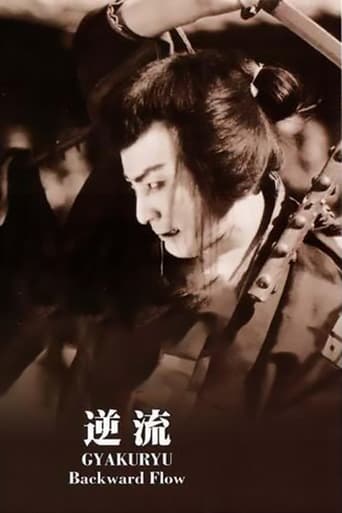
Kanzaburo Arashi
Actor
- Active
- 1924-1924
Films 1
About Kanzaburo Arashi
Kanzaburo Arashi was a Japanese film actor active during the silent era, best known today for his appearance in the 1924 film Backward Flow. He appears to have worked during the early years of Japanese cinema, a period when many performers moved between stage traditions and the rapidly developing film industry. Surviving reference sources on his life are extremely limited, and detailed documentation of his broader career, personal background, and later years is not readily available in major English-language film histories. Because of this scarcity, his surviving screen credit in Backward Flow stands as the principal confirmed marker of his work in cinema. His name suggests a connection to the Arashi acting lineage or a stage-derived naming tradition, which was common among Japanese performers of the period, but specific biographical confirmation is lacking. Like many silent-era Japanese actors whose careers were not extensively preserved in international archives, he remains a little-documented figure whose contribution is primarily remembered through film credits rather than extensive surviving publicity or interviews. His importance lies in the historical record of early Japanese screen acting and the larger ensemble of performers who helped establish the national cinema in the 1920s.
More about Kanzaburo Arashi
On screen
No detailed contemporary critical descriptions of Kanzaburo Arashi's acting style have been located in widely accessible sources. As a silent-era Japanese actor, his performance would likely have relied on the expressive physicality, gesture, and stylized emotional clarity common to the period. Because no surviving reviews or performance analyses are readily available in standard reference material, any further description would be speculative.
In film history
Kanzaburo Arashi's cultural impact is primarily historical rather than widely popular or celebrity-driven. His value to film history comes from representing the generation of early Japanese screen actors who helped establish the silent-era performance vocabulary of the national cinema. Even when an actor survives in the record through only one or a few credits, that presence helps scholars reconstruct production networks, casting practices, and the artistic environment of 1920s Japan. His appearance in Backward Flow places him within the broader development of Japanese film culture during a key transitional decade. In that sense, his impact is tied to preservation, archival memory, and the study of early cinema rather than to a large documented star persona.
Later reputation
Kanzaburo Arashi's legacy is preserved mainly through filmography records rather than a large body of surviving critical commentary or fan memory. For historians of silent Japanese cinema, even sparse credits are valuable because they identify the working actors who contributed to the medium's early growth. His name remains part of the historical cast of performers who appeared in 1920s Japanese films, a period from which much material has been lost or is difficult to access. The limited documentation also underscores the fragility of silent-era film history, where many artists' careers can only be reconstructed in fragments. As such, his legacy is one of archival significance and historical continuity within Japanese cinema.
Influence
There is no well-documented evidence of direct influence by Kanzaburo Arashi on later actors or directors in the available reference record. His influence is best understood indirectly, as part of the broader foundation of silent-era Japanese performance traditions that later generations inherited and transformed. The actors of his era helped normalize screen acting styles that balanced theatrical roots with the needs of film close-ups and visual storytelling. Although specific protégés or successors are not known, his work belongs to the lineage that shaped early Japanese screen performance.
Off screen
No reliable biographical information on Kanzaburo Arashi's personal life, family background, marriages, or children is readily available in the standard reference sources accessible for this profile. The surviving public record is too limited to confirm details about his upbringing, education, or life outside of acting. This is not unusual for minor or obscure performers from the silent era, especially in early Japanese cinema, where archival preservation and international indexing were often incomplete. As a result, his personal life remains undocumented in this summary.
Credits
- Confirmed screen credit in the 1924 silent-era film Backward Flow
- Participation in Japanese cinema during the formative mid-1920s period
- Representation of early stage-to-screen acting traditions in Japan
- Historical presence in the silent film era when many performances are now lost or poorly documented
Roles
- Role in Backward Flow (1924)
Films
- Backward Flow (1924)
Notes
- Kanzaburo Arashi is specifically linked in available film records to the 1924 silent film Backward Flow.
- He is a Japanese actor from the silent era, a period with many incomplete surviving records.
- No widely verified birth or death dates are readily available in standard accessible sources.
- His career appears, from surviving filmography evidence, to have been brief or at least sparsely documented in international archives.
- He is an example of how many early Japanese film performers are known today mainly through credit listings rather than extensive biographies.
- The name 'Arashi' may suggest a stage-family connection common in Japanese acting traditions, but this is not confirmed for him specifically.
- His obscurity reflects the archival challenges of documenting early 20th-century Japanese cinema.
- He is important to researchers primarily as a historical credit connected to the silent era.
Questions
Who was Kanzaburo Arashi?
Kanzaburo Arashi was a Japanese silent-era film actor known from surviving film records, especially for appearing in Backward Flow (1924). Very little biographical information about him has survived in widely accessible sources, so he is primarily remembered as part of early Japanese cinema history.
What films is Kanzaburo Arashi best known for?
He is best known for Backward Flow (1924), which is the principal confirmed film credit associated with his name in accessible records. No broader, well-documented filmography is readily available from standard sources.
When was Kanzaburo Arashi born and when did he die?
His birth and death dates are not readily available in the accessible reference record. This is common for lesser-documented silent-era performers, especially from early Japanese cinema.
What awards did Kanzaburo Arashi win?
No awards or formal honors are currently documented for Kanzaburo Arashi in the available sources. His historical significance is based on his film credit and his place in early Japanese cinema rather than on recorded accolades.
What was Kanzaburo Arashi's acting style?
No detailed contemporary analysis of his acting style has been preserved in widely accessible sources. As a silent-era Japanese performer, his work would likely have emphasized expressive physical acting and gesture-driven performance typical of the period.
What is Kanzaburo Arashi's legacy in film history?
His legacy is primarily archival and historical, representing the early generation of Japanese screen actors whose work helped build silent cinema. Even with limited surviving information, his credit helps film historians reconstruct the performers and production culture of 1920s Japan.