Arthur Maude
Actor
Born: July 23, 1880 in Pontefract, Yorkshire, England Died: January 9, 1950 Active: 1913-1935 Birth Name: Arthur John Maude
Films
2 films

About Arthur Maude
Made significant contributions to early cinema, particularly during the silent era. Born in Yorkshire, England, he began his career in theater before transitioning to film in the early 1910s. Maude worked extensively in both British and American cinema, appearing in numerous silent films while also establishing himself as a prolific director. He directed over 60 films throughout his career, often writing the screenplays as well. His most notable directorial work included adaptations of literary classics and popular serials. After the transition to sound, his directorial output decreased, though he continued to act in smaller roles. Maude spent his later years in England, where he died in 1950, leaving behind a substantial body of work that represents an important chapter in early film history.
The Craft
On Screen
Maude's acting style was characteristic of the theatrical tradition of the early 20th century, featuring expressive gestures and dramatic facial expressions essential for silent film communication. He brought a refined, stage-trained presence to his screen performances, often playing sophisticated gentlemen and authoritative figures. His technique emphasized clear emotional projection through physical movement and exaggerated expressions, ensuring audiences could understand character motivations without dialogue.
Milestones
- Directed over 60 silent films
- Wrote and directed the popular 'Adventures of Sherlock Holmes' film series
- Married and frequently collaborated with actress Constance Crawley
- Established himself as a prominent figure in early American cinema
- Successfully transitioned from British theater to American film industry
Best Known For
Iconic Roles
Must-See Films
Accolades
Special Recognition
- Recognized as a figure in early British and American cinema
- His films are preserved in several film archives as examples of early cinema
Working Relationships
Worked Often With
Studios
Why They Matter
Impact on Culture
Arthur Maude contributed significantly to the development of early cinema, particularly in the transition from theatrical to film storytelling. His work in adapting literary classics for the screen helped establish conventions for literary adaptations in cinema. His Sherlock Holmes films were among the earliest screen adaptations of Arthur Conan Doyle's famous detective, influencing countless later interpretations. Maude's dual role as actor-director represented the versatile nature of early film professionals who often wore multiple hats. His films, though largely forgotten today, represent important examples of the artistic and technical evolution of cinema during its formative years.
Lasting Legacy
Arthur Maude's legacy lies in his substantial contribution to the foundation of narrative cinema, particularly in the silent era. His extensive filmography provides valuable insight into the storytelling techniques and production methods of early 20th-century cinema. While not as famous as some of his contemporaries, his work as both actor and director demonstrates the multi-faceted nature of early film professionals. His adaptations of literary works helped establish the practice of bringing classic literature to the screen, a tradition that continues in cinema today. His films are preserved in various archives and studied by film historians interested in the development of narrative cinema.
Who They Inspired
Maude influenced later filmmakers through his efficient storytelling techniques and his approach to literary adaptations. His work on serial films helped establish patterns for episodic storytelling that would later become important in both film and television. His Sherlock Holmes adaptations, while not the first, contributed to the visual vocabulary that would define the character on screen for decades. His success as a British expatriate in Hollywood also paved the way for other British filmmakers to find success in the American film industry.
Off Screen
Arthur Maude was married to actress Constance Crawley, with whom he frequently collaborated both on screen and behind the camera. Their professional partnership was one of the notable actor-director collaborations of the silent era. The couple worked together on numerous productions, with Crawley often starring in films that Maude directed. Their marriage represented both a personal and professional partnership that contributed significantly to early cinema. After Crawley's death, Maude eventually returned to England where he spent his final years.
Education
Trained in theater in England before transitioning to film, though specific educational institutions are not well documented
Family
- Constance Crawley (1910s-1920s)
Did You Know?
- He directed over 60 films in his career, most of which are now lost
- His Sherlock Holmes films were among the earliest American adaptations of the famous detective
- He began his career on the British stage before moving to America
- He often wrote the screenplays for the films he directed
- His wife Constance Crawley was a popular actress of the silent era
- He worked during the transitional period when cinema was establishing itself as a serious art form
- Many of his films were produced by small independent studios rather than major studios
- He was one of many British film professionals who found success in early Hollywood
- His active years covered the entire silent era and briefly into the early sound period
- His films often featured strong moral themes and clear narratives suitable for family audiences
In Their Own Words
The moving picture is the theater of the future, and we are but pioneers in this great new art form.
In silent drama, the actor must speak with his whole body, not merely his voice.
To adapt literature for the screen is to give new life to timeless stories for modern audiences.
Frequently Asked Questions
Who was Arthur Maude?
British actor, on YTB.my. He directed over 60 films and was particularly known for his adaptations of literary works, including the Sherlock Holmes series. His active years covered both British and American cinema, making him a transatlantic figure in early film history.
What films is Arthur Maude best known for?
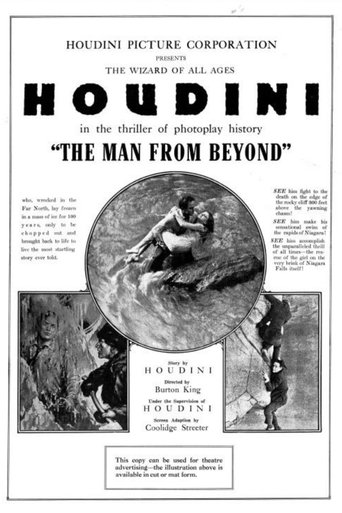
Titles linked here include The Man from Beyond (1922), The Adventures of Sherlock Holmes series (1921-1923).
When was Arthur Maude born and when did he die?
Born July 23, 1880; died January 9, 1950.
What awards did Arthur Maude win?
Arthur Maude did not receive major formal awards during his career, as the award systems we know today, such as the Academy Awards, were not established during his most active period. However, he is recognized by film historians as an important pioneer of early cinema, and his films are preserved in various archives for their historical significance.
What was Arthur Maude's acting and directing style?
Maude's acting style reflected the theatrical traditions of his era, characterized by expressive gestures and dramatic projection essential for silent films. As a director, he favored clear, linear narratives and efficient storytelling, often adapting literary works with a focus on character development and dramatic tension. His style was well-suited to the technical constraints and audience expectations of early cinema.
Did Arthur Maude work with any famous collaborators?
Maude frequently collaborated with his wife, actress Constance Crawley, who often starred in his directed films. He worked with numerous silent era actors including Harry Myers, William Russell, and Marguerite Snow. His collaborations represented common practices of the era where actors and directors formed regular working partnerships.
What is Arthur Maude's legacy in film history?
Maude's legacy lies in his substantial contribution to early narrative cinema and his role in adapting literary works for the screen. His Sherlock Holmes films helped establish visual conventions for the character that influenced later adaptations. His extensive filmography provides valuable insight into the development of cinema during its formative years, particularly in the transition from theatrical to film storytelling.
Are Arthur Maude's films still available to watch?
Many of Arthur Maude's films are unfortunately lost, as was common with silent era films. However, some of his works, including parts of his Sherlock Holmes series and 'The Man from Beyond,' survive and are preserved in film archives. These surviving films are occasionally shown at silent film festivals and are available through some specialty film distributors and archives.