Films
1 film
About Vladimir Siversen
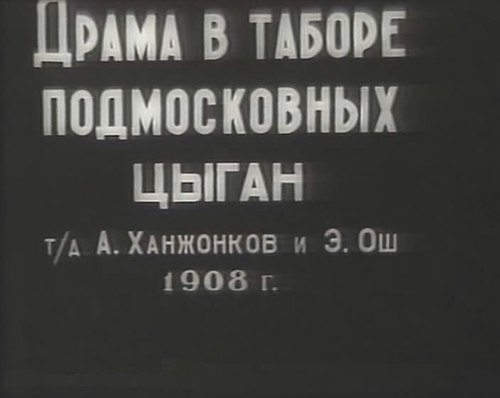
Russian filmmaker active during the dawn of cinema in the Russian Empire. As one of the earliest Russian directors, he worked during a transformative period when motion pictures were transitioning from novelty to art form. His most notable work, 'Drama in a Gypsy Camp Near Moscow' (1909), represents some of the earliest narrative filmmaking in Russian cinema history. Siversen was part of the first generation of Russian filmmakers who established the foundation for what would later become the influential Soviet film industry. His brief but significant career in 1909 coincided with the emergence of Russian commercial cinema, with filmmakers beginning to explore narrative storytelling beyond simple actualities. While his filmography appears limited to this single year, his contribution represents an important milestone in the development of Russian cinema. Siversen's work exemplifies the early attempts by Russian filmmakers to create dramatic narratives that would appeal to domestic audiences.
The Craft
Behind the Camera
As an early pioneer of Russian cinema, Siversen's directing style would have been influenced by the technical limitations of the 1900s, likely employing static camera positions typical of the period, with emphasis on theatrical staging and clear narrative progression suitable for early cinema audiences.
Milestones
- Directed 'Drama in a Gypsy Camp Near Moscow' (1909)
- One of the earliest narrative filmmakers in Russian cinema
- Pioneer of Russian dramatic filmmaking
Best Known For
Must-See Films
Working Relationships
Studios
Why They Matter
Impact on Culture
Vladimir Siversen represents an important but often overlooked chapter in Russian film history as one of the earliest directors creating narrative content for Russian audiences. His work in 1909 came during a crucial period when Russian cinema was establishing its identity separate from European influences. The existence of films like 'Drama in a Gypsy Camp Near Moscow' demonstrates that Russian filmmakers were already exploring culturally specific themes and settings that would become hallmarks of Russian cinema. Though his direct influence may have been limited due to his brief career, Siversen was part of the foundation upon which later Russian masters like Eisenstein, Pudovkin, and Vertov would build their revolutionary cinematic theories and practices.
Lasting Legacy
Vladimir Siversen's legacy lies primarily in his role as an early pioneer of Russian narrative cinema. While his name may not be as recognized as later Russian filmmakers, his contribution in 1909 represents an important milestone in the development of Russian film culture. His work serves as historical evidence of the early attempts by Russian filmmakers to create dramatic narratives that reflected Russian culture and settings. The film 'Drama in a Gypsy Camp Near Moscow' stands as proof of the early Russian cinema's efforts to establish its own cinematic language and themes, predating the revolutionary advances of the 1920s Soviet cinema.
Who They Inspired
As an early filmmaker from 1909, Vladimir Siversen's direct influence on later filmmakers is difficult to trace, but he was part of the generation that established the possibility of Russian narrative cinema. The very existence of his work demonstrated to later Russian filmmakers that cinema could be used to tell distinctly Russian stories, paving the way for the more sophisticated and politically charged works of the Soviet era.
Off Screen
Very little is documented about Vladimir Siversen's personal life, which is common for many early cinema pioneers who worked before the film industry became established and before filmmakers achieved celebrity status. His brief appearance in film history during 1909 suggests he may have been involved in cinema during its experimental phase in Russia.
Did You Know?
- One of the very first Russian film directors
- His entire known filmography consists of work from a single year (1909)
- Represents the dawn of Russian narrative cinema
- Worked during the reign of Tsar Nicholas II
- His film 'Drama in a Gypsy Camp Near Moscow' is among the earliest Russian dramatic films
- Part of the first wave of Russian filmmakers before the Revolution
- His career coincided with the transition from actualities to narrative films
- Likely worked with hand-cranked cameras and natural lighting
- His films would have been accompanied by live music during screenings
- Represents an era when Russian cinema was still finding its artistic voice
Frequently Asked Questions
Who was Vladimir Siversen?
Early Russian on YTB.my.' He was one of the filmmakers who helped establish narrative cinema in Russia during the dawn of the film era.
What films is Vladimir Siversen best known for?
Titles linked here include Drama in a Gypsy Camp Near Moscow (1909).
When was Vladimir Siversen born and when did he die?
Specific birth and death dates for Vladimir Siversen are not documented in available historical records, which is common for many early cinema pioneers who worked before the film industry became formally established.
What awards did Vladimir Siversen win?
No awards or formal recognitions have been documented for Vladimir Siversen, as he worked during the very early period of cinema (1909) before such industry awards and honors existed.
What was Vladimir Siversen's directing style?
As an early filmmaker from 1909, Siversen's directing style would have been constrained by the technical limitations of the period, likely featuring static camera positions and theatrical staging typical of early cinema, with emphasis on clear narrative storytelling.
Why is Vladimir Siversen important in film history?
Vladimir Siversen is important as one of the earliest Russian narrative filmmakers, representing the foundation upon which later Russian and Soviet cinema would build. His work in 1909 demonstrates the early emergence of Russian film culture and storytelling.